




Georgian Entryway Chairs
Georgian entryway chairs are sturdy wooden reception seats designed for grand halls, bringing historic British character to a modern entrance.
Georgian Entryway Chairs
When searching for georgian entryway chairs, buyers encounter formal hall chairs and benches originating from the eighteenth and nineteenth centuries. These pieces were traditionally placed in grand entrance halls rather than domestic living spaces, serving as sculptural furniture for visitors and waiting guests.
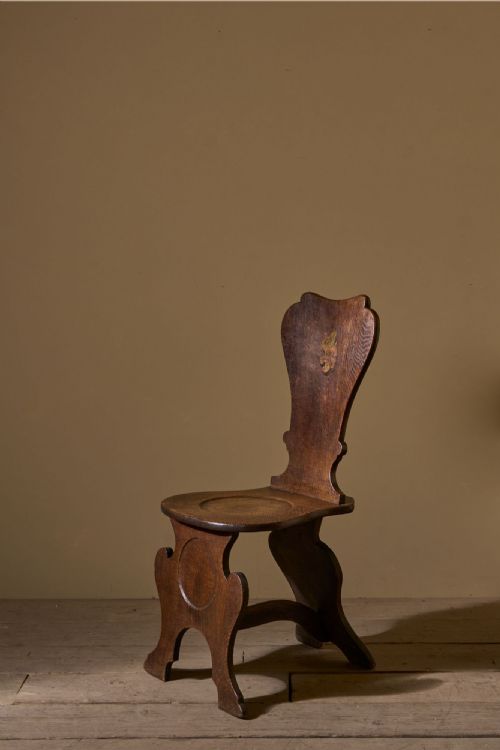
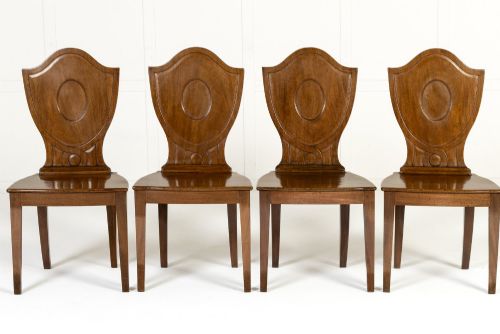
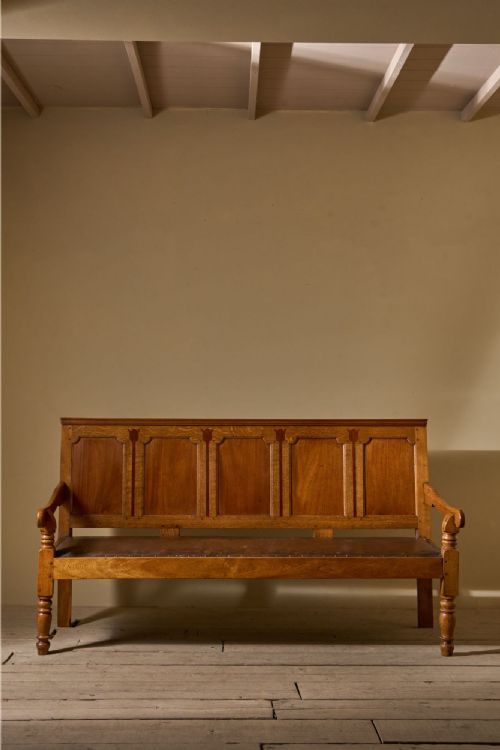
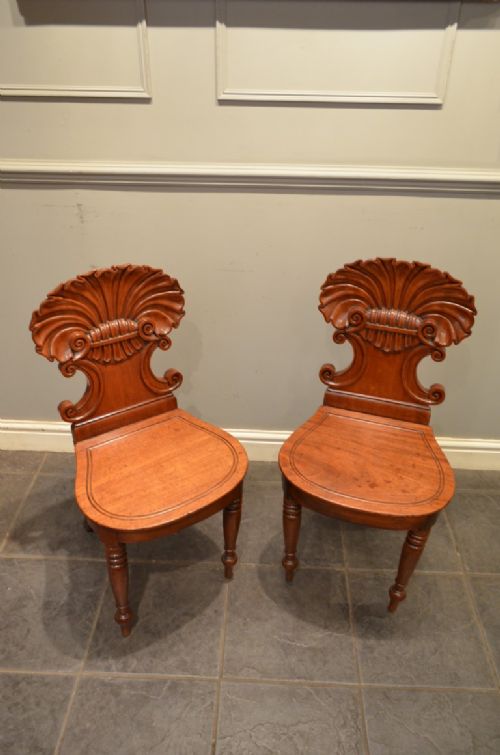
The selections available here predominantly feature mahogany hall chairs from the Regency and George III periods alongside oak benches. Makers constructed these seats with solid wooden backs, often incorporating carved armorials, shields, or shell motifs rather than upholstered padding.
Design variations span from mid eighteenth-century George II pieces through to William IV and Victorian interpretations. Scottish origins also appear, utilising native oak and walnut alongside the standard mahogany timbers.
Materials and construction
Makers relied heavily on solid mahogany, oak, and walnut to construct these rigid wooden seats. Timber selection governed the durability required for furniture intended to sit in high-traffic entranceways.
Carving and turnings defined the decoration, utilising pelta backs, shield backs, and sculpted wood inlay. Brass details and paint finish occasionally highlight the carved crests and armorials.
Materials recorded across the inventory include mahogany, oak, walnut, brass, paint, and wood inlay.
Assessing craftsmanship
Quality separates through the depth and crispness of the carved details on the wooden backs. Pieces featuring sculpted armorials, hippocampus motifs, or distinct shell designs demonstrate superior workmanship by skilled cabinetmakers.
The integrity of the timber joints and the weight of the mahogany or oak determine structural merit. Substantial proportions and well-preserved wooden surfaces distinguish finer examples from standard production.
Gillows
The Georgian Entryway Chairs Glossary
- Shield back
- A chair back shaped in the outline of a heraldic shield. This design gained popularity during the Georgian period.
- Armorial
- A design displaying a coat of arms or family crest. These symbols were carved into the wooden backs of hall chairs.
- Sgabello
- An early form of wooden chair with a high back and trestle base. The style appears in mid-eighteenth century examples.
Georgian Entryway Chairs: Frequently Asked Questions
Where were these chairs used?
These chairs stood in the entrance halls and reception rooms of large country houses. Visitors waited on them while awaiting admittance to the main residence.
Because they sat in hallways rather than private parlours, the seats were made entirely of wood without comfortable upholstery.
Are they comfortable for daily sitting?
Georgian entryway chairs were built for formality and display rather than lounging. Their rigid wooden seats and upright backs suit short periods of sitting.
Collectors generally use them as occasional side chairs or sculptural accent pieces in modern hallways.
How do I date a hall chair?
Dating relies on stylistic clues like shield backs, pelta shapes, and carved armorials matching specific reigns. Cabinetmakers adjusted proportions and motifs from George II through to the Victorian era.
Timber choice also aids dating, as eighteenth-century pieces frequently feature oak or early mahogany while Regency examples lean towards refined mahogany.