


Georgian Drop Leaf Waiter
A georgian drop leaf waiter is a tiered mahogany serving stand with folding leaves, designed to hold dishes near the dining table without servant attendance.
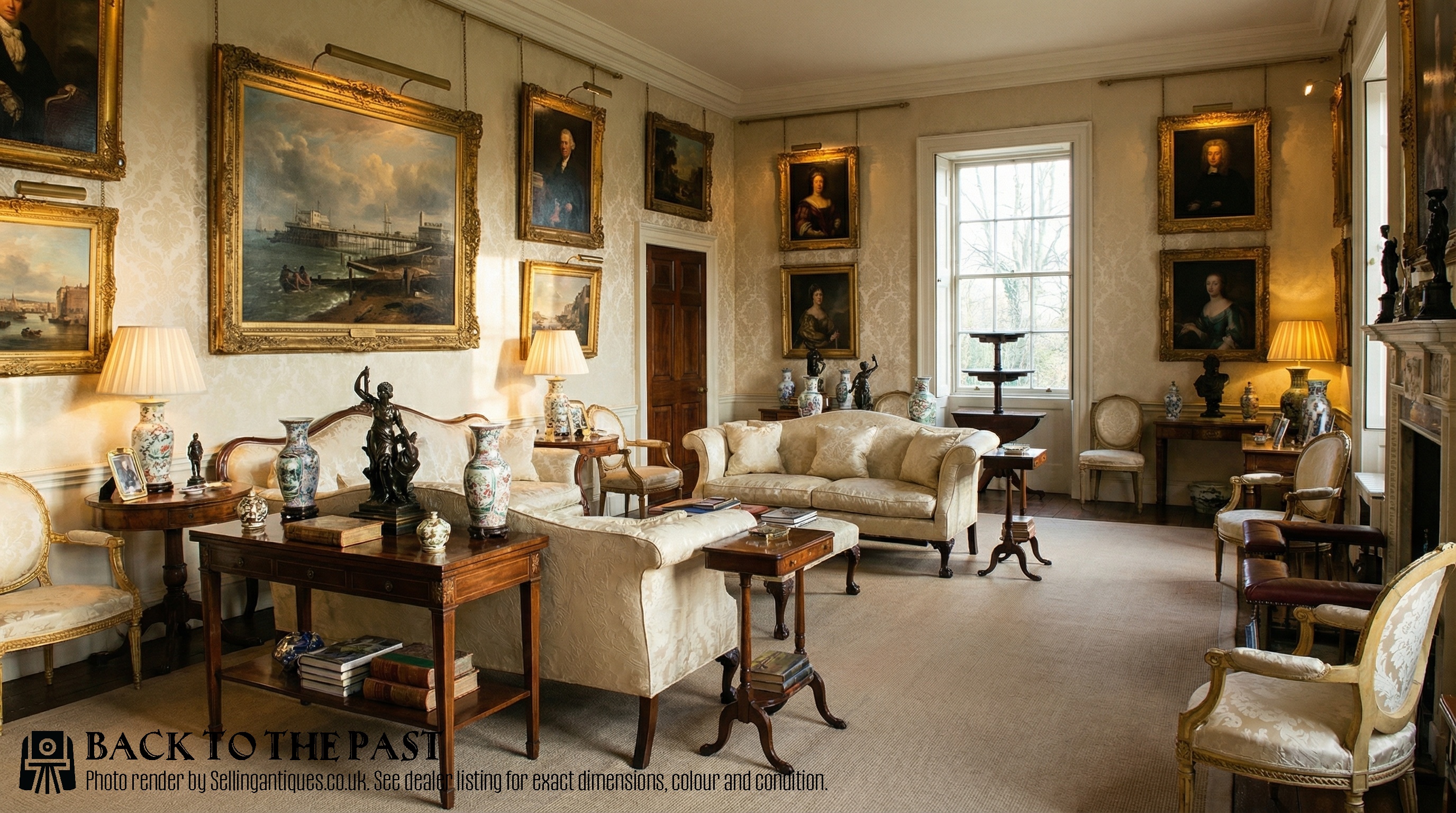
Georgian Drop Leaf Waiter
A georgian drop leaf waiter is a multi-tiered piece of dining room furniture designed to hold plates, glasses, and dishes during meals without the need for servants in the room. Most examples found on this page belong to the George III and Regency periods, spanning the eighteenth and nineteenth centuries.
The forms vary between circular, octagonal, and rectangular tiered tables, incorporating folding leaves, drop-leaves, and fold-down shelves. These folding mechanisms allow the tiers to drop down or tuck away when not in use, making them practical for smaller spaces as well as grand dining rooms.
Materials and construction
These servers are constructed primarily from mahogany, a dense and durable timber favoured for fine furniture during the Georgian era. The wood is often shaped into tiered shelves supported by central pillars and brass fittings.
Makers integrated folding sides, drop-leaves, and hinges to create the tiered and fold-down configurations. The joinery and brass hardware allow the leaves to drop securely and lift smoothly.
These pieces were called dumb waiters because they held your dinner in polite, motionless silence.
Assessing quality in a georgian drop leaf waiter
Quality rests in the precision of the folding mechanism and the stability of the tiered shelves. Pieces featuring complex shapes, such as octagonal tiers or multi-tiered rectangular drop-leaf designs, demonstrate greater joinery skill than standard circular forms.
The choice of mahogany grain and the quality of the brass fittings distinguish finer examples. The smoothness of the drop-leaf action and the rigidity of the central column when loaded indicate superior cabinet-making.
The Georgian Drop Leaf Waiter Glossary
- Drop-leaf
- A table or tier with hinged flaps that can be folded down or supported horizontally. This allows the overall footprint of the piece to be reduced when space is needed.
- Dumb waiter
- A tiered serving stand used in the eighteenth and nineteenth centuries to hold food and drink near a dining table. The term reflects its function as a silent servant.
- Tiered table
- Furniture built with multiple stacked shelves or platforms arranged vertically. These levels provide additional surface area for serving dishes.
- George III period
- The era spanning the reign of King George III, associated with refined mahogany furniture and specific classical styling. Many surviving waiters date from this time.
- Regency style
- The design period following the Georgian era, characterised by classical restraint and elegant proportions. Pieces from this time often feature round or tiered configurations.
Georgian Drop Leaf Waiter: Frequently Asked Questions
What is a georgian drop leaf waiter used for?
These pieces were originally placed beside the dining table to hold extra plates, wine bottles, and side dishes. They kept food and drink within arm's reach without requiring servants to remain in the room.
Today, they function well as decorative side tables or tiered display stands in living spaces and dining rooms.
How do you operate the folding leaves?
The folding leaves and drop-down sections operate on integrated hinges and wooden or brass supports. Lifting the leaf engages the support bracket to lock the shelf flat.
Lowering the leaves allows the tiers to fold down compactly against the central column for storage.
What shapes do these servers come in?
The listings show circular, rectangular, and octagonal forms across two or three tiers. Some feature fold-down shelves while others utilise drop-leaves on the upper or lower platforms.
Circular and rectangular three-tier designs appear most frequently among eighteenth-century examples.
How do I date a mahogany dumb waiter?
Dating relies on stylistic markers from the George III and Regency periods, alongside construction methods visible in the timber and hinges. Eighteenth-century pieces typically display characteristic mahogany turning and joinery.
Later nineteenth-century examples reflect transitional styles while retaining the core tiered and folding functionality.