

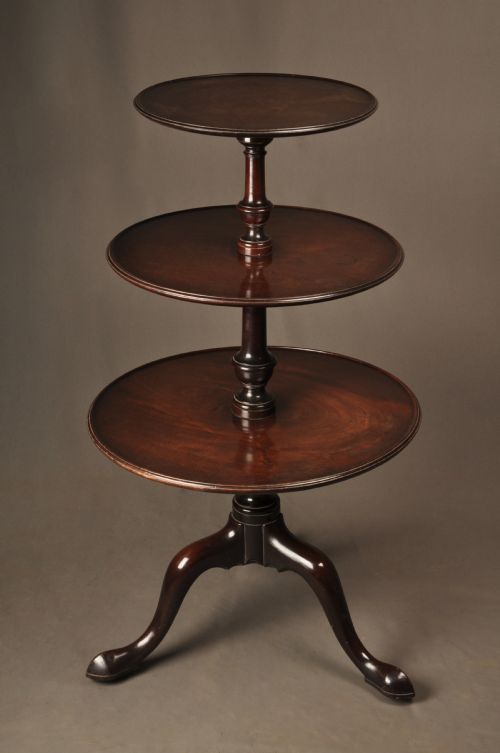
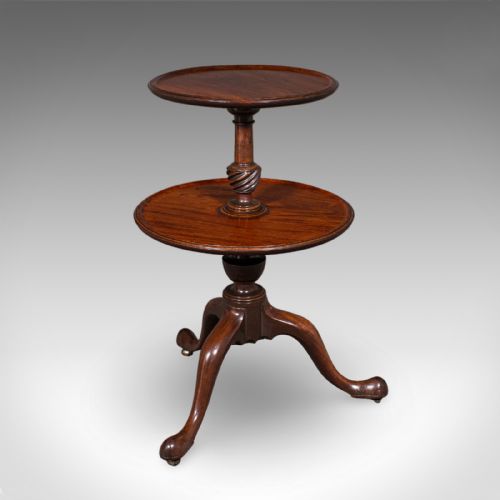


Antique Tripod Serving Table
An antique tripod serving table provides tiered circular surfaces for dining rooms, and you will most often find mahogany dumb waiters spanning the Georgian and Regency periods.
Antique Tripod Serving Table
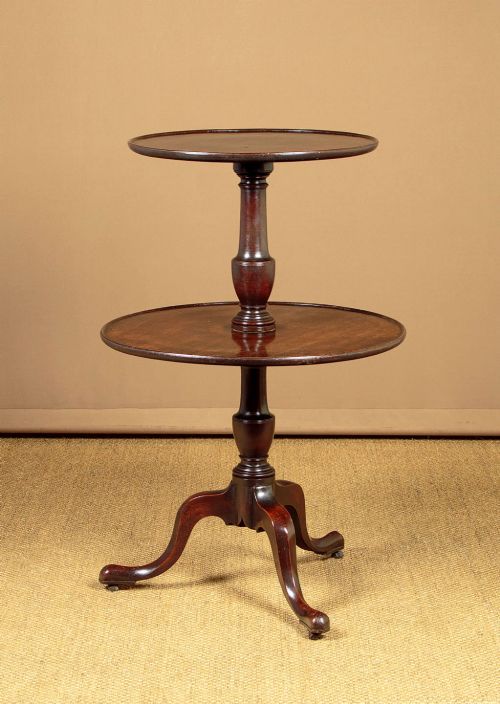
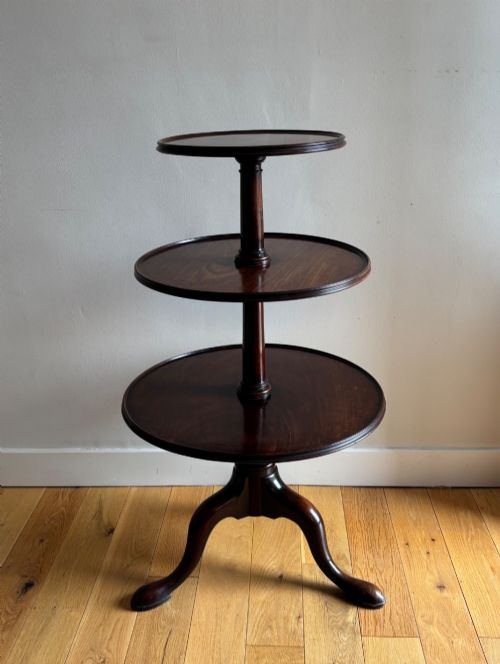
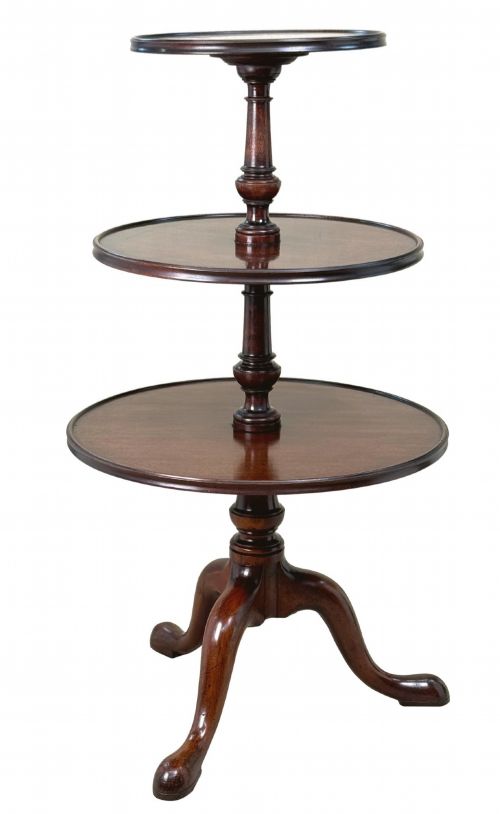
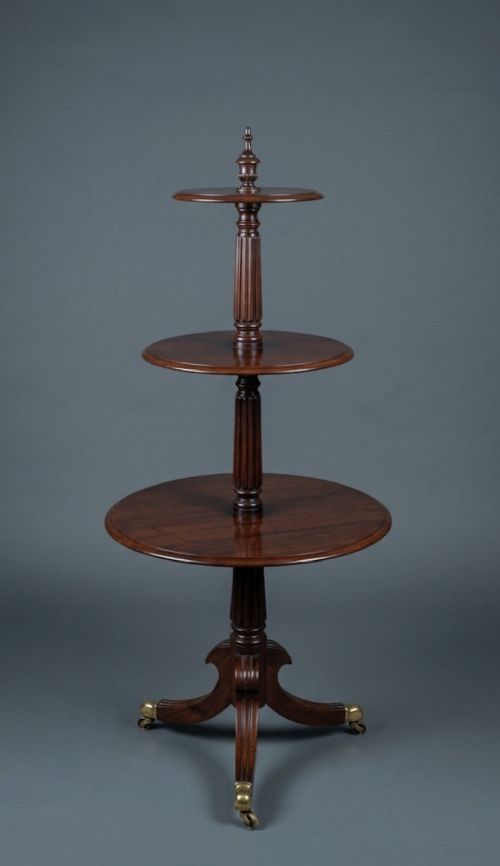
When you search for an antique tripod serving table, you are looking at graduated tiered stands designed to hold food, wine and glass without the need for hovering servants. The pieces on this page are predominantly mahogany dumb waiters originating from the eighteenth and nineteenth centuries, taking the form of multi-tiered circular trays mounted on a central pillar supported by three legs.
You will encounter two-tier and three-tier examples, some featuring revolving trays, drop-leaves or folding sides for convenient storage when not in use. Styles range from restrained George II and George III proportions to grand Regency designs and traditional country interpretations, alongside occasional side tables and wine stands.
How they were made
Cabinet makers constructed these serving stands primarily from solid mahogany and selected mahogany veneers, relying on dense grain for structural stability in the central pillars and slender tripod legs. Brass fittings such as castors and column catches appear frequently, adding functional mobility and secure tier locking mechanisms to the heavier multi-tiered pieces.
Joinery techniques focused on balancing the weight of stacked serving trays above a narrow three-way base, utilising strong column mounts and stable leg junctions. Turning and hand-carving shaped the central pedestals and transitional rings, while specialised hinges enabled the folding sides and drop-leaf mechanisms seen on adaptable dining room pieces.
Early dining etiquette demanded silent service, making a smoothly revolving mahogany tray the eighteenth-century equivalent of modern convenience engineering.
What varies in quality
Quality in these pieces depends heavily on the proportion and balance of the stacked tiers in relation to the supporting tripod base. Finer examples display harmonious tier graduation, crisp turning on the central pillar, and robust leg attachments that prevent the stand from wobbling when loaded with heavy tableware.
The choice of timber grain and the precision of mechanical actions, such as smooth-revolving trays or tightly fitted folding leaves, separate standard utility pieces from higher-status dining room furniture. Original brass castors, clean edge mouldings and well-preserved structural integrity further define the upper tier of the range.
Gillows
The Antique Tripod Serving Table Glossary
- Dumb waiter
- A tiered serving table designed to hold dishes, glasses and bottles independently of human servants during a meal. These pieces typically feature two or three graduated circular trays mounted on a central pillar.
- Tripod base
- A supporting stand composed of three diverging legs attached to a central column. This arrangement ensures stability on uneven dining room floors while allowing maximum legroom for diners seated nearby.
- Drop-leaf
- A hinged section of a table top that can be folded down when not in use to save space. On serving stands, this mechanism allows the outer leaves of the trays to drop vertically.
- Bain marie
- A heated container used to keep food warm during service. The listings include copper examples designed for tabletop food warming.
- Whatnot
- A set of open shelves standing on legs, used for displaying or storing small items. These utility pieces share functional similarities with tiered serving stands.
Antique Tripod Serving Table: Frequently Asked Questions
What is an antique tripod serving table used for?
These pieces served as auxiliary dining room furniture designed to hold plates, glasses and wine bottles close to the table without requiring a servant to stand by. Diners could easily reach for secondary courses or fresh drinks from the revolving or static tiers.
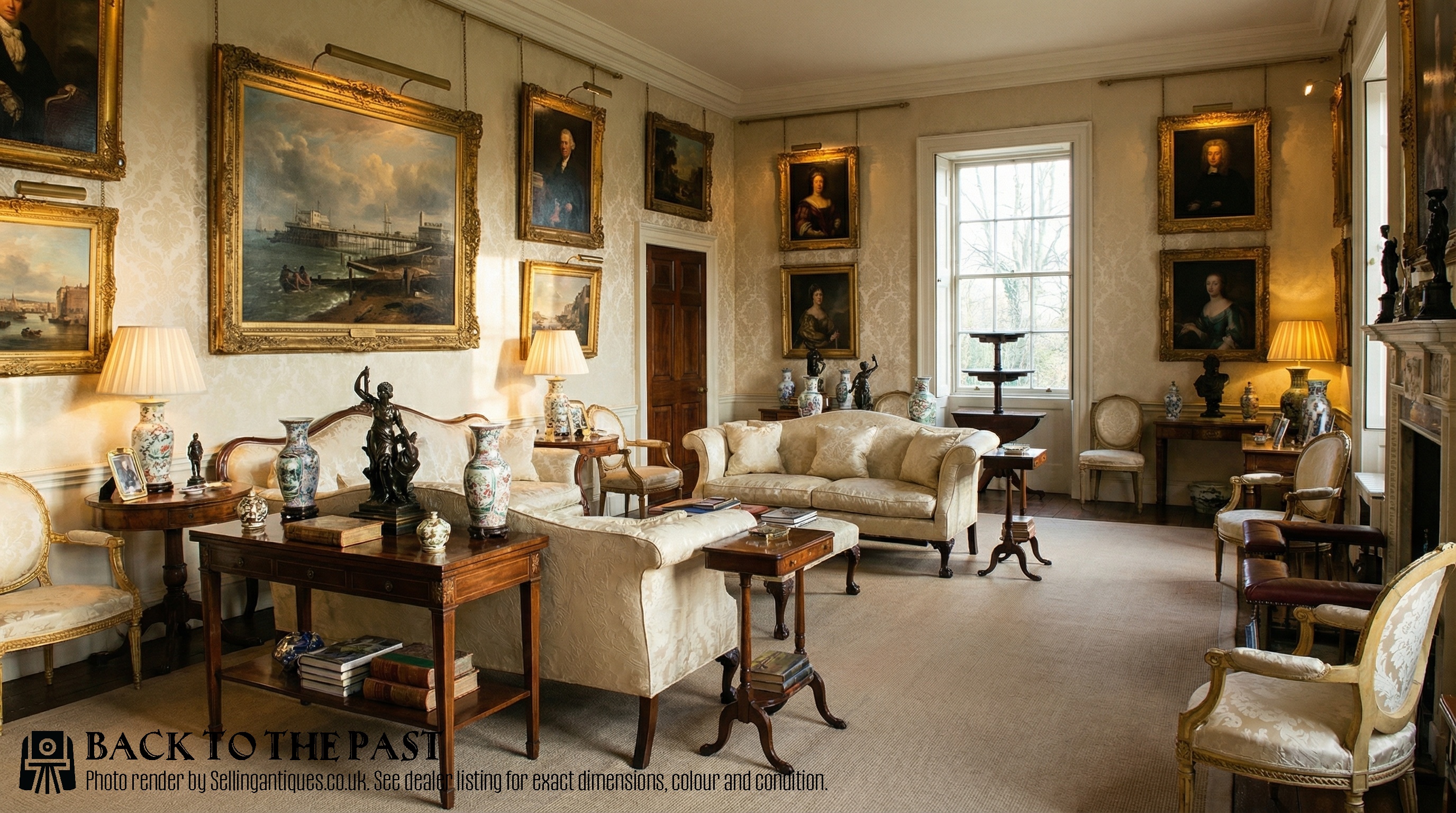
Today, they function as versatile accent tables, lamp stands or practical display pieces in living rooms and dining spaces. Their tiered construction offers significant surface area while maintaining a small floor footprint.
How do I tell a Georgian piece from a Regency one?
Georgian serving stands, particularly those from the George III period, often exhibit classic proportions, subtle carving on the central pillar, and refined tripod legs terminating in pad or spade feet. Mahogany surfaces display a warm, mature patina developed over centuries of use.
Regency pieces tend to embrace bolder classical influences, occasionally featuring grander proportions, heavier reeded columns, or more pronounced brass mounts and castors. Cabinet makers during this later era also introduced clever folding mechanisms and distinct pillar configurations.
Why do some tiers revolve?
Revolving tiers allowed diners seated around a table to spin the trays and access dishes or bottles without needing to stand up or lean across other guests. This clever mechanical feature made self-service during formal meals remarkably efficient.
Not all models rotate, as static two and three-tier stands were equally common for corner placement or static side service. The presence of a revolving mechanism usually adds versatility to how the piece can be utilised in a modern room.
How do I care for a mahogany serving stand?
Protect the polished wood surfaces by avoiding direct sunlight, which can fade the rich mahogany colour and dry out the antique finish. Use coasters under drinks and felt pads beneath heavy decorative objects to prevent ring marks and surface scratches.
Feed the timber periodically with appropriate wax polish to maintain its natural lustre and protect the grain. Ensure the central pillar and leg joints remain stable by lifting rather than dragging the table when moving it across a room.