

Georgian Drop Desk
A georgian drop desk brings domestic writing surfaces into period interiors with hinged lids and fitted compartments.
Georgian Drop Desk
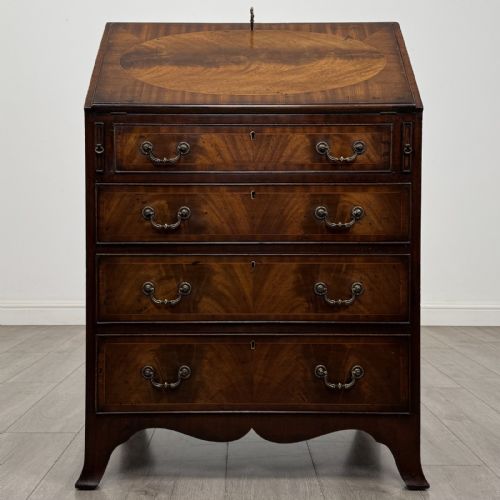
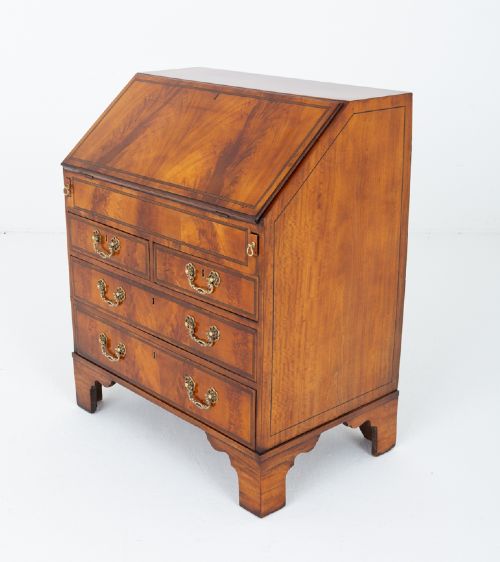
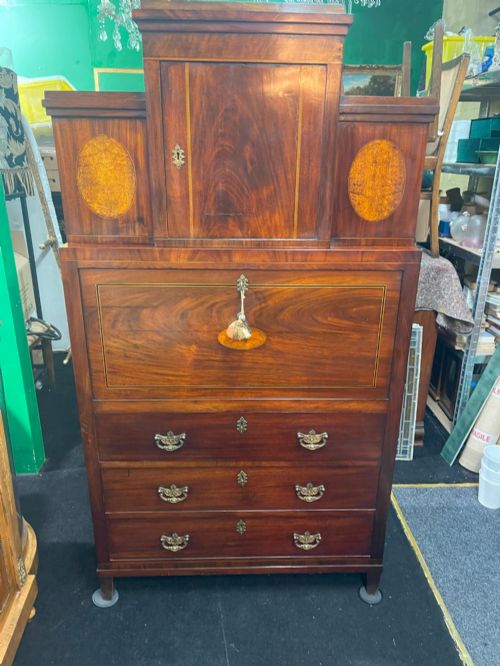
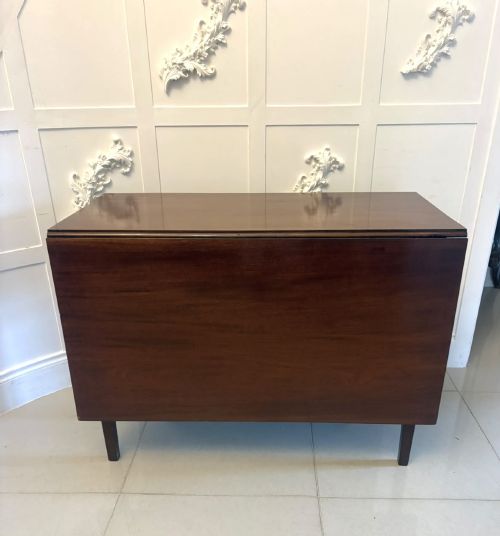
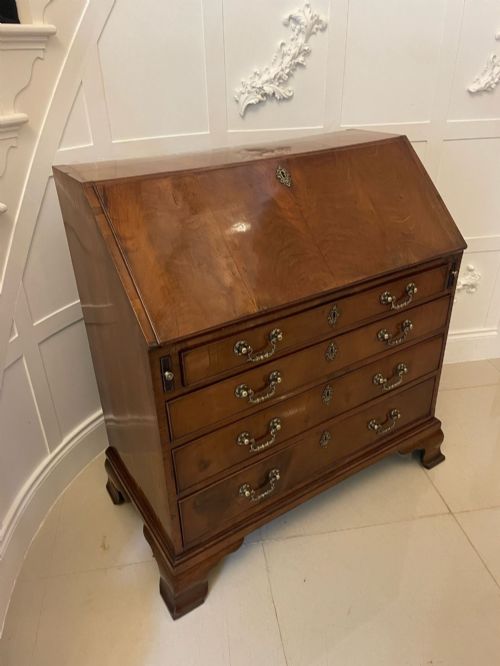
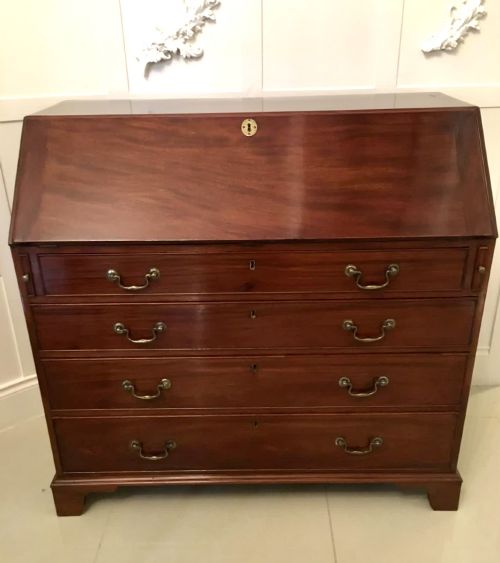
A georgian drop desk encompasses forms designed for written correspondence and document storage across the eighteenth century and subsequent revival periods. These pieces appear most frequently asbureaux with fall-front flaps that open to reveal small drawers and pigeonholes.
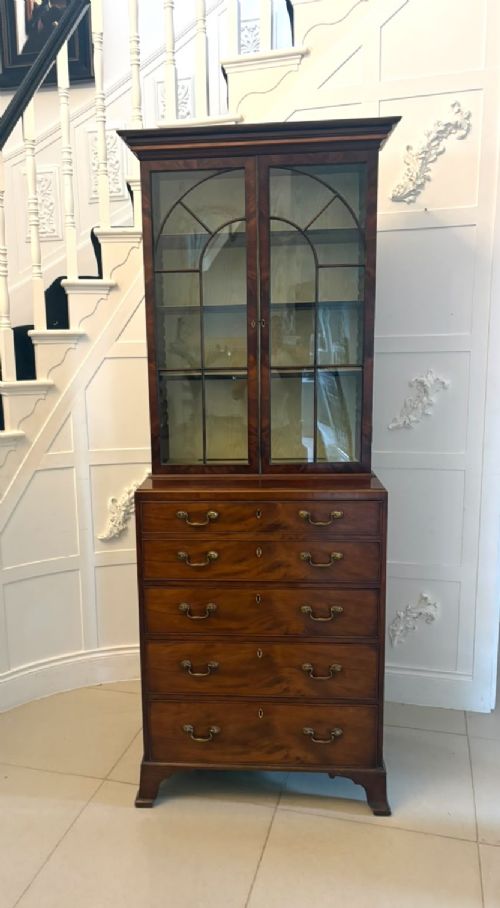
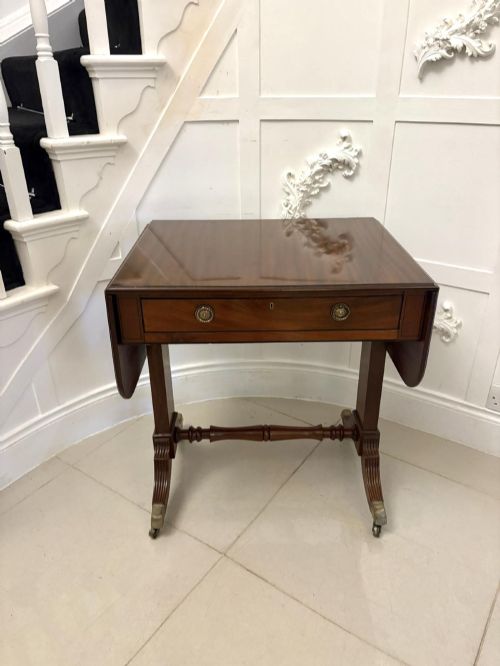
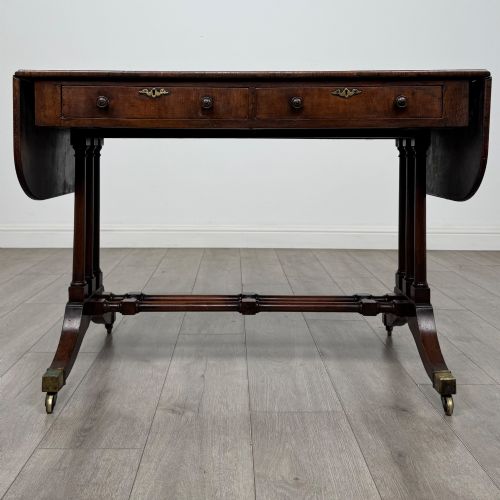
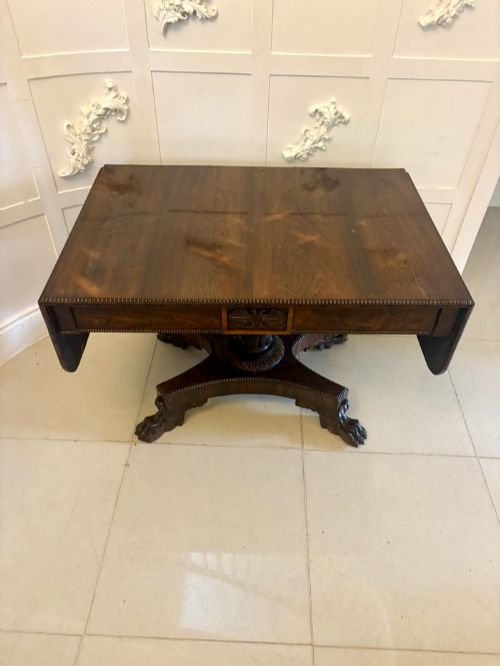
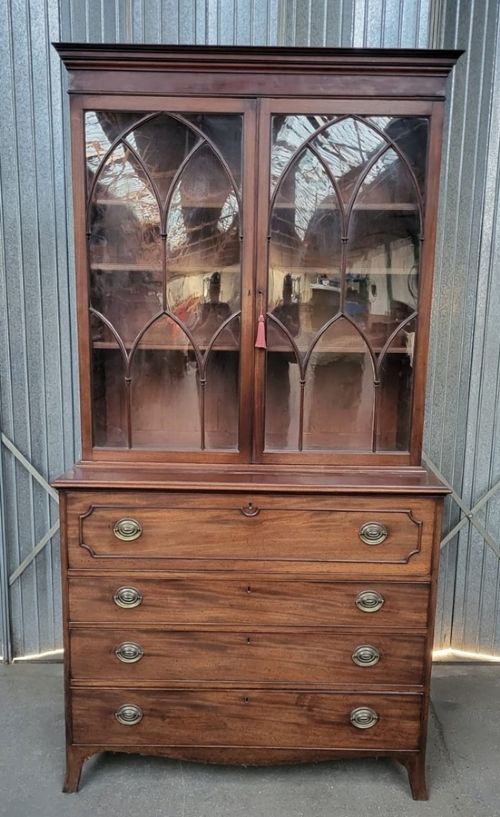
The material record on this page spans solid mahogany, walnut, and burr walnut, alongside rosewood and oak. Surviving examples range from compact seventeenth-century walnut escritoires to substantial George III bookcase combinations and freestanding sofa tables.
Buyers encounter regional variations and stylistic revivals extending from William and Mary and Queen Anne influences through to Edwardian interpretations. The core function remains the provision of a concealed writing surface that folds away when not in use.
Materials and Construction
Cabinetmakers utilised dense native and imported timbers, pairing solid carcases with decorative veneers such as burr walnut and flame mahogany. Crossbanding and herringbone inlay frequently frame the primary surfaces of drawer fronts and writing flaps.
Internal partitions and small drawers require precise dovetail joinery and thin secondary woods like oak or pine. Brass hardware including drop handles, escutcheons, and hinges secures the working components and supports the folding writing slope.
Current listings feature pieces spanning the seventeenth, eighteenth, nineteenth, and twentieth centuries, constructed in mahogany, walnut, rosewood, oak, and brass.
Assessing Quality and Execution
The distinction between tiers rests upon the selection of timber figure, the crispness of internal drawer pigeonhole architecture, and the integrity of the original carcase. Finer examples display continuous grain matching across drawer fronts and sophisticated marquetry or inlay work.
Structural refinement shows in the thickness of solid timber drawer linings and the subtlety of edge moulding. Lower tiers often involve later alterations or replacement brassware that disrupts the historical harmony of the piece.
The Georgian Drop Desk Glossary
- Bureau
- A desk featuring an angled or horizontal hinged writing flap that conceals an interior arrangement of small drawers and pigeonholes. This form serves as the primary writing desk type in eighteenth-century domestic interiors.
- Fall Front
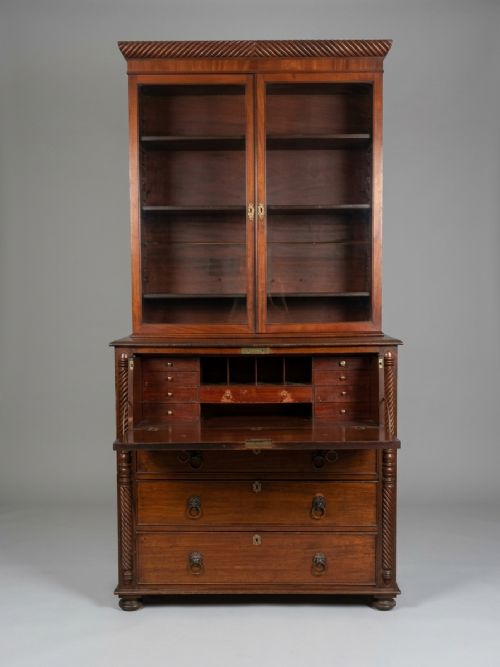
- A hinged writing panel that drops forward into a horizontal position to form the desk surface. When closed, it protects the inner stationery compartments.
- Secretaire Bookcase
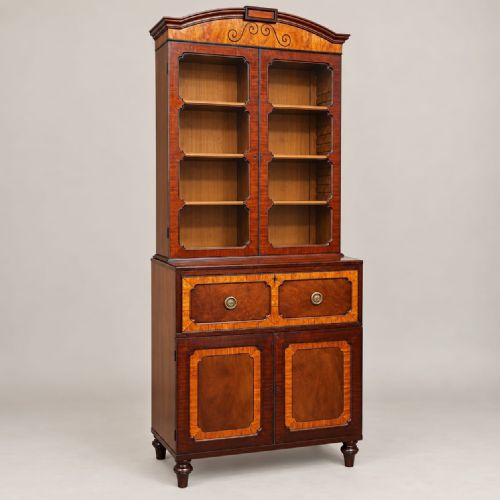
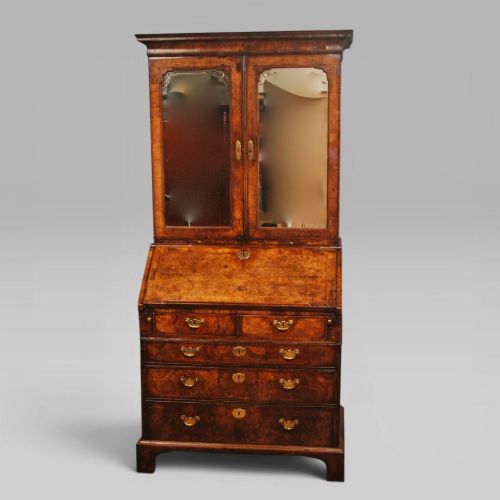
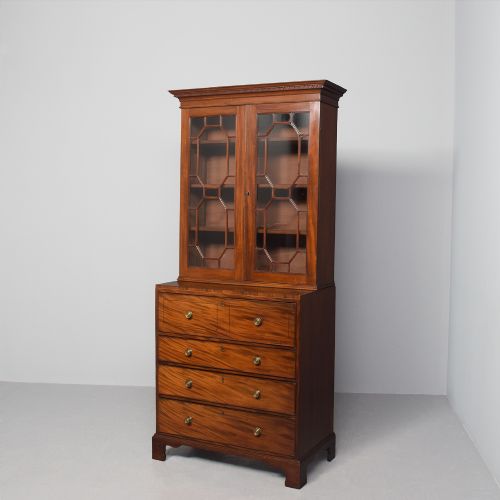
- A tall dual-purpose cabinet combining a dedicated writing drawer or fall-front desk compartment with upper glass-fronted shelving. These pieces dominate the larger scale of study and library furniture.
- Escritoire
- A writing cabinet or desk, often originating in the late seventeenth or eighteenth century, featuring a drop-down writing surface. The term derives from the French root for writing.
- Crossbanding
- A decorative border technique where thin strips of veneer are laid with the grain running perpendicular to the main panel. This frames drawer fronts and writing surfaces with contrasting timber figure.
Georgian Drop Desk: Frequently Asked Questions
What is a georgian drop desk?
A georgian drop desk is a writing cabinet featuring a hinged fall-front panel that lowers to create a flat writing surface. Inside, small drawers and pigeonholes organise correspondence and writing materials.
These pieces reflect the domestic habits of the eighteenth century, serving as private spaces for letter writing and document storage before the widespread use of dedicated study rooms.
How do I use a drop desk?
To use the desk, unlock and lower the hinged fall-front flap so it rests horizontally on wooden supports or quadrant stays. This reveals the internal stationery compartments for daily writing tasks.
When writing is complete, secure loose papers inside the internal compartments and lift the flap back to the vertical position to conceal the workspace.
How do I identify a Georgian period piece?
Identification relies on examining timber selection, construction methods, and hardware styles characteristic of the eighteenth century. Walnut, mahogany, and oak predominate, joined with hand-cut dovetails and traditional cabinetmaker techniques.
Stylistic cues such as bracket feet, interior pigeonhole layouts, and crossbanded veneers help distinguish authentic period furniture from later nineteenth-century revivals.
Where does a drop desk fit best?
These desks suit studies, living rooms, and reception spaces where a compact surface for occasional writing is required. Their vertical orientation saves floor space while offering substantial storage capacity within the lower drawers.
Positioning away from direct heat sources and strong sunlight protects walnut and mahogany veneers from drying and fading over time.