
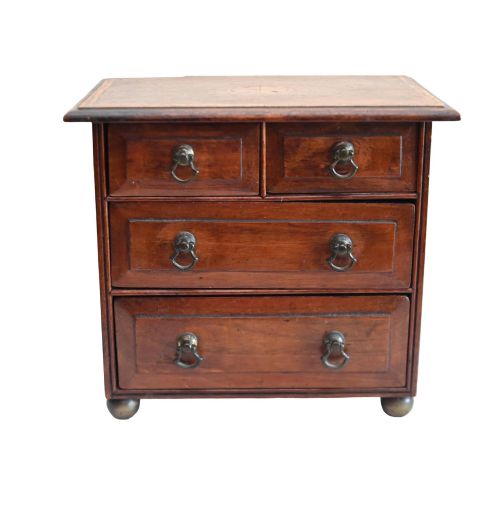
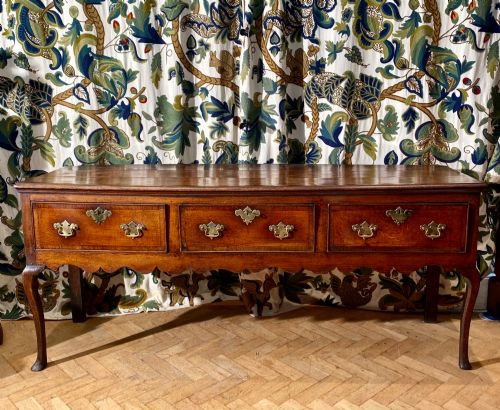
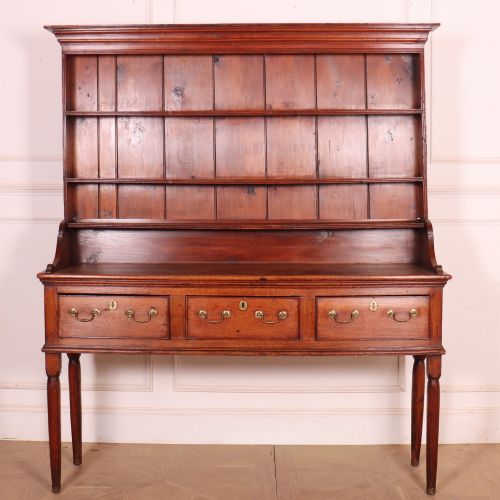
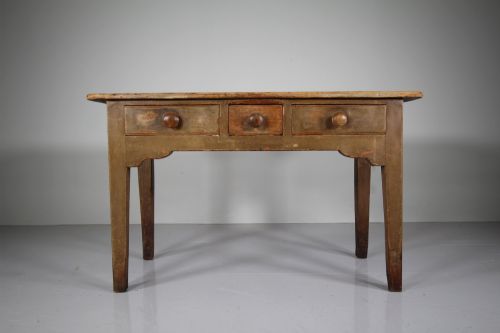
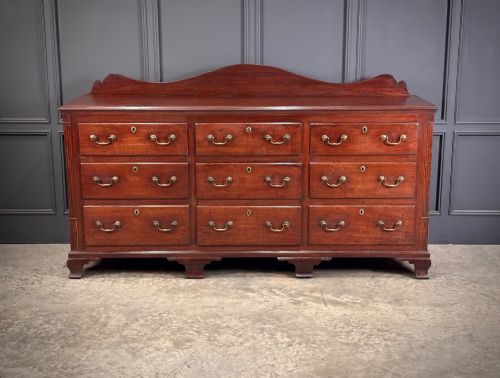
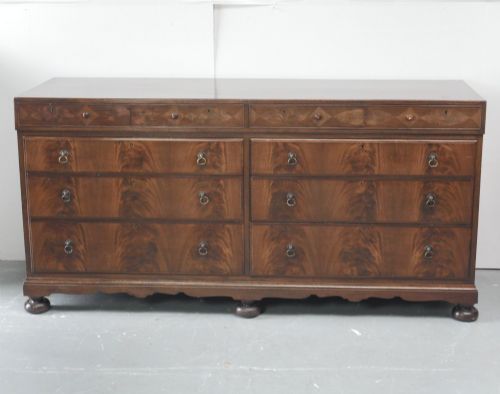
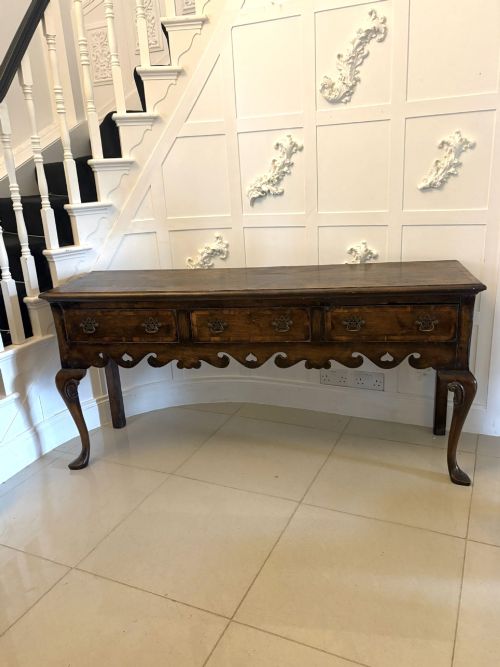
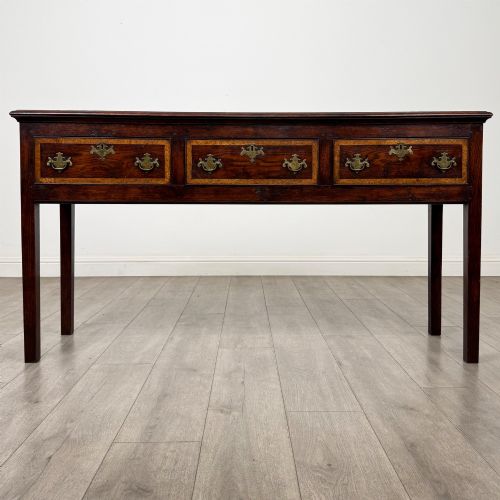
Georgian Drawer Sideboard
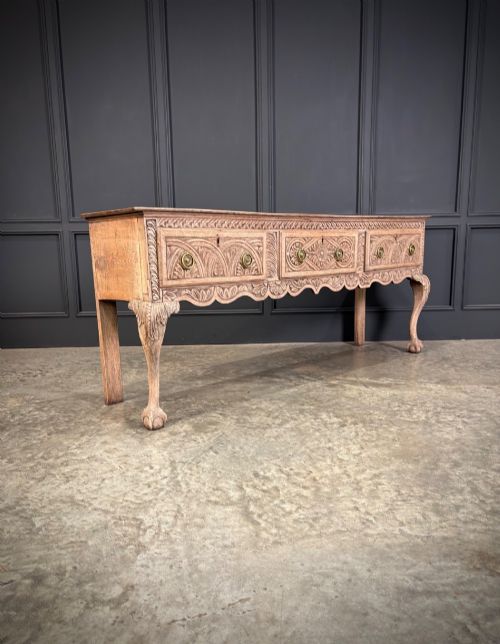
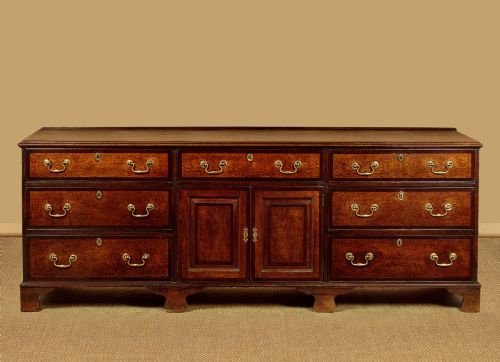
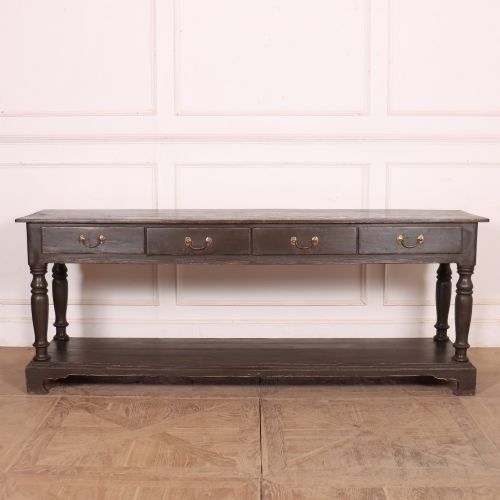
A georgian drawer sideboard brings sturdy timber and practical storage into a room, offering surface space and deep drawers built for daily use.
Georgian Drawer Sideboard
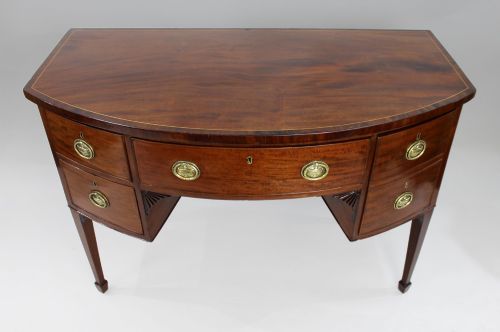
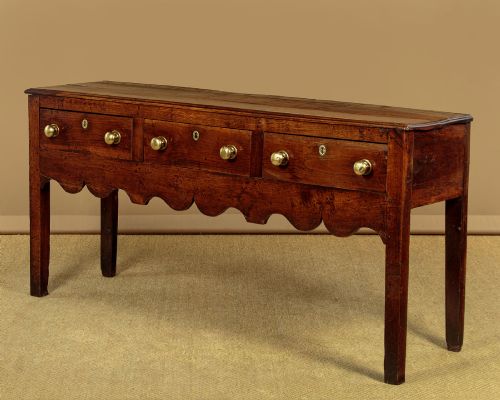
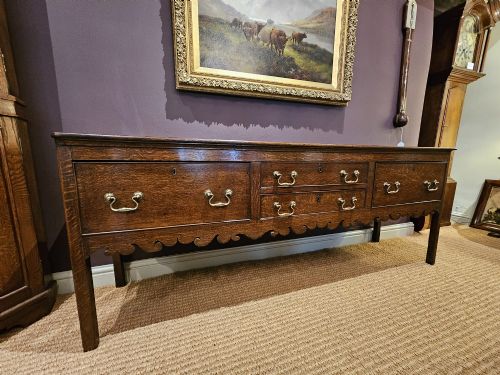
A georgian drawer sideboard encompasses heavy timber storage units, dresser bases, and serving tables originating mainly from the eighteenth and nineteenth centuries.
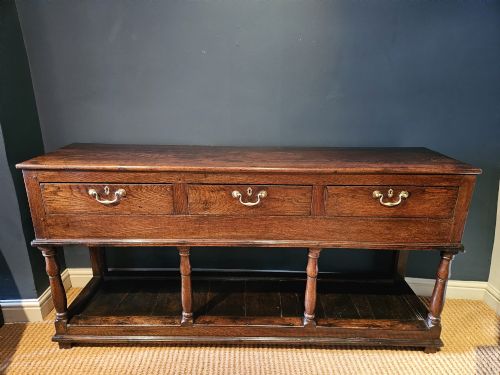
The version most commonly met on this page is the oak or mahogany dresser base, featuring rows of functional drawers above open potboards or closed cupboards.
These items originate from English and Welsh provincial workshops, built primarily to serve country houses and domestic kitchens before evolving into more formal dining room furniture.
Materials and construction
Cabinet makers built these pieces using solid local timbers like oak and fruitwood alongside imported mahogany and walnut for finer urban commissions.
Joinery relied on traditional pegged mortise and tenon frames for structural strength, paired with hand-cut dovetails securing the drawer boxes.
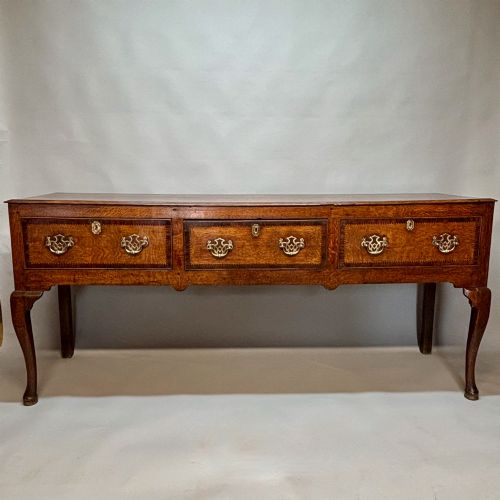
Surfaces received simple wax finishes to protect the wood, while select examples incorporated brass drop handles and decorative inlay work.
Early dairy prep tables brought the farm indoors, designed for rolling pastry and turning cheese on scrubbed sycamore tops.
Quality and construction differences
The standard of timber selection marks the primary distinction between utilitarian regional pieces and grander urban commissions, with dense grain and figured mahogany sitting at the upper end.
Construction details such as solid oak drawer linings and original brass hardware indicate higher workshop competence than later replacements or crude softwood repairs.
Proportion and surface patination dictate desirability, where crisp mouldings and undisturbed wear over centuries outweigh heavy restoration.
Whytock and Reid
The Georgian Drawer Sideboard Glossary
- Potboard
- An open lower shelf fitted beneath a dresser base for storing heavy kitchen pottery and crockery. This low platform raises items off cold stone floors.
- Dresser base
- A low wooden sideboard fitted with multiple drawers across the front, designed originally for food preparation and household storage.
- Flame mahogany
- A veneer cut from the fork of the mahogany tree where the branch meets the trunk, producing a distinctive flickering flame pattern.
- Dovetail
- A joint formed by interlocking wedge-shaped fingers, used primarily to connect drawer sides to drawer fronts with high tensile strength.
- Coffer bach
- A small Welsh chest featuring a hinged lid, often raised on a short drawer base for storing domestic linens and valuables.
Georgian Drawer Sideboard: Frequently Asked Questions
How were these sideboards used originally?
These pieces served practical roles in domestic spaces, functioning as work surfaces for food preparation and storage for serving dishes and utensils.
The drawers held cutlery and linens, while lower shelves or cupboards accommodated heavy crockery and provisions.
Where should I place a dresser base at home?
A dresser base fits well in a dining room as a serving surface or in a hallway to provide substantial storage beneath a mirror.
Kitchens also suit these sturdy wooden items well, offering deep drawers and surface space that handle heavy everyday use.
How do I care for antique timber surfaces?
Protect the wood by applying natural beeswax periodically and avoiding placement near direct heat sources or strong sunlight.
Use dry cloths for dusting and wipe up moisture immediately to preserve the historic finish of the timber.
Are these pieces made of solid wood?
Construction relies heavily on solid regional timbers like oak, fruitwood, and pine, particularly in eighteenth-century vernacular examples.
Finer nineteenth-century variations occasionally incorporate mahogany veneers applied over secondary woods to display decorative grain patterns.