

Georgian Dining Room Chairs
Georgian dining room chairs offer solid mahogany frames and traditional styling that anchor a formal dining space.
Georgian Dining Room Chairs
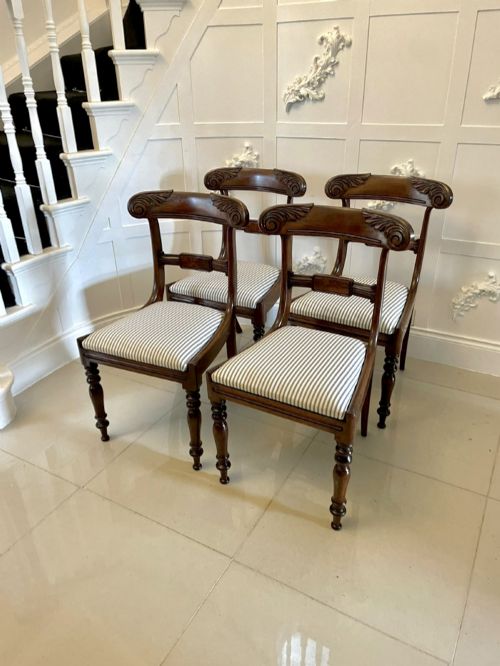
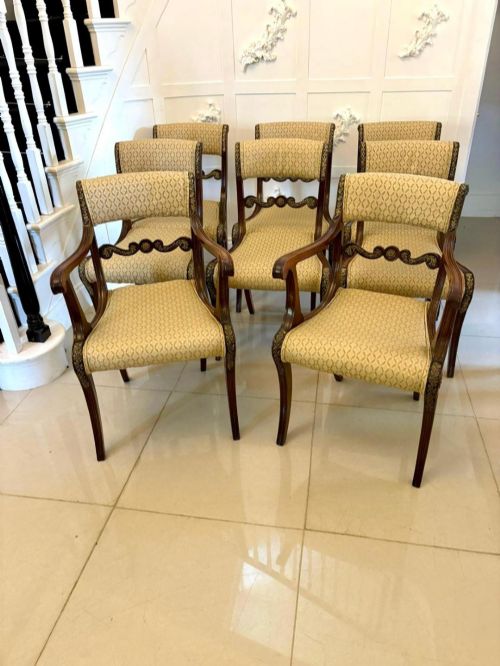
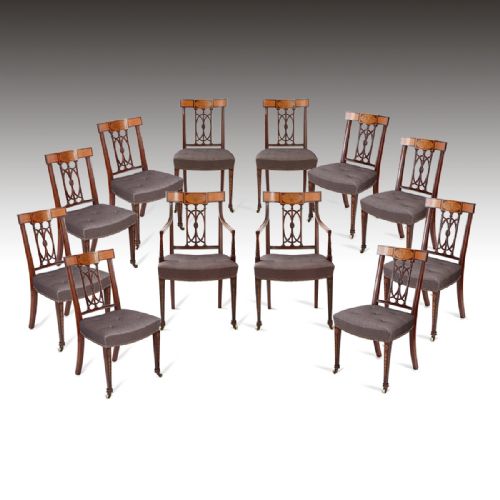
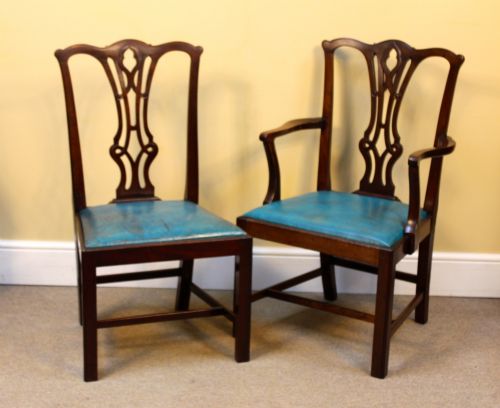
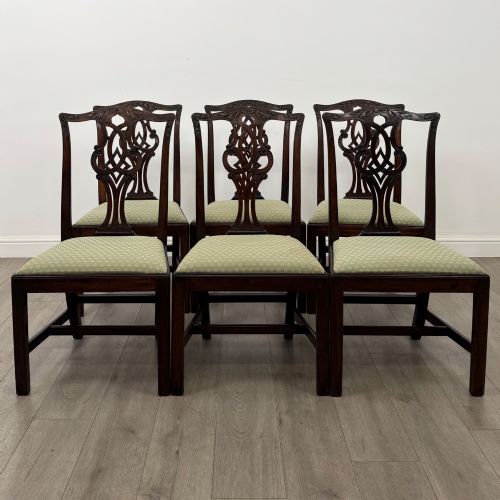
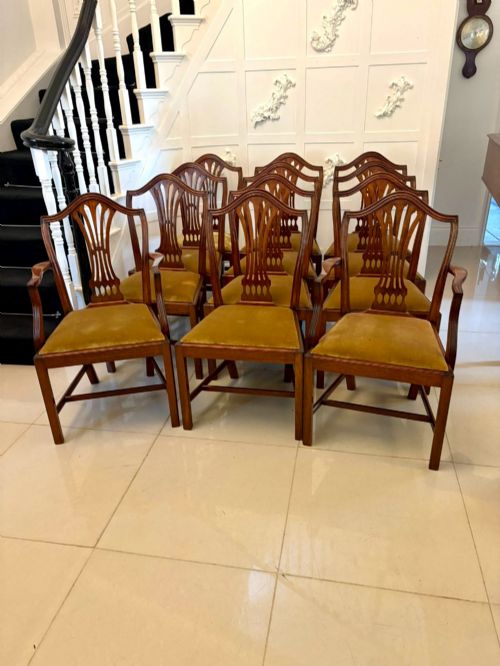
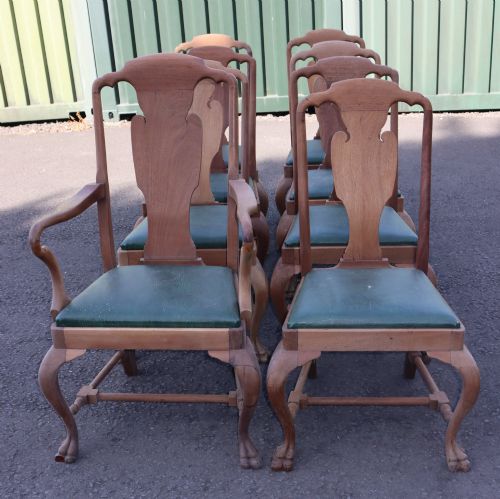
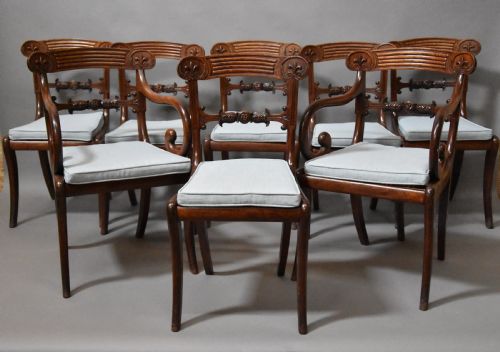
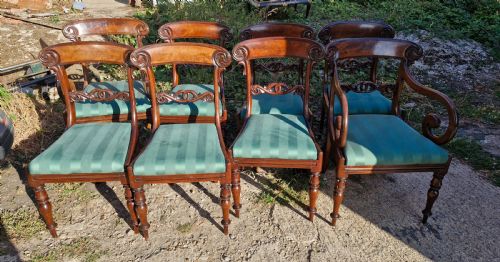
Georgian dining room chairs comprise sets of wooden seats made during the eighteenth and nineteenth centuries, alongside later revival pieces produced into the twentieth century. They take the form of dining chairs and carvers, often grouped in sets ranging from pairs up to sixteen matching seats.
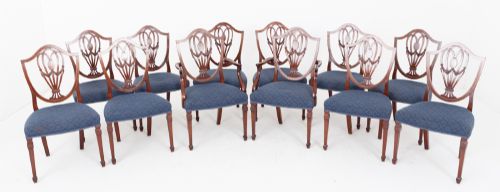
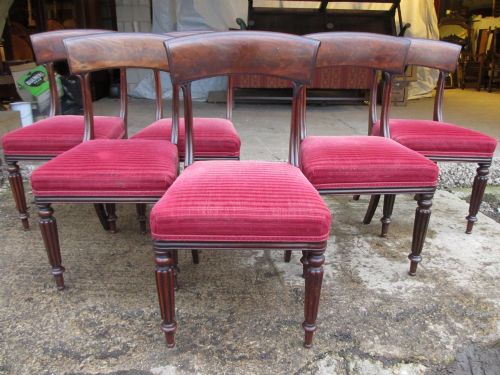
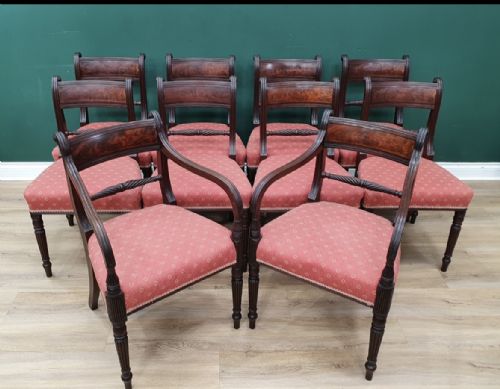
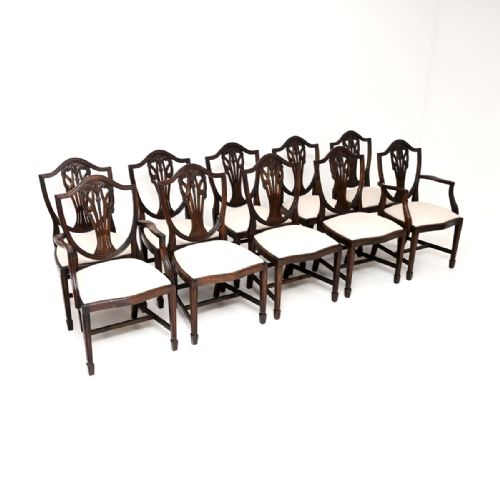
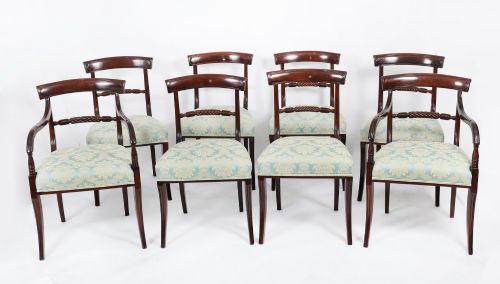
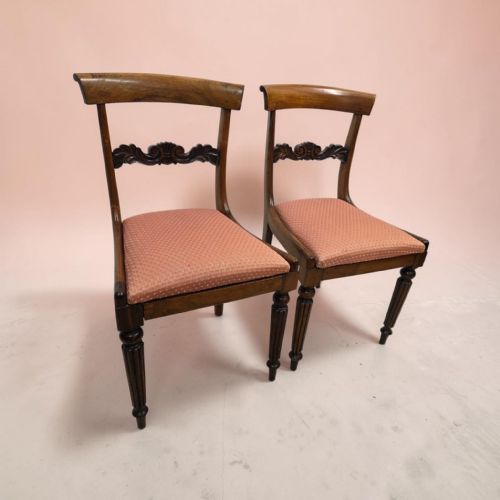
The versions most commonly met on this page belong to the Regency period and the Hepplewhite style, constructed in mahogany with upholstered seats. They appear with shield backs, bar backs, and rope backs supported by reeded legs.
The selection includes specific regional variations such as Scottish and Irish examples, as well as distinct designs associated with makers like Gillows. Buyers encounter both original eighteenth-century pieces and later twentieth-century interpretations.
How they were made
Makers relied primarily on solid mahogany, supplemented by rosewood and burr walnut in certain Regency and revival pieces. Frames utilise traditional joinery techniques to support carved details like shield backs and bar backs.
Seats incorporate fabric, leather, velvet, and textile upholstery over brass details, fixed with padding to provide a firm base for dining.
One determined dining suite gathers sixteen matching chairs to test the patience of any host.
What varies in quality
The distinction between standard dining seats and exhibition quality items rests on the depth of the carving and the uniformity of the timber selection across a large set. Sets that maintain matching grain patterns and crisp detail on every chair command greater attention.
Original condition influences the standing of a set, particularly when the frames retain their structural integrity and period upholstery materials without excessive replacement of timber components.
Gillows
The Georgian Dining Room Chairs Glossary
- Carver
- An armchair designed to sit at the head of a dining table. These match the smaller side chairs in a set.
- Bar back
- A horizontal wooden rail across the upper back of a dining chair. Regency examples frequently incorporate reeded decoration on this member.
- Reeded legs
- Chair legs carved with parallel convex mouldings that resemble parallel reeds. This detail appears widely on Regency period furniture.
- Rope back
- A chair back design incorporating carved twist motifs that resemble coiled rope. It occurs on Regency dining seats.
Georgian Dining Room Chairs: Frequently Asked Questions
How do I arrange mismatched carvers and chairs?
Place the armchairs at the head and foot of the table while lining the side chairs along the flanks.
Matching timber tones help unify sets that combine single chairs and carvers.
What is the difference between George III and Regency chairs?
George III chairs lean towards classical proportions with straight or carved legs and shield or ladder backs.
Regency seats adopt bolder classical revival forms, often featuring brass inlays, sabre or reeded legs, and bar or rope backs.
Can I use these chairs every day?
Mahogany frames provide the structural strength needed for regular daily seating around a dining table.
Periodic checks of the joinery and upholstery support will keep the frames stable through years of use.
How do I spot a revival set?
Twentieth-century revival sets often use standardised timber milling and show uniform wear patterns across all chairs.
Examine the underside of the seat rails for modern fixings and machine-cut timber marks.