


Georgian Demilune Tea Table
A georgian demilune tea table is a semicircular folding piece designed to sit against a wall before opening for evening hospitality.
Georgian Demilune Tea Table
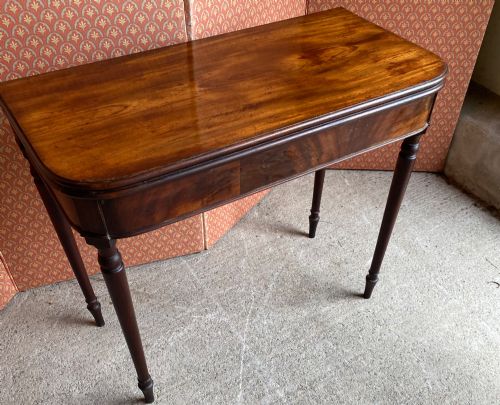
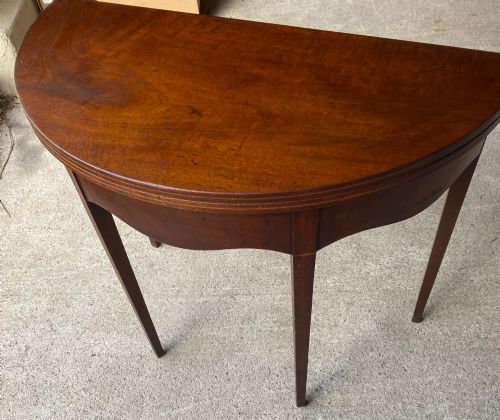
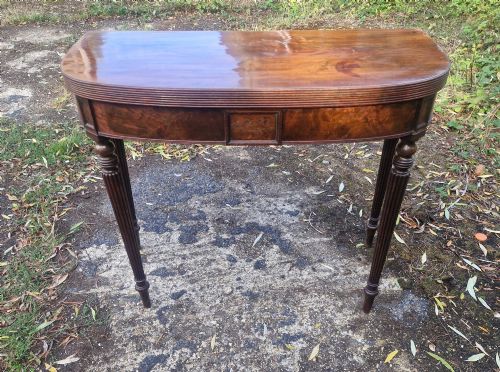
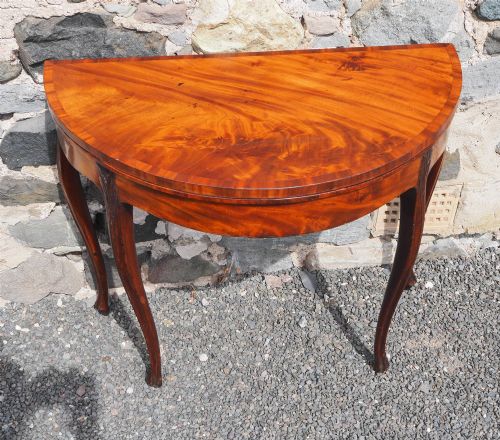
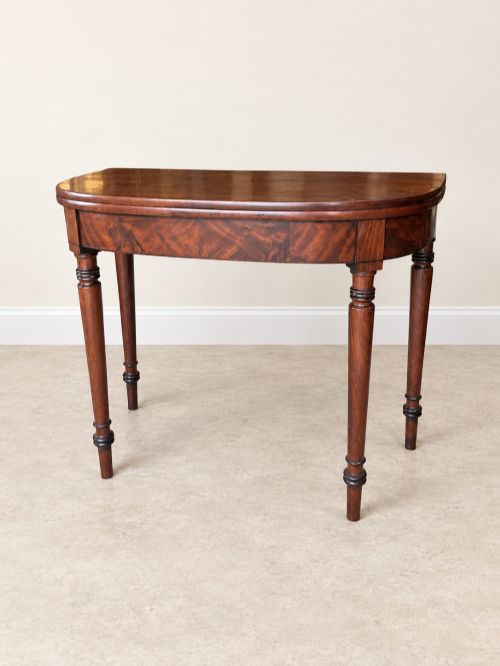
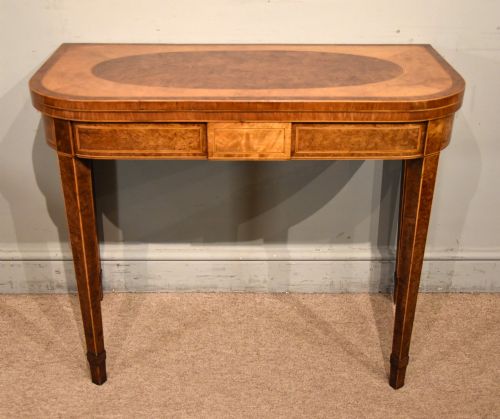
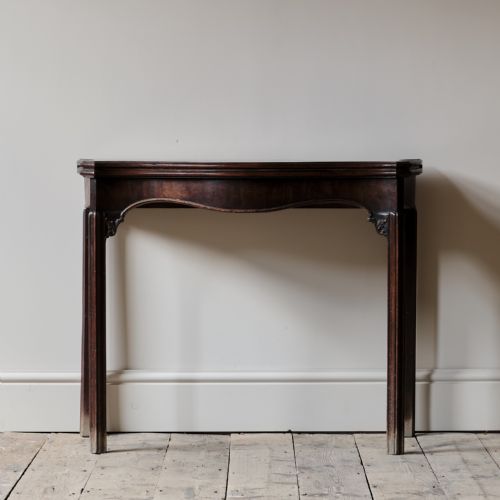
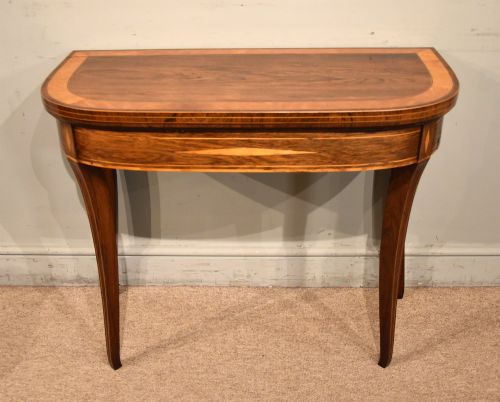
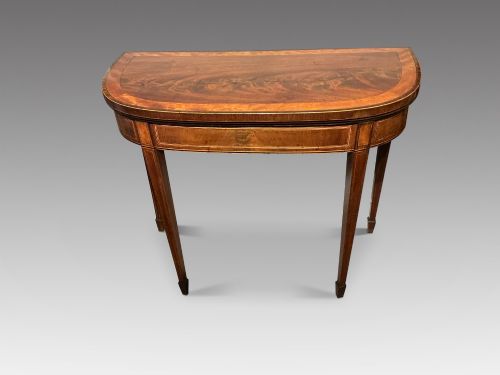
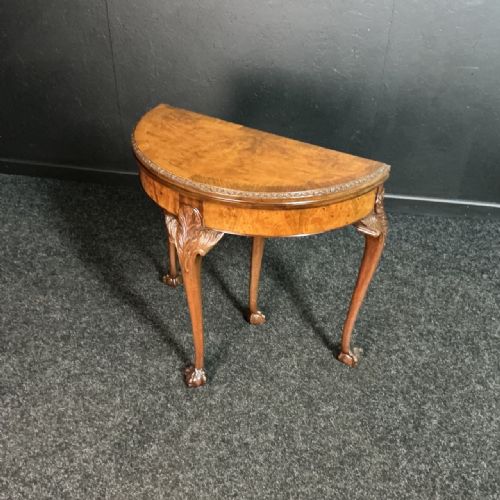
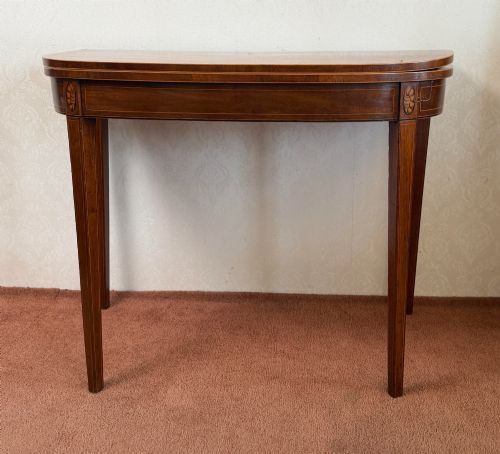
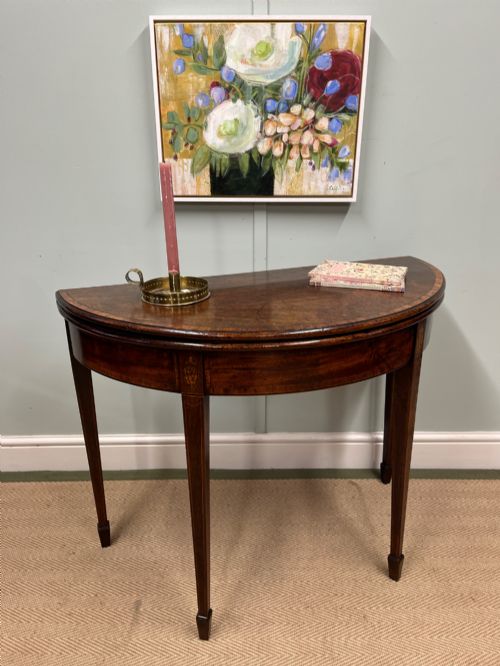
When you examine a georgian demilune tea table, you encounter a semicircular form with a hinged top that folds open to reveal a surface for social gatherings. These pieces appear frequently in mahogany and satinwood, spanning George III, Sheraton, and Regency styles alongside later revivals.
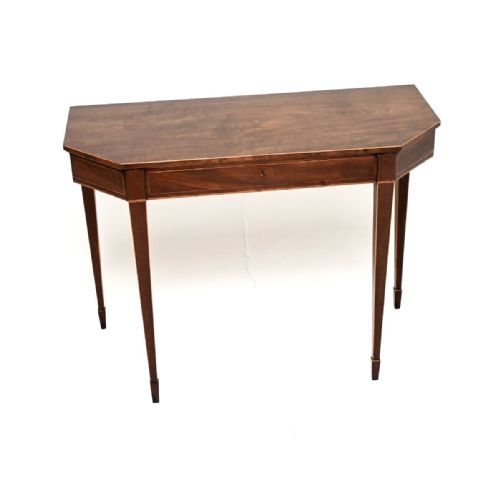
The objects listed under this term include folding side tables, card tables, and games tables sharing the characteristic D shape or half moon profile. Makers and workshops constructed them to economise on space while providing a formal centrepiece for a room.
What varies in quality
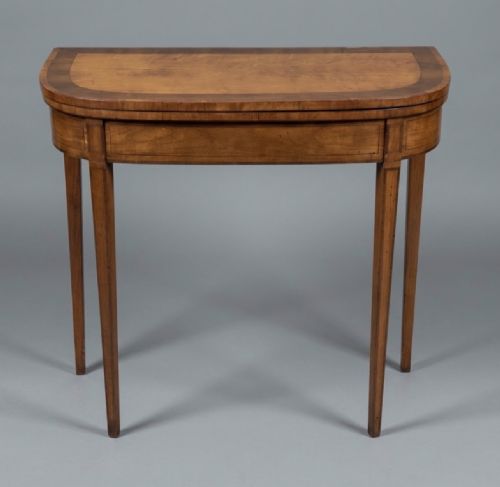
The quality of a piece rests heavily on the selection of timber, particularly the figuring visible in the mahogany or satinwood top. Subtle contrasts in wood inlay and the precision of the mitres and hinges separate standard production from exceptional examples.
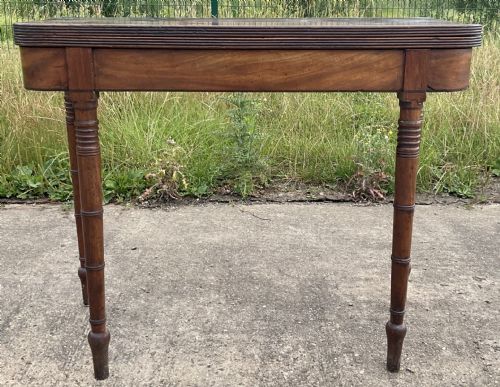
Proportion and the handling of the legs, such as Gillows style turnings or refined tapered supports, dictate the visual balance of the table. The integrity of the folding mechanism and the matching of veneer grains across the split top also influence the overall standard.
Georgian Demilune Tea Table Retail Price Guide 2026
Typical asking prices for georgian demilune tea table among the pieces listed under this phrase on Sellingantiques today, from the lower quarter to the upper quarter. They describe what is for sale here now, not the wider market.
Listings feature mahogany, satinwood, and rosewood alongside boxwood inlay and flame mahogany veneer across eighteenth and nineteenth century periods.
Bruce & Burns of Edinburgh
The Georgian Demilune Tea Table Glossary
- Demilune
- Semicircular in shape, resembling a half moon. This profile allowed tables to stand flush against a wall when closed.
- Fold over
- A hinged top design where the surface doubles in area when unfolded. This configuration transforms a console into a full table.
- Satinwood
- A yellowish exotic timber prized for its lustrous grain. Cabinetmakers used it extensively for contrasting veneers and inlay work.
- Flame mahogany veneer
- A sliced timber finish displaying a characteristic flickering flame pattern. This decorative surface adorned the tops of finer tables.
- Card table
- A folding table intended for gaming and social play. Many share the demilune format seen in tea tables.
Georgian Demilune Tea Table: Frequently Asked Questions
What is a demilune table?
A demilune table is a semicircular piece of furniture designed to sit flat against a wall. The shape provides a compact footprint when closed.
When the top is unfolded, the table reveals a larger surface suitable for tea or games. This dual nature made them practical for eighteenth and nineteenth century interiors.
How do I use one today?
These tables function well as console or side tables in hallways and living rooms. Placed against a wall with a lamp or mirror above, they occupy minimal space.
Opening the top requires care, but doing so provides a temporary table surface for entertaining. They suit both traditional rooms and contemporary settings as accent pieces.
Are these tables good for cards?
Many demilune tables double as card or games tables with folding tops. The interior surfaces sometimes feature baize or wood veneers suited for play.
Collectors find both dedicated card tables and tea tables listed under similar D shaped formats. Examining the interior reveals whether the piece was built for gaming or hospitality.
How do I date these pieces?
Dating relies on observing timber choices, leg shapes, and inlay styles characteristic of periods like George III or Regency. Mahogany and satinwood popularity shifted across the eighteenth and nineteenth centuries.
Secondary woods and construction methods also offer clues to the era of manufacture. Comparing details with documented examples helps narrow down the decade.