




Georgian Demilune Hall Tables
Georgian demilune hall tables are semi-circular timber furniture pieces designed to sit flat against an entrance wall, offering surface space without blocking narrow passages.
Georgian Demilune Hall Tables
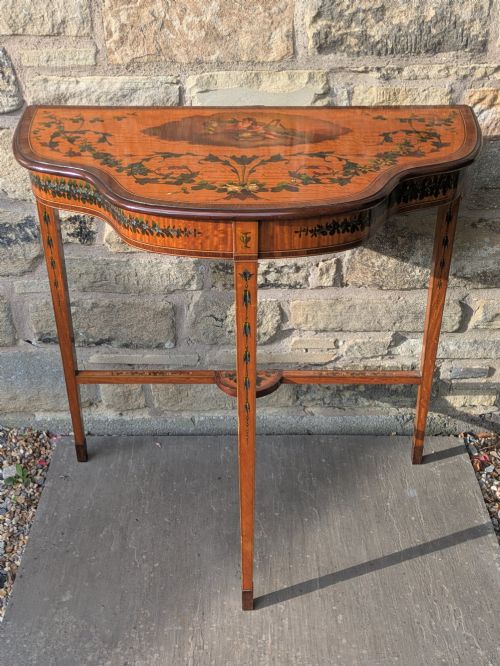
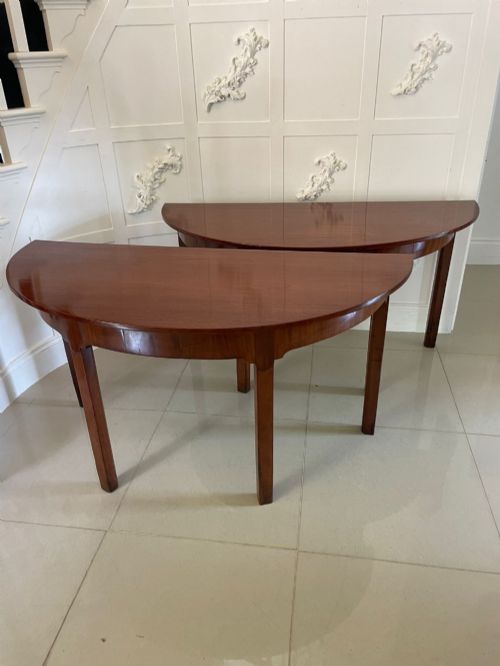
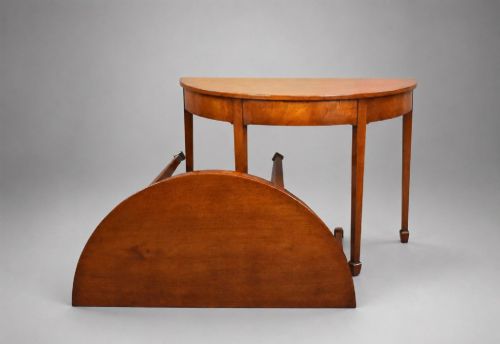
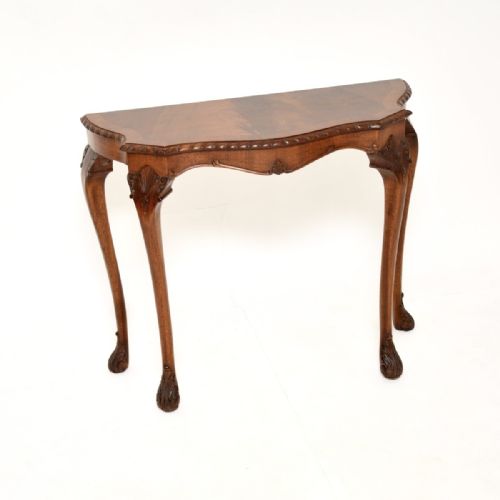
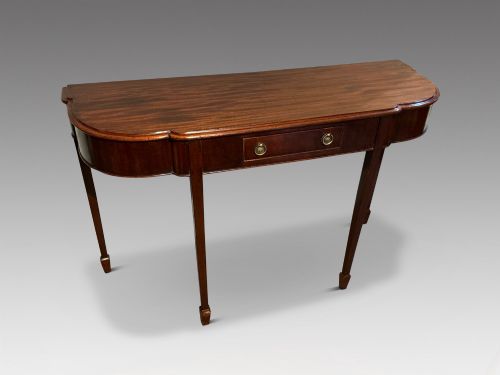
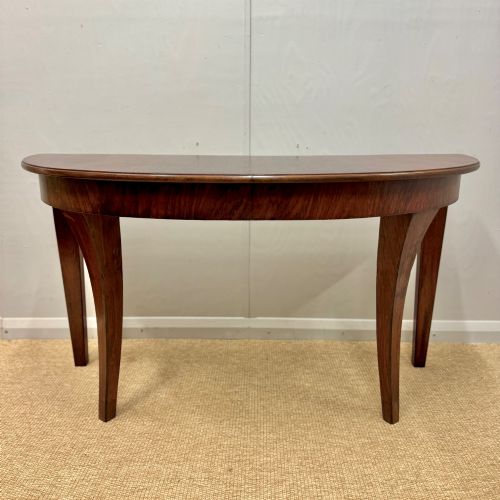
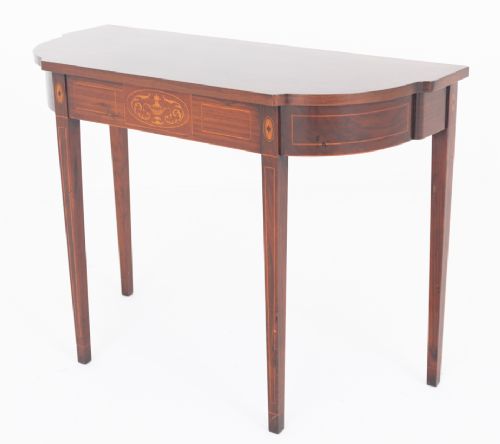
Georgian demilune hall tables are half-moon console and side tables originating primarily in the eighteenth and early nineteenth centuries. Buyers searching for georgian demilune hall tables encounter items designed to stand against entrance walls, often featuring D-shaped tops that fold out or sit flush against plaster.
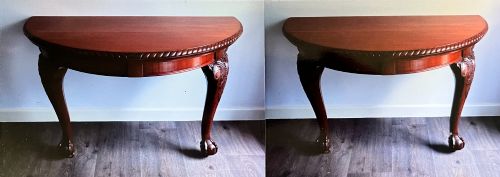
The selections span genuine Georgian pieces alongside later nineteenth-century adaptations and twentieth-century revival interpretations. Makers produced these forms as console tables, pier tables, and tea tables which function today as narrow hall furniture.
Originating largely from English workshops, the forms include single pieces and matched pairs executed in proportions suitable for compact and grand hallways alike.
Materials and Technique
Cabinetmakers constructed these pieces predominantly from solid and veneered timbers including mahogany, satinwood, walnut, and rosewood. Sections frequently incorporate contrasting woods such as boxwood for decorative stringing and inlaid borders.
Surfaces display figuration through book-matched veneers and crossbanding, supported by turned or tapering legs. Some examples incorporate marble tops set within timber frames.
Listings feature mahogany, satinwood, walnut, and rosewood alongside boxwood inlay across Georgian and later periods.
Materials and Construction
Quality rests on the selection of timber figure, such as highly figured mahogany or fine satinwood grain, paired with precise execution of boxwood inlay. The integration of secondary woods and the crispness of edge banding distinguish superior cabinetwork.
Proportion and structural integrity define the upper tier, where timber joints remain stable and the half-moon profile maintains balanced lines. Examples utilising dense hardwoods with subtle tonal contrast command greater attention from collectors.
Gillows
The Georgian Demilune Hall Tables Glossary
- Demilune
- Half-moon shape. This describes tables with a curved front and a flat back designed to stand against a wall.
- Crossbanding
- A strip of veneer applied perpendicularly to the grain of the main surface. This technique creates a distinct decorative border around the table top.
- Console table
- A table supported by wall brackets or legs. These pieces stand flush against entrance walls.
- Stringing
- Thin lines of contrasting wood inlaid into the surface. This technique forms delicate geometric borders.
Georgian Demilune Hall Tables: Frequently Asked Questions
Where do you put a demilune table?
These tables fit flat against an entrance wall where floor space is limited. Their half-moon footprint leaves walkways clear while holding lamps or small objects.
They also function in dining rooms and living spaces as pier tables beneath mirrors.
How do you date a Georgian hall table?
Dating relies on timber selection, construction methods, and leg profiles. Eighteenth-century pieces often show native mahogany and hand-cut joinery.
Later revival pieces from the twentieth century utilise different secondary woods and standardised fixings.
Can these tables hold heavy items?
Most pieces serve as decorative surfaces for lamps, trays, and letters. Their narrow frames and delicate legs suit moderate weights rather than heavy loads.
Items with marble tops offer sturdier surfaces for display.