





Georgian Demi Lune Furniture
Georgian demi lune furniture comprises half-round tables and cabinets designed to hug a wall and bring architectural elegance to a room.
Georgian Demi Lune Furniture
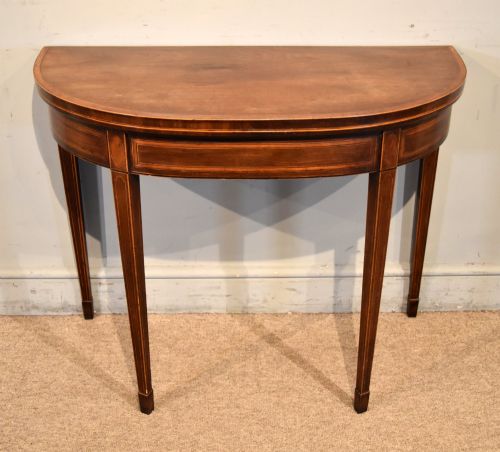
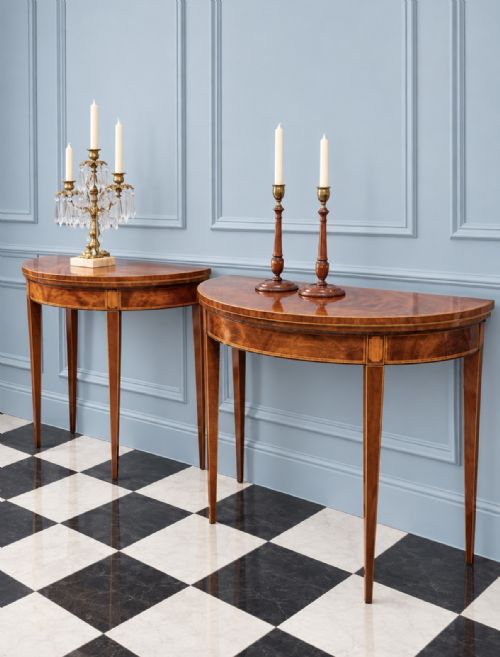
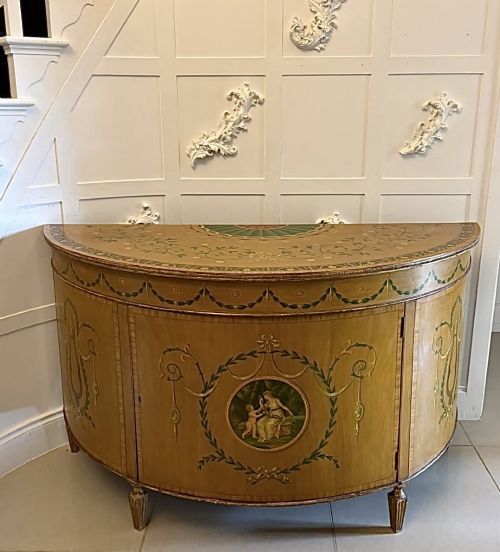
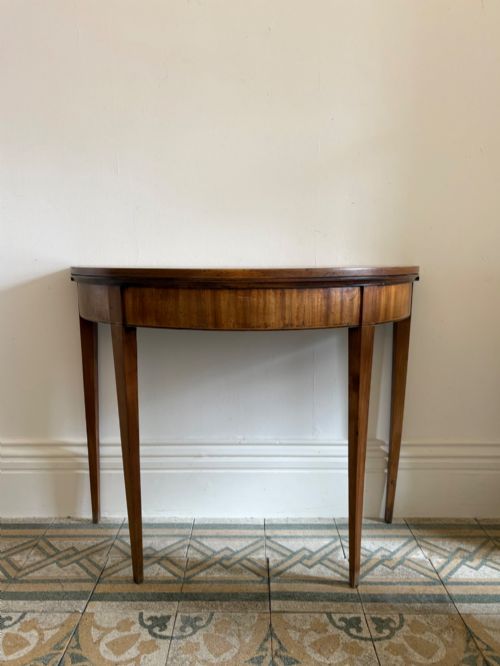
Georgian demi lune furniture brings the distinctive half-circle footprint of the late eighteenth century into homes through console tables, card tables, and commodes. When searching for georgian demi lune furniture, buyers encounter forms that range from fold-over games tables to painted satinwood side cabinets.
The pieces appearing in this selection span authentic eighteenth-century examples to later revival interpretations from the Victorian and Edwardian eras. Console tables and commodes dominate the forms, offering shallow profiles that suit hallways and principal reception rooms.
How they were made
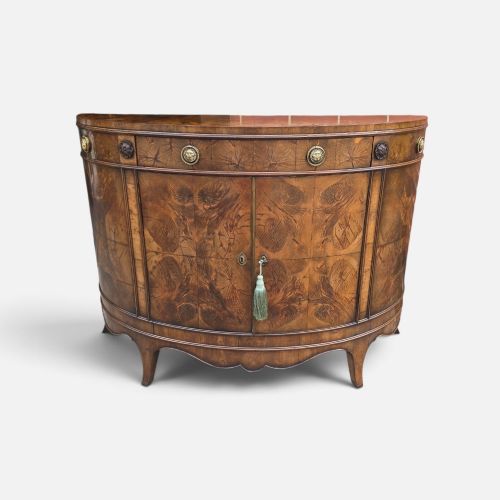
Cabinetmakers utilised rich primary timbers like mahogany and satinwood, frequently paired with contrasting stringing in boxwood to outline the curved tops and legs. Burr elm and burr yew provide striking natural grain patterns across larger cabinet surfaces.
Sophisticated decoration includes hand-painted classical panels, marquetry motifs, and intricate crossbanding. Structural integrity relies on precision joinery suited to the demanding radius of a half-round frame.
Georgian Demi Lune Furniture Retail Price Guide 2026
Typical asking prices for georgian demi lune furniture among the pieces listed under this phrase on Sellingantiques today, from the lower quarter to the upper quarter. They describe what is for sale here now, not the wider market.
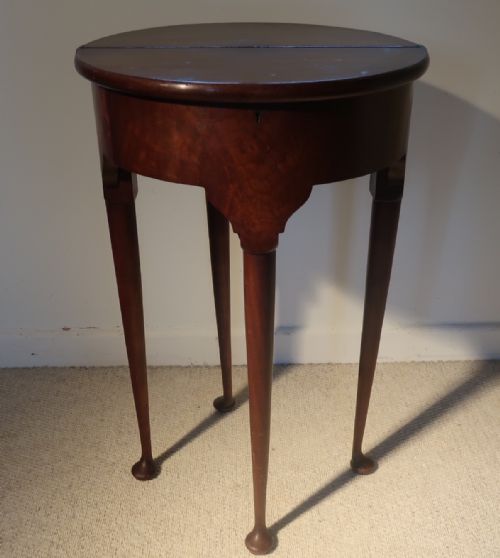
Several tables cleverly double their surface area with a folding top, ready to host an impromptu card game at a moment's notice.
What varies in quality
The refinement of the painted decoration and the intricacy of the marquetry distinguish exceptional pieces from standard workshop output. Hand-painted classical motifs executed with precision carry greater artistic merit than simpler surface treatments.
The choice of timber figure, such as highly figured mahogany or burr yew wood, dictates the visual impact of the piece. Superior construction is evident in the seamless movement of fold-over mechanisms and the stability of curved veneered aprons.
The Georgian Demi Lune Furniture Glossary
- Demi-lune
- French for half-moon, describing the semicircular shape typical of these tables and cabinets. This design allowed furniture to stand flat against a wall while projecting a graceful curve into the room.
- Marquetry
- The art of applying pieces of veneer to a structure to form decorative patterns and pictures. Craftsmen used various coloured woods to create detailed classical scenes and urn motifs.
- Satinwood
- A durable, lustrous timber imported from the tropics, prized for its golden yellow sheen. It became the favoured canvas for painted neoclassical decoration during the Sheraton period.
- Crossbanding
- A strip of veneer applied to the border of a table top or drawer front with the grain running perpendicular to the main surface. This technique creates a distinct visual frame around the curved edge.
- Console table
- A table fixed to a wall or designed to stand flat against it, supported by legs at the front. In demi lune forms, this shape provides a shallow surface for display without obstructing circulation.
Georgian Demi Lune Furniture: Frequently Asked Questions
Where should I place a demi lune table?
These half-round pieces suit entrance halls, narrow corridors, and drawing rooms where deep furniture would block movement. Their flat backs sit flush against the wall while the curved front softens the geometry of the space.
They function effectively beneath mirrors or paintings, serving as display surfaces for lamps, ceramics, or decorative objects without dominating the room.
How do I use a fold over card table?
Fold-over card tables feature a hinged top that opens outward to double the surface area for playing games. A concealed leg or gate-leg action swings out from the frame to support the opened leaf safely.
When closed, the table reverts to its compact demi lune shape against the wall, serving as a side table or console.
What is the difference between Georgian and revival pieces?
Authentic Georgian pieces date from the eighteenth century or the early nineteenth century, displaying the proportions and construction methods of the period. They often show natural wear and patination accumulated over generations.
Revival pieces, produced during the Victorian or Edwardian eras, emulate these earlier styles using period techniques, allowing buyers to acquire the aesthetic with different structural signatures.
How do I care for satinwood surfaces?
Satinwood and painted finishes require protection from direct sunlight to prevent fading of the delicate colours and natural golden tones. Regular dusting with a soft, dry cloth preserves the polished surface.
Avoid placing damp items or plastic objects directly onto antique timber or painted panels to protect the historical finish from moisture damage.