




Georgian Delftware Pottery
Georgian delftware pottery brings tin-glazed earthenware into the home through hand-painted chargers, chargers, plates, and apothecary jars from the eighteenth century.
Georgian Delftware Pottery
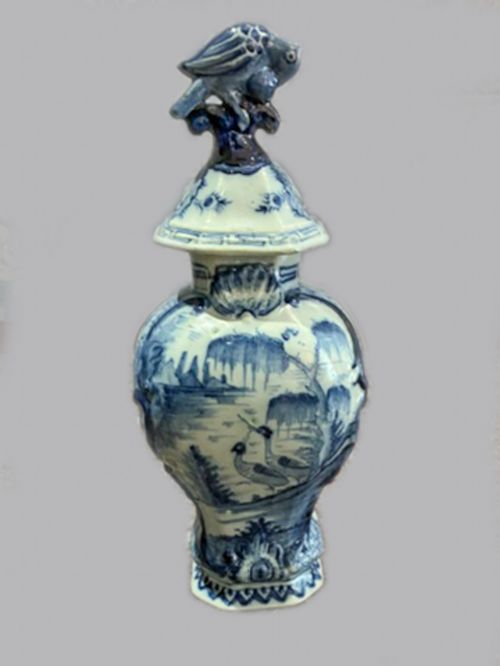
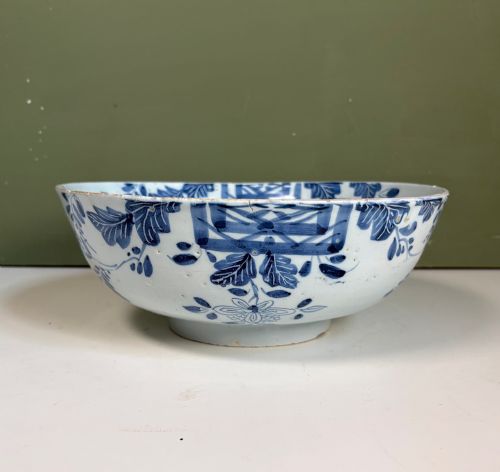
Georgian delftware pottery encompasses tin-glazed earthenware objects produced largely across the eighteenth century, including decorative plates, chargers, bowls, vases, and apothecary jars. These pieces reflect both English and Dutch origins, spanning styles from traditional blue and white to polychrome and Chinoiserie decoration.
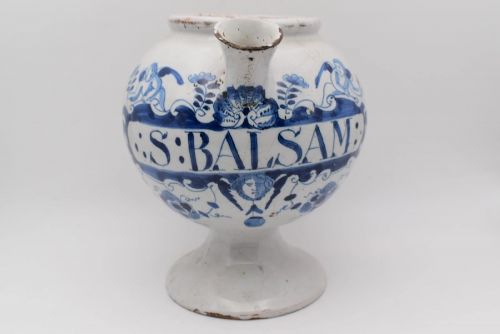
Buyers examining this page will most frequently encounter eighteenth-century plates and chargers, alongside smaller items such as salt cellars, inkwells, jugs, and tiles. The selection also includes converted table lamps and apothecary wet drug jars featuring hand-painted motifs.
How Georgian delftware pottery was made
Potters shaped these objects from earthenware bodies before applying a tin glaze that provided an opaque white surface for subsequent painting. Cobalt oxide and other pigments were then brushed directly onto the unfired glaze.
The application of cobalt pigment and polychrome colours required steady brushwork, as the porous tin glaze absorbed the liquid pigment instantly. Articles were then fired to fix the decoration within the glaze layer.
Georgian Delftware Pottery Retail Price Guide 2026
Typical asking prices for georgian delftware pottery among the pieces listed under this phrase on Sellingantiques today, from the lower quarter to the upper quarter. They describe what is for sale here now, not the wider market.
Listings feature 18th-century tin-glazed earthenware in forms including plates, chargers, apothecary jars, tiles, and table lamps.
What varies in quality in Georgian delftware pottery
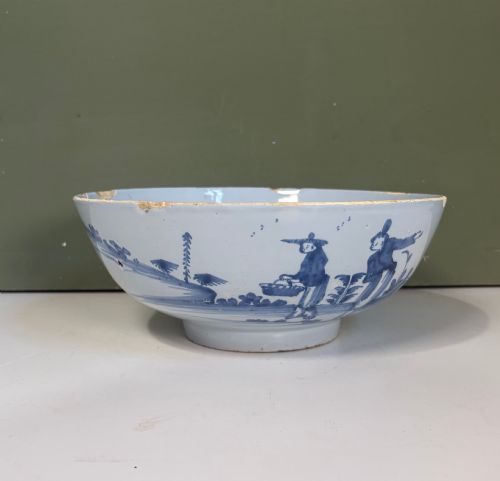
Visual distinction across these ceramics rests upon the crispness of the hand-painted brushwork and the clarity of the tin glaze. Pieces demonstrating controlled pigment application and distinct pictorial scenes, such as Watteau subjects or Chinoiserie landscapes, stand apart from simpler domestic wares.
The depth of colour within blue and white or polychrome palettes also signals the standard of production, alongside the overall preservation of the tin glaze across edges and rims.
The Georgian Delftware Pottery Glossary
- Tin-Glazed Earthenware
- Earthenware pottery coated with a lead glaze made opaque by the addition of tin oxide. This surface served as the canvas for painted decoration.
- Charger
- A large decorative plate intended for display on a wall or dresser rather than for dining. These large circular surfaces often carried the most ambitious painted scenes.
- Polychrome
- Decoration utilising multiple colours rather than a single pigment. In these ceramics, this typically involves greens, yellows, reds, and blues painted over the white tin glaze.
- Chinoiserie
- European artistic styles reflecting Chinese motifs and imaginary landscapes. These designs appear frequently on eighteenth-century plates and chargers.
- Apothecary Jar
- A vessel used in medical dispensaries to hold dry drugs, wet drugs, or balsams. These containers often bear specific painted labels and pictorial cartouches.
Georgian Delftware Pottery: Frequently Asked Questions
What is Georgian delftware pottery?
Georgian delftware pottery refers to tin-glazed earthenware items made during the eighteenth century. The category includes plates, bowls, chargers, and apothecary jars decorated with hand-painted blue and white or polychrome designs.
These pieces originate predominantly from English and Dutch potteries. They reflect domestic and decorative uses from the period.
How do I clean delftware pottery?
Clean these earthenware pieces gently using dry or barely damp cloths to protect the porous tin glaze. Avoid soaking or abrasive cleaners that might harm the historic surface.
Display items away from excessive moisture and sudden temperature changes. Careful handling preserves both the body and the painted decoration.
Were chargers used for dining?
Chargers were primarily decorative items displayed on walls or dressers rather than used for serving food. Their large size provided a broad canvas for detailed painted scenes.
Plates and smaller dishes saw more everyday table use. Chargers remained ornamental centerpieces within eighteenth-century interiors.
How do I tell English and Dutch delft apart?
Distinguishing English delft from Dutch delft involves examining the clay body, glaze tone, and painting style. English wares often display slightly heavier bodies and distinct palette choices.
Pottery centres like Lambeth and Bristol produced specific characteristics in their tin glazes. Comparing the base fabric and pigment hues helps identify the likely origin.