


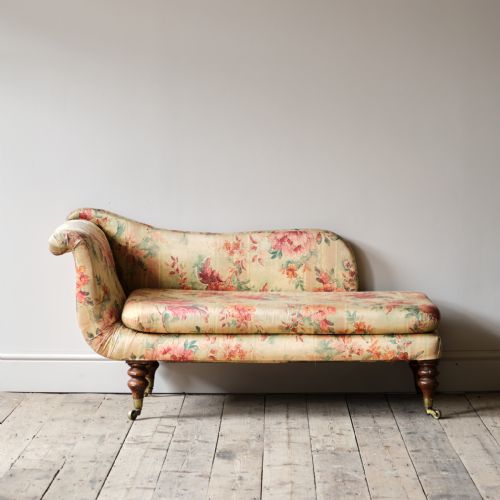


Georgian Daybed Couch
These georgian daybed couch examples offer scrolling frames and deep upholstery, bringing refined elegance and seating comfort to drawing rooms.
Georgian Daybed Couch
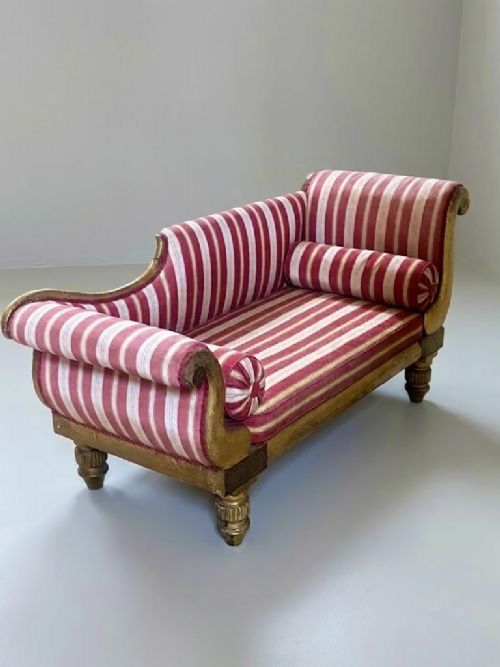
A georgian daybed couch bridges the gap between a formal sofa and a reclining lounge, designed for daytime relaxation in grand interiors. Pieces on this page span the Regency and William IV periods, alongside broader nineteenth-century items.
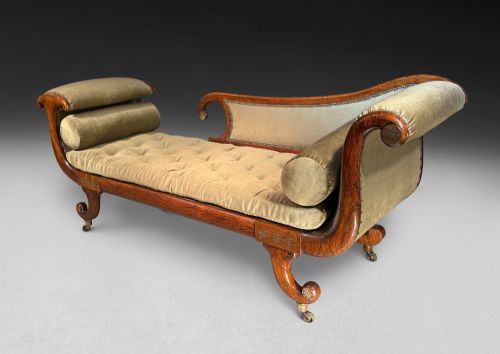
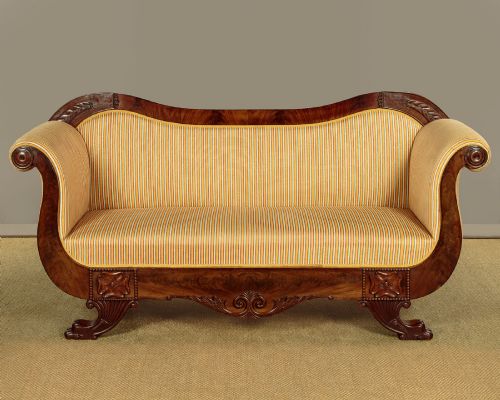
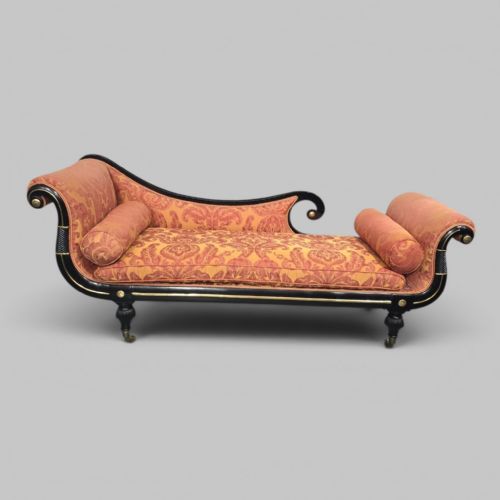
Most entries take the form of scroll-end sofas, double-ended settees, and chaise longues. These variations share elongated seating platforms meant for reclining while maintaining a supportive upright back or scroll end.
Origins point toward English country houses and Dublin drawing rooms, showcasing the classic proportions and flowing lines typical of early nineteenth-century seating furniture.
Materials and construction
Timbers dominate the construction, particularly solid mahogany and simulated rosewood, sometimes accented with giltwood or intricate brass inlay. These woods provide the structural strength needed for long scroll-end frames.
Upholstery defines the comfort and visual weight of each piece, utilising antique striped silk, velvet, satin, and various traditional fabrics. The textiles are stretched over generous padding to support the classic reclining posture.
Some scroll ends curl just enough to double as an impromptu headrest for an afternoon nap.
Distinctions in quality
The sophistication of the timber grain and the precision of applied brass inlay separate standard workshop output from finer examples. Simulated rosewood surfaces require careful hand-painting to mimic the natural grain convincingly.
Carved detailing along the scroll ends and frame rails indicates the hand of a more skilled cabinetmaker. Crisp lines and balanced proportions dictate the visual harmony of the finished seat.
Gillows
The Georgian Daybed Couch Glossary
- Scroll end
- A sweeping, curved wooden arm or back termination that rolls outward, defining much of the Regency silhouette.
- Chaise longue
- An upholstered chair or sofa extended for reclining, combining seat and footrest into one continuous piece of furniture.
- Simulated rosewood
- A painted or stained finish applied to a lesser timber to imitate the dark grain and rich colour of genuine rosewood.
- Giltwood
- Timber that has been coated with a thin layer of gold leaf or metallic gilt, highlighting carved decorative elements.
Georgian Daybed Couch: Frequently Asked Questions
Where did people place a georgian daybed couch?
These pieces sat in principal drawing rooms, private boudoirs, and grand entrance halls of large country houses. They served as comfortable daytime resting spots for reading or receiving visitors.
Their decorative backs and finished sides meant they often stood away from walls, positioned to display their carved mahogany frames and brass inlay.
How do I care for antique upholstery fabrics?
Historic silks, velvets, and satins require gentle maintenance to preserve their fibres and colour. Regular light vacuuming with a soft brush attachment prevents dust accumulation.
Professional textile conservation is advisable for older fabrics to avoid stressing delicate weaves and stitched seams during cleaning.
How do I tell Regency from William IV pieces?
Regency frames generally display lighter, more restrained classical proportions with delicate brass inlay and refined scrollwork. Mahogany timbers often have a bright, clean finish.
William IV items tend to be heavier and more robustly carved, reflecting a shift toward bolder architectural forms by the middle of the nineteenth century.
Can I use these couches for daily seating?
Most of these pieces remain structurally sound for gentle sitting and reclining. The solid mahogany frames provide enduring support for daily domestic use.
Periodic inspection of the internal webbing and padding helps maintain the structural integrity of older upholstered platforms.