


Georgian Damask Armchair
A georgian damask armchair brings robust mahogany frames and rich textile upholstery together, offering substantial seating that anchors a period room.
Georgian Damask Armchair
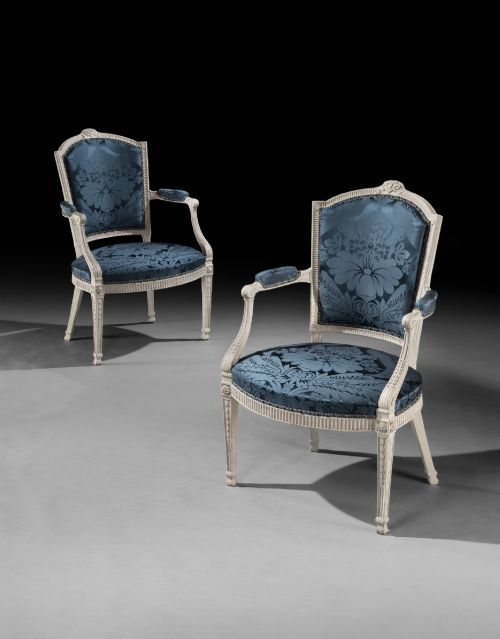
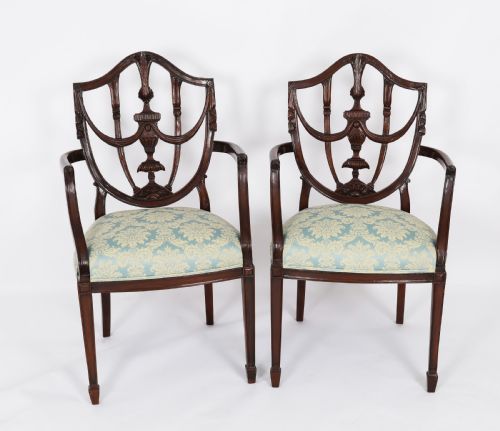
A georgian damask armchair sits at the heavier end of period seating, combining substantial wooden frames with patterned textile coverings. The pieces seen span genuine eighteenth-century origins alongside later revivals, capturing styles from George II and George III through to Regency and Victorian interpretations.
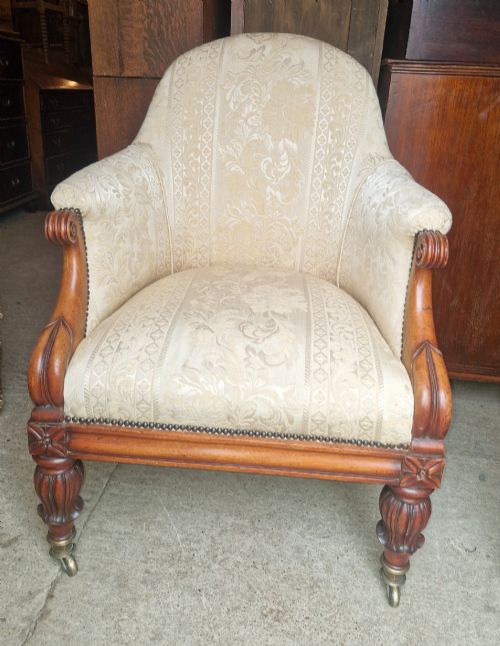
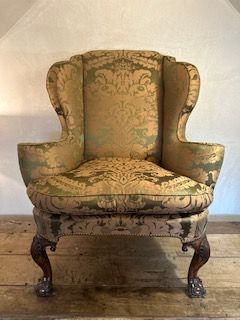
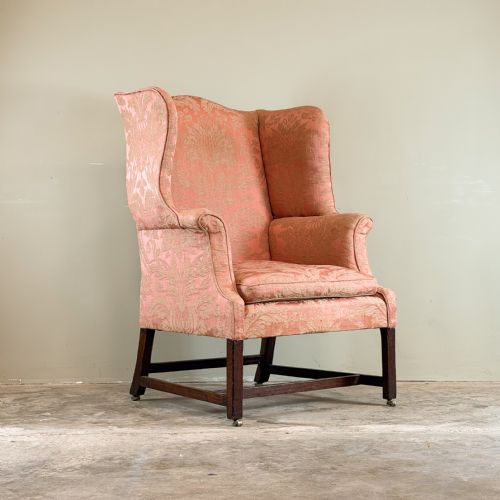
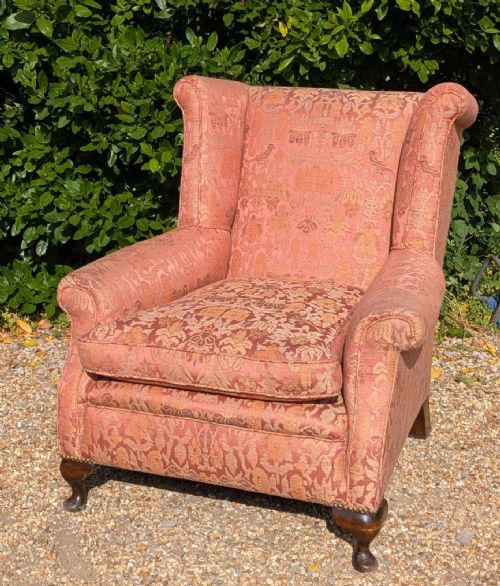
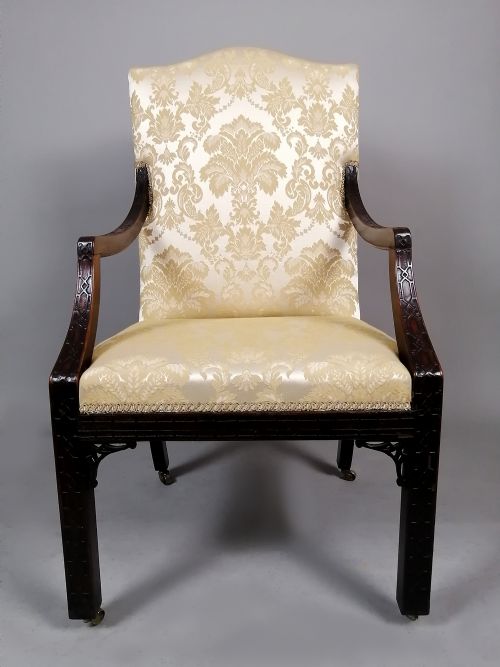
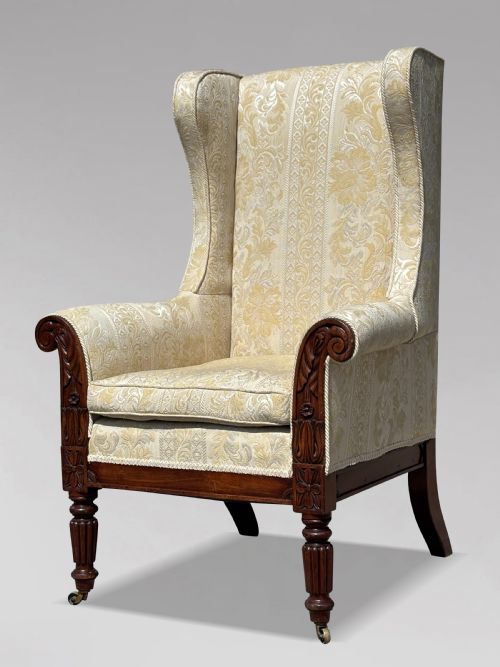
Forms range from open library chairs and Gainsborough designs to high-backed wing chairs intended to block draughts. Mahogany and walnut provide the structural support, while upholstery choices include damask, silk and general fabric coverings.
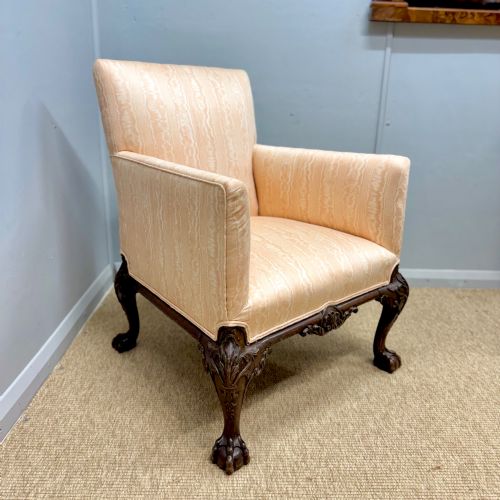
Buyers encounter both authentic eighteenth-century craftsmanship and later nineteenth- or twentieth-century revivals sharing the same stylistic vocabulary. Cabriole legs, carved details and generous proportions remain constants across the selection.
Indicators of standard
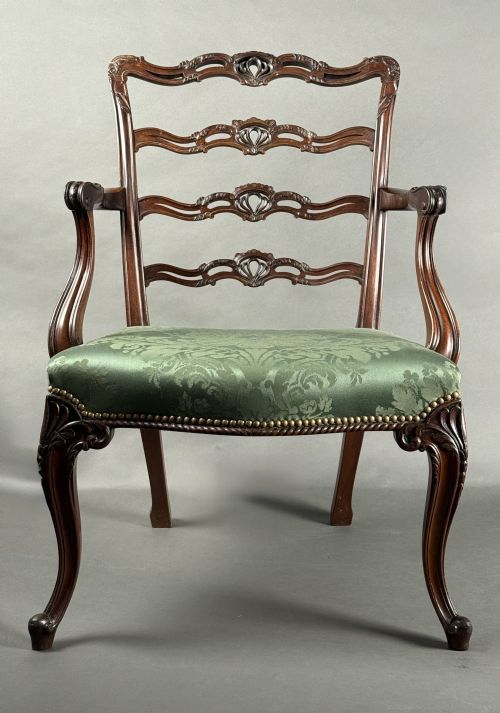
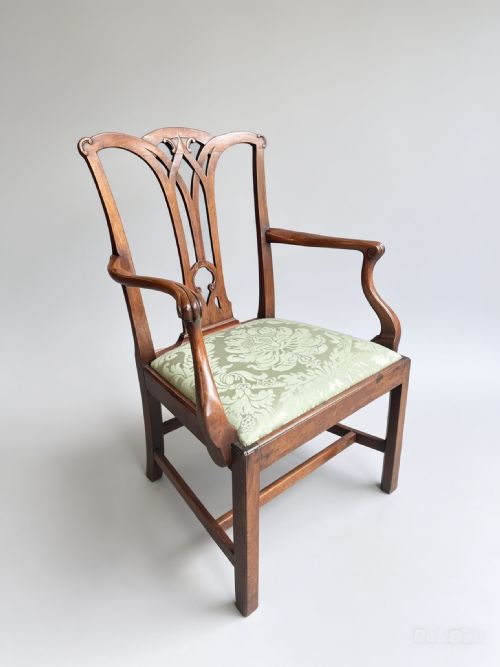
The crispness of the hand-carving on the wooden elements separates standard production from exceptional examples. Sharp detailing along the knees of cabriole legs and scrollwork on the arms demonstrates superior hand tools and artisan skill.
Proportion and stance dictate the visual success of the chair. A well-balanced frame maintains harmonious lines between the seat height, rake of the back and spread of the legs, whereas lesser examples appear heavy or awkward in their angles.
Listings demonstrate a strong presence of mahogany alongside walnut, paired primarily with damask, silk and general fabric upholstery across various centuries.
The Georgian Damask Armchair Glossary
- Damask
- A reversible figured fabric traditionally woven on a jacquard or drawloom, featuring patterns created by contrasting warp and weft satin weaves. It provides the patterned textile surface characteristic of these seats.
- Cabriole leg
- A furniture leg that curves out at the knee and tapers inward to an ankle, often terminating in a pad or claw-and-ball foot. This shape derives from ancient animal forms and dominated mid-eighteenth-century seating.
- Wing chair
- An armchair with side panels or 'wings' attached to the back, originally designed to shield the sitter from draughts. They appear frequently in mahogany across eighteenth- and nineteenth-century inventories.
- Chippendale style
- A decorative design vocabulary named after the cabinetmaker Thomas Chippendale, characterised by ribbon-back motifs, Chinese fretwork and Rococo carving. Revivals of this style recur throughout the nineteenth and twentieth centuries.
Georgian Damask Armchair: Frequently Asked Questions
How do I distinguish an original eighteenth-century chair from a later revival?
Original pieces display period-appropriate joinery methods, hand-cut timber marks and timber shrinkage consistent with considerable age. Revivals from the nineteenth and twentieth centuries often utilise machine-sawn components or alternative secondary woods inside the frame.
Examining the underside and interior webbing reveals the construction age and any subsequent reupholstering work undertaken over the lifespan of the armchair.
Where should I place a wing armchair in a modern interior?
A high-backed wing chair works effectively beside a fireplace or as a reading seat in a study, where its enclosed shape creates a distinct zone. The substantial wooden frame and patterned damask upholstery allow it to act as a focal point in a neutral room.
Ensure adequate floor space surrounds the piece so the carved legs and generous arm span remain visible from multiple angles.
How should I care for historic damask upholstery?
Protect delicate silk and damask textiles from direct sunlight to prevent fading and fibre degradation over time. Gentle surface vacuuming using a low-suction attachment removes dust without abrading the woven pattern.
Professional textile cleaners should handle any deep cleaning to avoid damaging the historical fabric structure or underlying stuffing.