
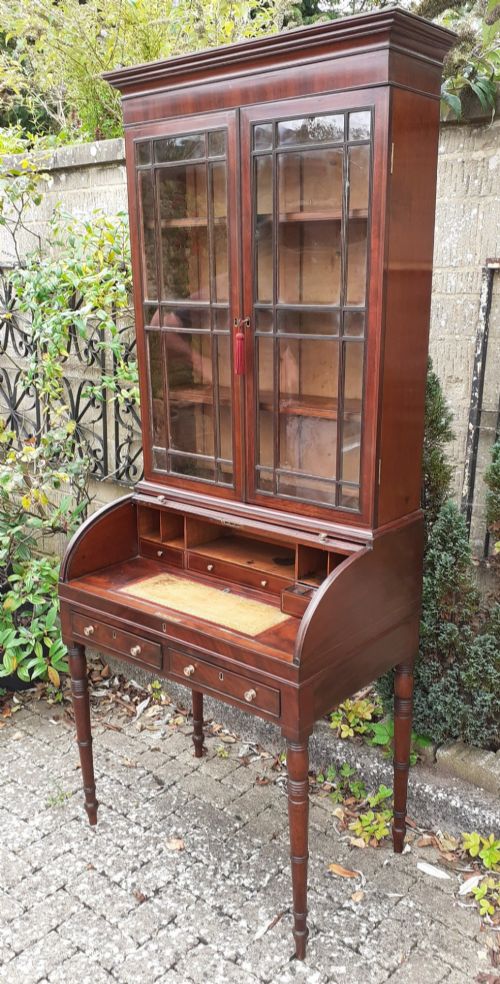


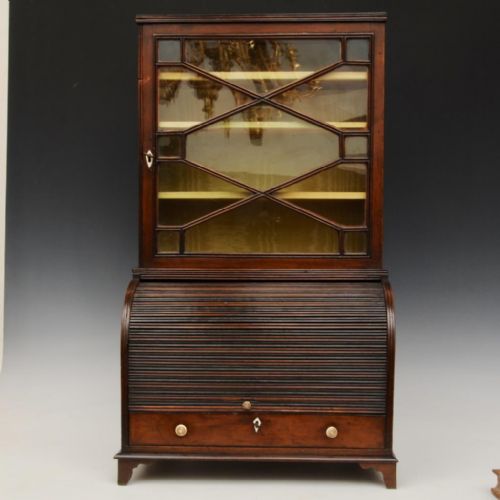

Georgian Cylinder Bureau Bookcase
A georgian cylinder bureau bookcase brings together a roll-top writing desk and a glazed display cabinet, offering a clever way to conceal correspondence while housing a library.
Georgian Cylinder Bureau Bookcase
When you search for a georgian cylinder bureau bookcase, you encounter impressive dual-purpose furniture designed for writing and storage. These pieces combine a curved roll-top cylinder enclosing a fitted desk interior with an upper bookcase section.
The examples found here span the eighteenth and nineteenth centuries, taking forms such as bureau bookcases, secretaire cabinets, and miniature furniture. You will discover variations originating from periods including the Georgian era, Regency, and later revivals like the Edwardian Sheraton Revival.
Stylistic influences range from classic George III and Regency designs to Dutch Baroque, incorporating distinct regional cabinetry traditions. Makers represented include Tudor & Burrey of Shrewsbury, alongside various anonymous workshops of the period.
How they were made
Cabinet makers constructed these pieces using dense hardwoods, most notably mahogany, satinwood, burr walnut, and rosewood. Sections often feature contrasting fruitwood inlay, accentuating the natural grain of the primary timbers.
Functional hardware integrates brass handles and escutcheons alongside glazed doors for the upper bookcase. Writing surfaces frequently incorporate fitted leather panels to provide a durable writing plane within the cylinder mechanism.
One tiny mahogany specimen proves that master cabinet makers enjoyed building exact, fully functional miniature furniture for wealthy clients.
What varies in quality
The distinction between standard examples and superior pieces rests on the choice of timber and the execution of decorative details. Finer items employ highly figured satinwood, burr walnut, or elaborate marquetry work rather than plain veneers.
Precision in the mechanics of the cylinder roll-top and the internal fittings dictates the overall standard of construction. Elaborate brass inlay and well-executed fruitwood marquetry further elevate the standing of a piece.
Tudor & Burrey
The Georgian Cylinder Bureau Bookcase Glossary
- Cylinder
- A rounded, quarter-circle wooden shutter that slides back into the body of the desk to reveal the writing surface and interior pigeonholes.
- Secretaire
- A piece of furniture containing a drawer or compartment configured for writing, often featuring a drop-down front or sliding cylinder.
- Marquetry
- The art of applying decorative veneer pieces of different woods, metals, or other materials to form geometric or pictorial designs.
- Escutcheon
- A protective plate surrounding a keyhole, frequently cast in brass to complement the surrounding woodwork.
Georgian Cylinder Bureau Bookcase: Frequently Asked Questions
How does a cylinder mechanism work?
The curved wooden shutter rolls back along hidden tracks into the body of the cabinet. This action simultaneously reveals the internal writing surface and small drawers.
Opening the writing slide often operates the mechanism automatically in certain designs. The curved slats are typically mounted on a flexible fabric backing to allow smooth movement.
Where were these cabinets placed in a home?
These pieces sat in principal reception rooms, libraries, or private studies of large residences. They provided a secure place to manage correspondence and store valuable volumes.
The combination of a bookcase and a desk saved floor space in multi-functional rooms. Wealthy households utilised them as both working furniture and display items.
How do you distinguish eighteenth-century pieces from later revivals?
Eighteenth-century examples display construction methods characteristic of the period, including hand-cut dovetails and native timber usage. Later nineteenth-century revivals, such as Edwardian Sheraton pieces, utilise slightly different secondary woods and machine-assisted precision.
Stylistic proportions and the type of veneer application also offer clues to the date of manufacture. Comparing the hardware fixings helps confirm the period.