

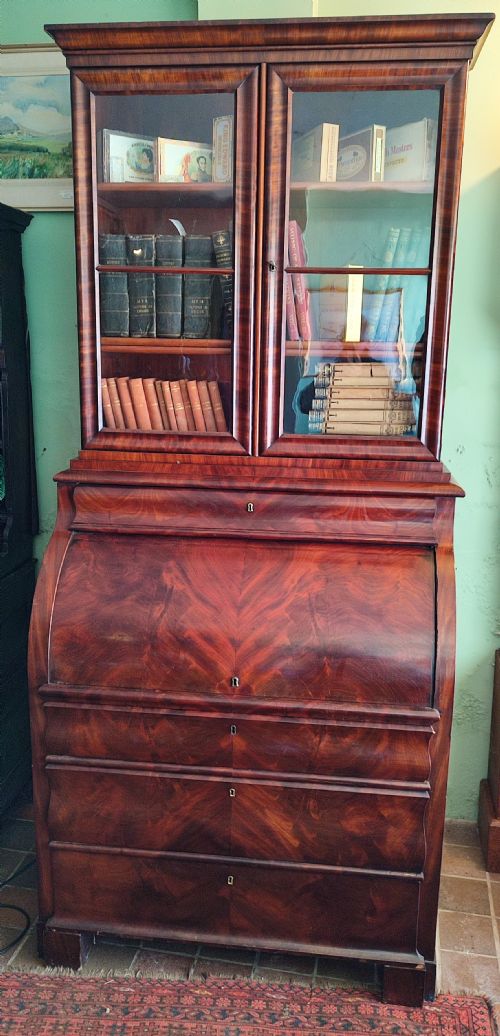


Antique Roll Top Bookcase
An antique roll top bookcase brings together a secure writing surface and display shelving in a single piece of refined furniture.
Antique Roll Top Bookcase
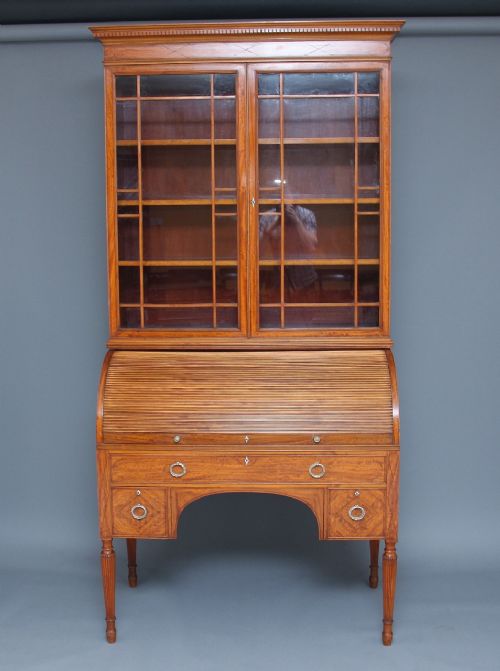
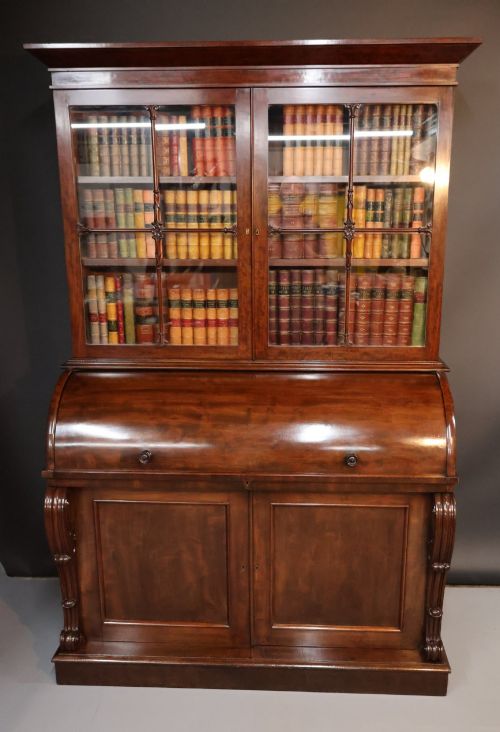
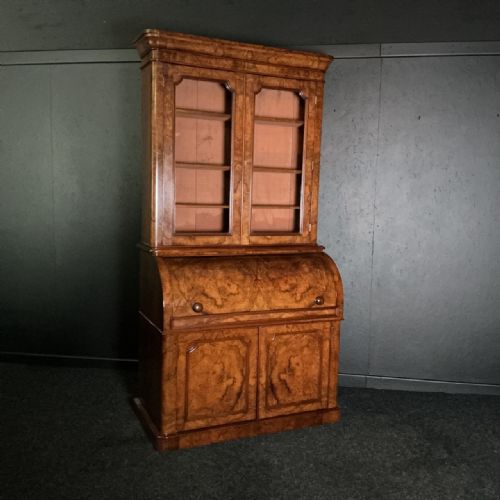
An antique roll top bookcase combines a lower writing section featuring a cylinder or tambour shutter with an upper glazed shelving compartment for books. These hybrid pieces appear across several eras, including the Georgian, Regency, and Victorian periods, offering both concealed storage and visible display.
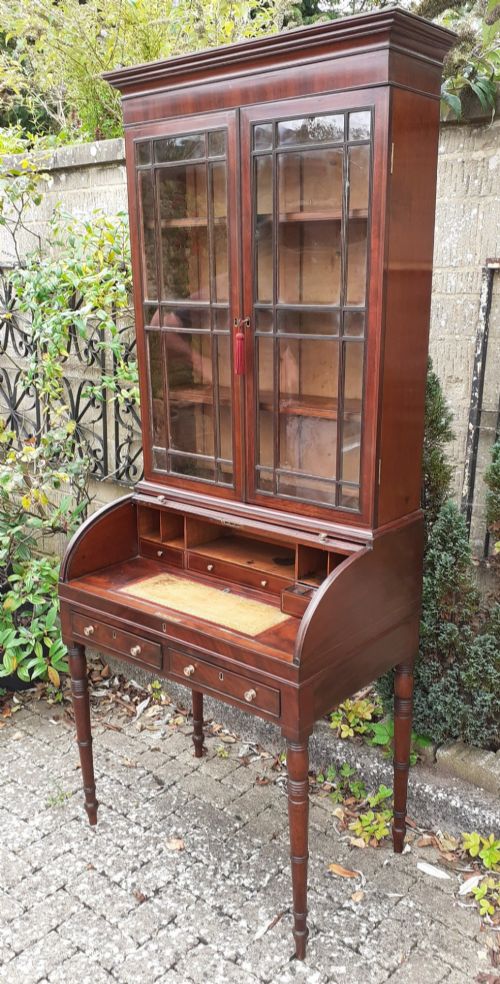
The layout typically integrates drawers and pigeonholes behind the curved roll top, surmounted by glass-fronted cabinet doors. Buyers on this page will frequently encounter versions in mahogany and satinwood, spanning styles from austere Biedermeier to grand Regency.
How They Were Made
Cabinet makers built these pieces using dense timber frames of mahogany, walnut, rosewood, or oak, often applying finely figured satinwood veneers to the principal surfaces. The curved cylinder or tambour mechanism required precise woodworking so the flexible shutter ran smoothly within hidden tracks.
Brass inlays, fine glass panes, and fitted leather writing surfaces completed the construction, combining structural rigidity with intricate decorative detailing.
Listings feature pieces spanning the Georgian, Regency, Victorian, and Edwardian periods, constructed in mahogany, satinwood, rosewood, walnut, and oak.
What Varies in Quality
The caliber of an antique roll top bookcase rests on the selection of timber veneers and the precision of the sliding mechanism. Superior examples display seamless movement in the cylinder shutter and careful matching of wood grain across the drawer fronts and doors.
Refined secondary details, such as original brass mounts, well-figured rosewood or satinwood surfaces, and finely carved mahogany mouldings, distinguish exceptional pieces from standard workshop production.
Tudor & Burrey Shrewsbury·Edwards & Roberts
The Antique Roll Top Bookcase Glossary
- Cylinder
- A rounded, quarter-circle solid wooden shutter that slides back into the body of the desk to reveal the writing surface. This rigid curved panel differs from the slatted tambour.
- Tambour
- A flexible shutter constructed from narrow vertical strips of wood glued to a canvas backing. It allows the roll top to follow a curved track around the desk interior.
- Secretaire
- A desk cabinet featuring a pull-out or drop-down writing flap that conceals small drawers and pigeonholes. It often forms the lower section of a combined bookcase.
- Biedermeier
- A Central European style from the nineteenth century prioritising clean lines, minimal ornamentation, and the natural grain of timbers like mahogany and walnut.
- Glazed
- Fitted with glass panes in the upper doors to protect books from dust while keeping them visible.
Antique Roll Top Bookcase: Frequently Asked Questions
How do I operate the roll top?
The curved wooden cylinder or slatted tambour slides smoothly along internal tracks when pushed upward or pulled forward. This action uncovers the internal writing surface and pigeonholes.
Ensure the tracks remain clean and free from obstruction to maintain easy movement of the mechanism.
What is the difference between a cylinder and a tambour?
A cylinder uses a solid, single-piece quarter-circle of wood that rolls back as a rigid unit into the desk body. A tambour consists of many small wooden slats attached to a flexible backing fabric.
Both serve the same function of concealing the desk interior but employ distinct construction techniques.
Where were these pieces used?
These hybrid cabinets served primarily in libraries, studies, and private drawing rooms of large homes. They provided a secure place to store correspondence alongside a visible display for valued volumes.
The upper glazed section kept dust away from books while the lockable roll top protected private papers.
How do I care for the wood surface?
Maintain finished timbers like mahogany, walnut, and satinwood by applying traditional beeswax polish sparingly. Avoid placing the cabinet near direct heat sources or strong sunlight to prevent veneer splitting.
Dust regularly with a soft, dry cloth to preserve the natural sheen of the polished grain.