


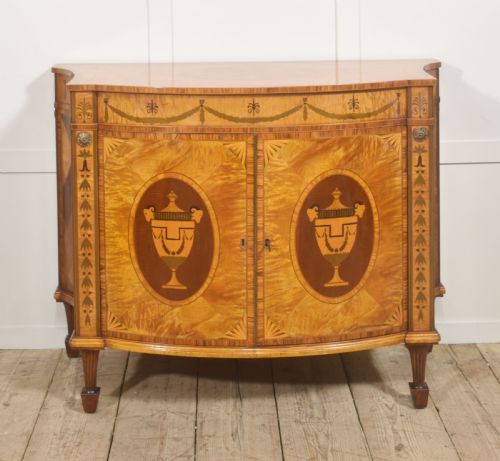


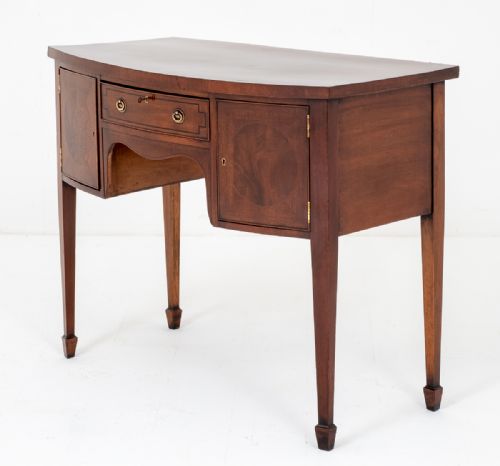
Georgian Curved Front Sideboard
A georgian curved front sideboard brings architectural grace to a dining room, combining subtle curves with generous storage.
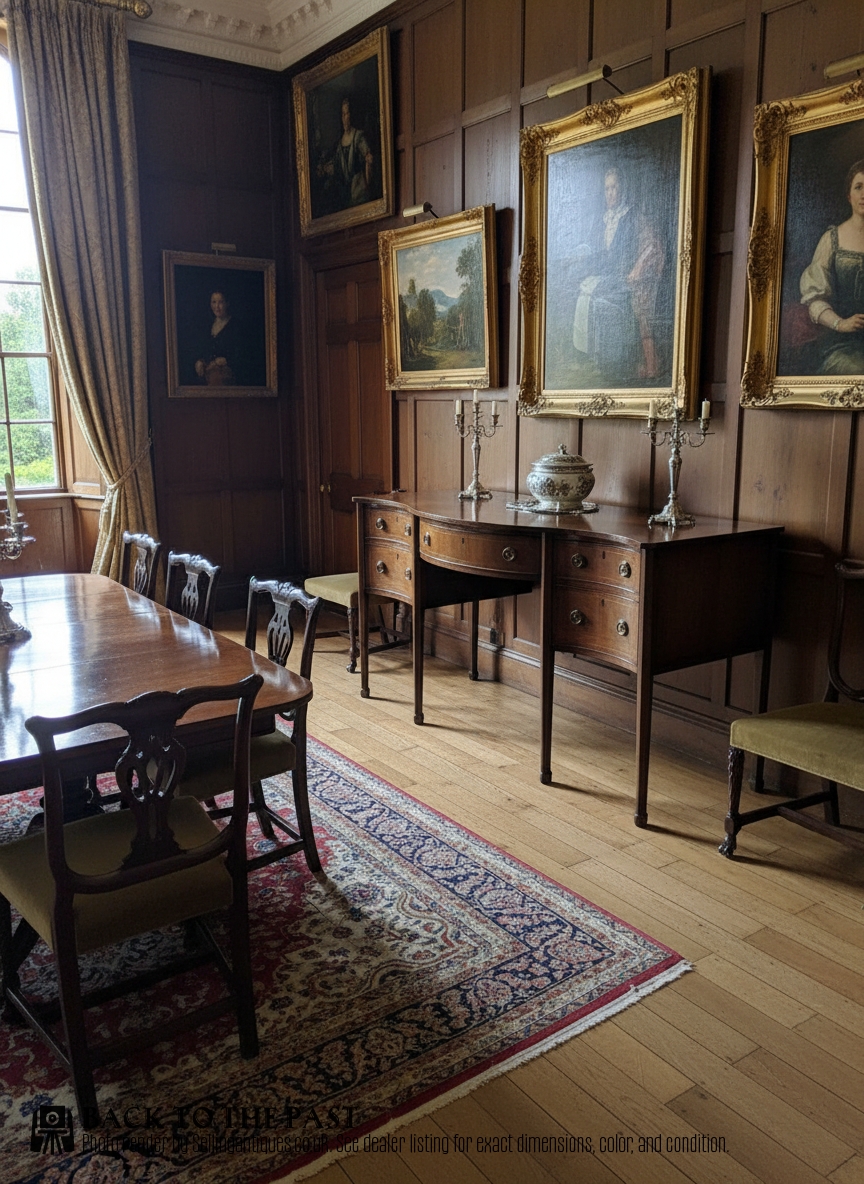
Georgian Curved Front Sideboard
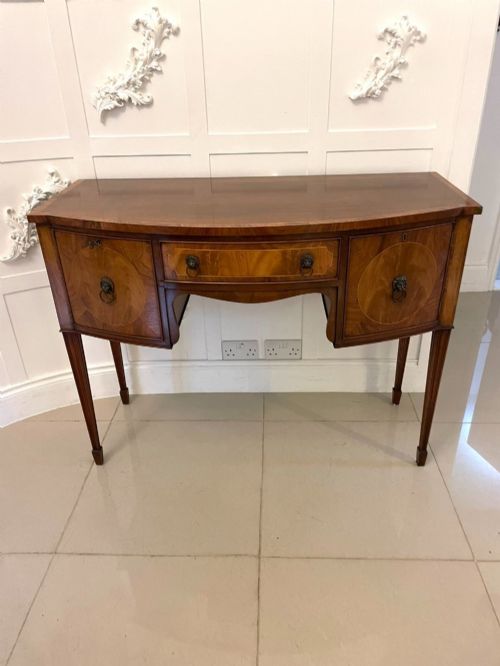
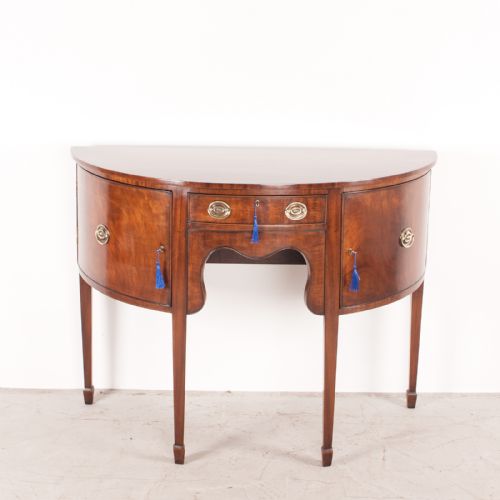
A georgian curved front sideboard takes several distinct shapes across the periods, appearing most frequently with a bow front or as a demi-lune form. These serving pieces provide long surfaces and deep drawers, designed originally for the dining rooms of large country houses and town residences.
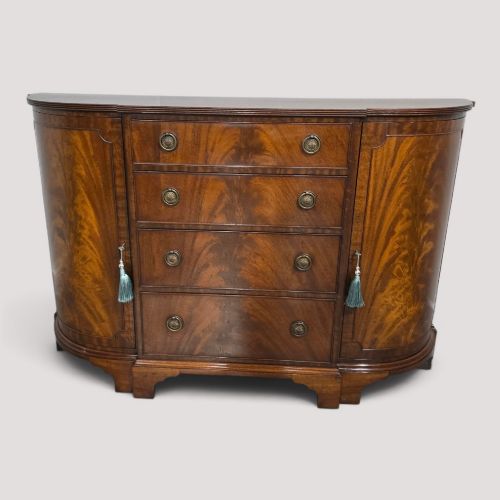
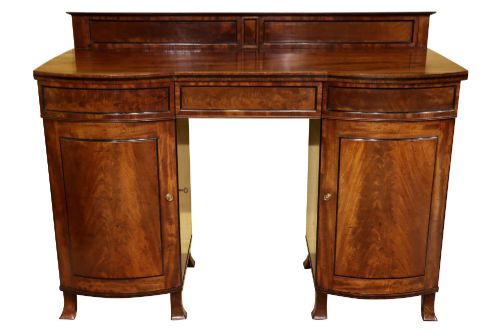
The items seen here span the Georgian and Regency eras, alongside later revivals from the early twentieth century. Bowfront and serpentine examples dominate the listings, offering a softened outline compared to standard rectangular furniture.
Makers and cabinet makers of these periods utilised curving timbers to soften the rigid geometry of the dining room. Surviving pieces range from compact proportions suitable for smaller spaces to large serpentine formats.
How they were made
Cabinet makers constructed these sideboards using solid timbers and carefully selected veneers over sturdy carcases. Flame mahogany veneer provides much of the primary surface movement, complemented by contrasting boxwood and satinwood inlay.
Detailing often includes delicate stringing and marquetry panels, particularly on neoclassical demi-lune cabinets. Brass hardware, including original ring pulls and lion mask handles, fixes securely to the drawer fronts.
Certain drawers retain hidden cellar compartments designed to keep wine bottles cool against the damp oak lining.
What varies in quality
The distinction between standard items and the finest pieces rests upon the choice of timber and the precision of the curves. Well-figured flame mahogany veneer exhibits deep natural chatoyancy, while lesser pieces rely on plain or uniform boards.
Construction methods also separate the grades, visible in the hand-cut dovetailing of the drawers and the crispness of the boxwood inlay. The integrity of the serpentine or bowed carcase requires expert timber bending and joining that holds firm over centuries.
The Georgian Curved Front Sideboard Glossary
- Bow front
- A convex curved cabinet front that projects outward in a smooth arc. This shape softens the corners of the dining room and maximises internal drawer depth.
- Serpentine
- A front contour characterised by a convex centre flanked by concave ends, or vice versa. This complex curving profile requires advanced woodworking skill.
- Demi-lune
- Half-moon shaped furniture designed to stand flush against a wall. These half-circle sideboards and commodes appeared frequently during the neoclassical period.
- Flame mahogany
- Timber cut from the fork of the mahogany tree to produce a distinctive flickering flame pattern. Cabinet makers used these veneers on primary display surfaces.
- Stringing
- Thin strips of contrasting wood inlaid into channels cut into the surface. This technique creates delicate borders around drawer fronts and table edges.
Georgian Curved Front Sideboard: Frequently Asked Questions
How do I style a curved sideboard?
Place the piece against a principal dining room wall where its curved profile can be fully appreciated. The top surface suits serving dishes, silver lamps, or decorative trays during gatherings.
Keep surrounding items simple to let the mahogany grain and inlay work draw the eye.
What is the difference between Georgian and Regency sideboards?
Georgian sideboards often display restrained classical proportions with subtle boxwood stringing and elegant tapering legs. Regency examples tend toward bolder architectural forms, occasionally incorporating heavier pedestals or brass mounts.
Both styles share a focus on figured mahogany and curved fronts.
Are these sideboards suitable for modern dining rooms?
The curved proportions and rich mahogany tones fit comfortably into contemporary interiors as statement storage pieces. Their deep drawers accommodate modern tableware, linen, and glassware with ease.
Compact bowfront versions function well in medium-sized spaces without dominating the room.