
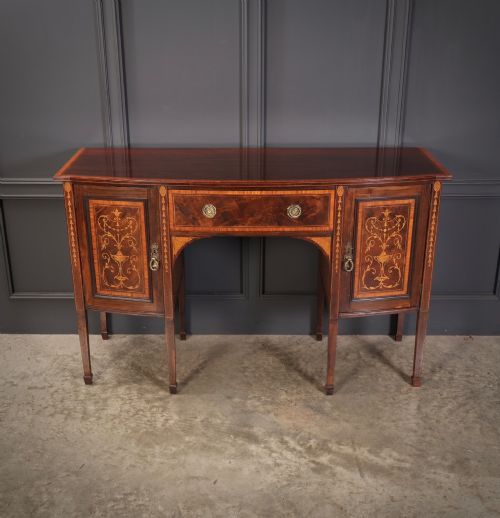
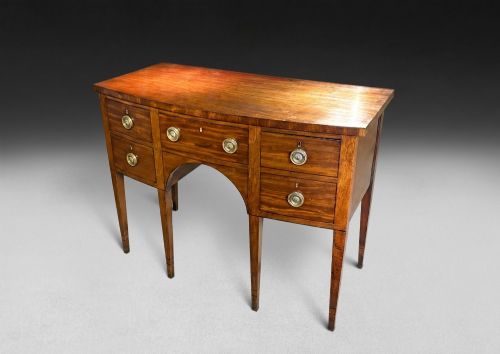
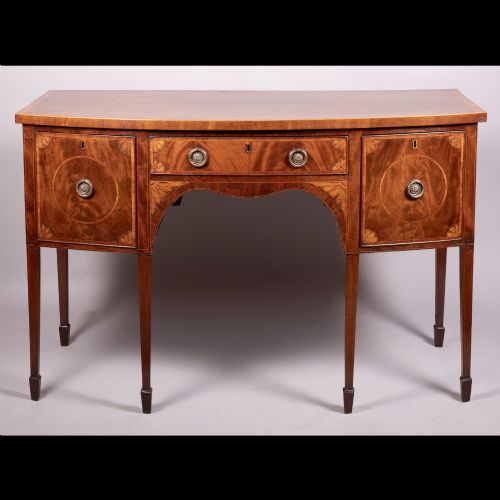


Georgian Tapered Leg Sideboard
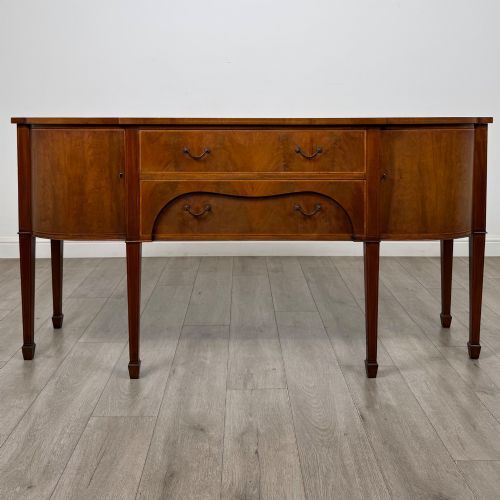
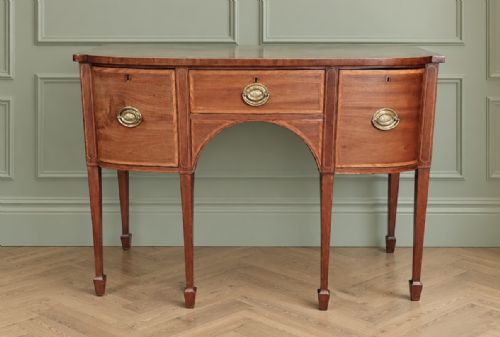
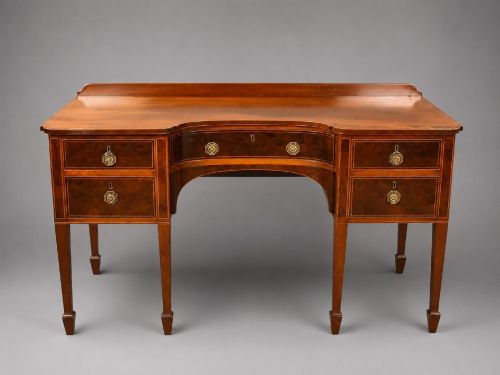
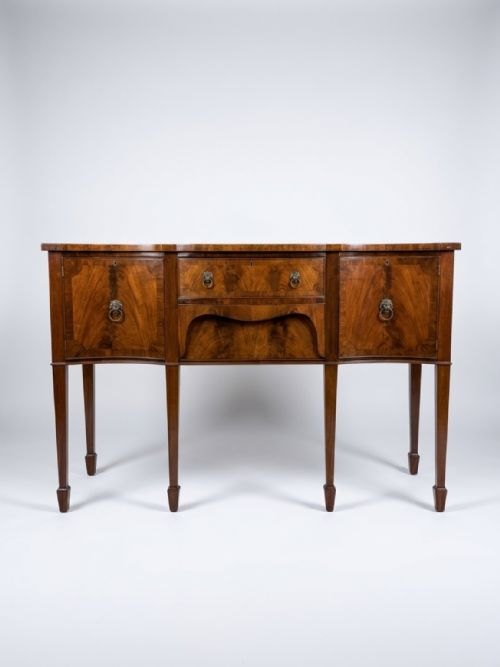
A georgian tapered leg sideboard brings quiet architectural presence into a room, combining solid timber construction with disciplined neoclassical lines.
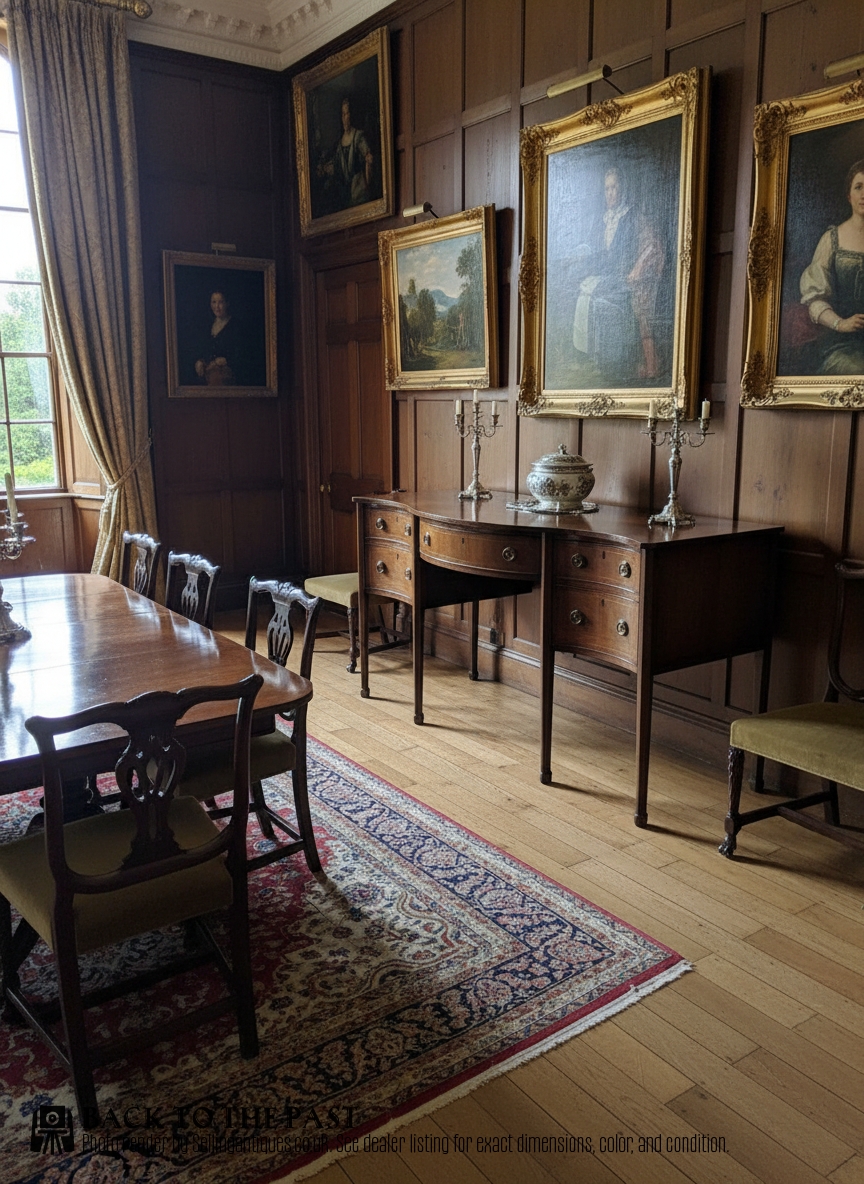
Georgian Tapered Leg Sideboard
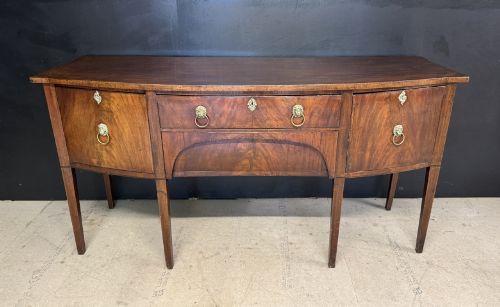
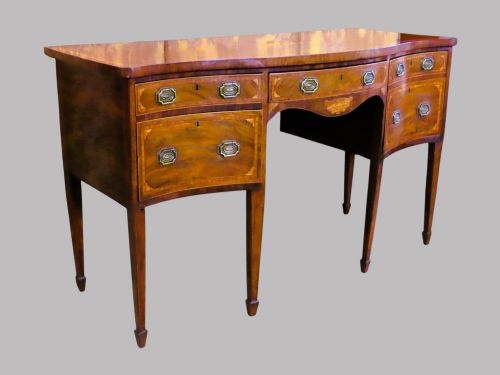
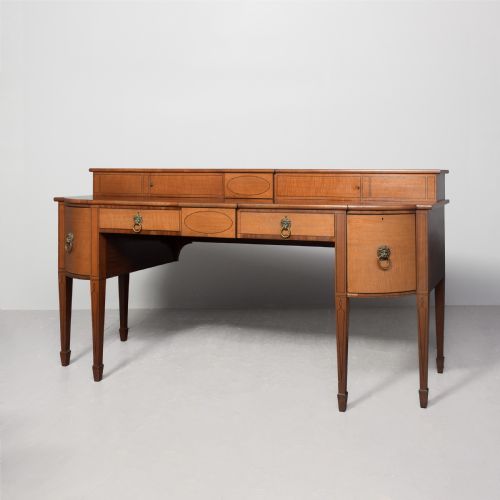
A georgian tapered leg sideboard sits at the intersection of practical dining room storage and refined cabinet making, taking forms such as serpentine fronts, bow fronts, and straight-fronted servers. The pieces appearing here span the eighteenth century and subsequent revival periods, capturing both original Georgian craftsmanship and later Edwardian interpretations.
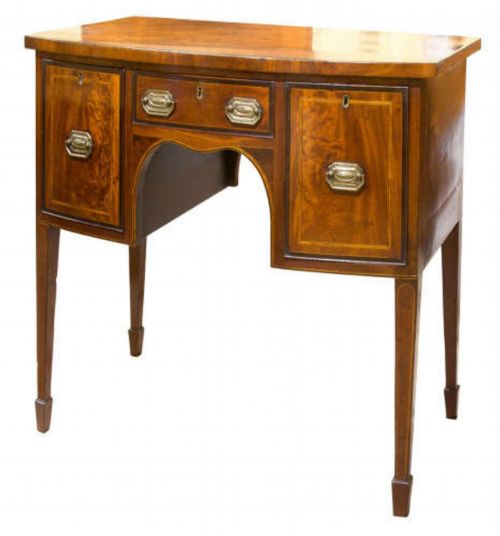
Buyers encounter regional variations alongside standard London forms, including Scottish examples and smaller scaled pieces designed for compact spaces. Alongside traditional sideboards, the selection encompasses related serving tables, side tables, and console tables sharing the same period vocabulary.
The primary structural form relies on a substantial timber carcase raised on slender supports, balancing the visual weight of the top drawers and cupboards. Cabinet makers of the period utilised mahogany as the principal ground, often shaping the elevation into sweeping curves.
Materials and construction
Makers constructed these carcases primarily from solid mahogany and flame mahogany veneer, selected for deep grain patterns and stability. Surface decoration relied on contrasting timbers, incorporating satinwood, boxwood inlay, and boxwood stringing to define drawer outlines and borders.
Hardware details involved cast brass fittings, while structural longevity depended on precise dovetail joints within the drawer construction. Cabinet makers shaped the timber using hand saws and planes, applying polish by hand to build a deep lustre over the mahogany grain.
Cabinet makers occasionally concealed secret cellarette drawers within sideboards, designed specifically to keep wine bottles secure from thirsty footmen.
Assessing build and design
Quality separates along the crispness of the timber inlays and the selection of figured mahogany veneer across the drawer fronts. Superior examples demonstrate balanced proportions, particularly where bow fronts or serpentine shapes require exact geometry from the cabinet maker.
The integration of secondary timbers and the retention of original brass handles influence the standing of a piece within its period. Finer execution shows in the continuity of grain patterns across multiple drawers and the subtlety of boxwood stringing.
The Woodworkers Ltd Kilkenny
The Georgian Tapered Leg Sideboard Glossary
- Bow front
- A convex curved cabinet front that projects outward in a smooth arc, popular in late eighteenth century design.
- Serpentine front
- A furniture elevation featuring a convex centre flanked by concave wings, demanding high skill from the cabinet maker.
- Boxwood stringing
- Narrow inlaid lines of pale boxwood set flush into dark mahogany surfaces to create decorative borders.
- Flame mahogany
- Timber veneer cut from the fork of the mahogany tree, displaying a characteristic flickering flame pattern.
- Stage-back
- A raised rear superstructure on a sideboard used for displaying serving silver or platters.
Georgian Tapered Leg Sideboard: Frequently Asked Questions
How do I date a Georgian sideboard?
Dating relies on examining the secondary timbers inside the drawers, the style of the brass hardware, and the subtlety of any inlay work. Earlier pieces from the eighteenth century typically show hand-cut dovetails and solid mahogany linings.
Design shifts also help narrow the period, moving from straight structural lines to sweeping bow fronts and serpentine shapes towards the end of the century. Revival pieces from later eras often use machine-cut elements and standardised internal components.
Where should I place a sideboard?
These dining room pieces suit placement against a principal wall in a dining room, hallway, or spacious living area where their linear form can anchor the room. Ensure adequate clearance around the front for opening drawers and cabinet doors.
Keep the timber away from direct heat sources and strong sunlight to prevent the mahogany veneer from drying out or fading over time. A breathable wax polish helps maintain the lustre of the surface.
What is the difference between George III and Sheraton?
George III refers to the regnal period spanning the mid to late eighteenth century, encompassing various evolving design movements. Sheraton represents a specific neoclassical style within that period, named after designer Thomas Sheraton.
Sheraton furniture typically displays lighter proportions, geometric inlays like boxwood stringing, and tapered supports. A piece can therefore be both George III in date and Sheraton in style.
How do I care for antique mahogany?
Maintain the timber by applying a traditional beeswax polish sparingly and buffing with a soft cloth to remove dust. Avoid silicone-based sprays, which can penetrate the finish and damage the underlying polish.
Maintain stable humidity levels in the room to prevent the solid mahogany and applied veneers from splitting or warping. Gentle cleaning preserves the natural patina developed over centuries.