
Georgian Curved Front Drawers
Georgian curved front drawers bring architectural grace to a room, offering smooth convex lines and generous storage.
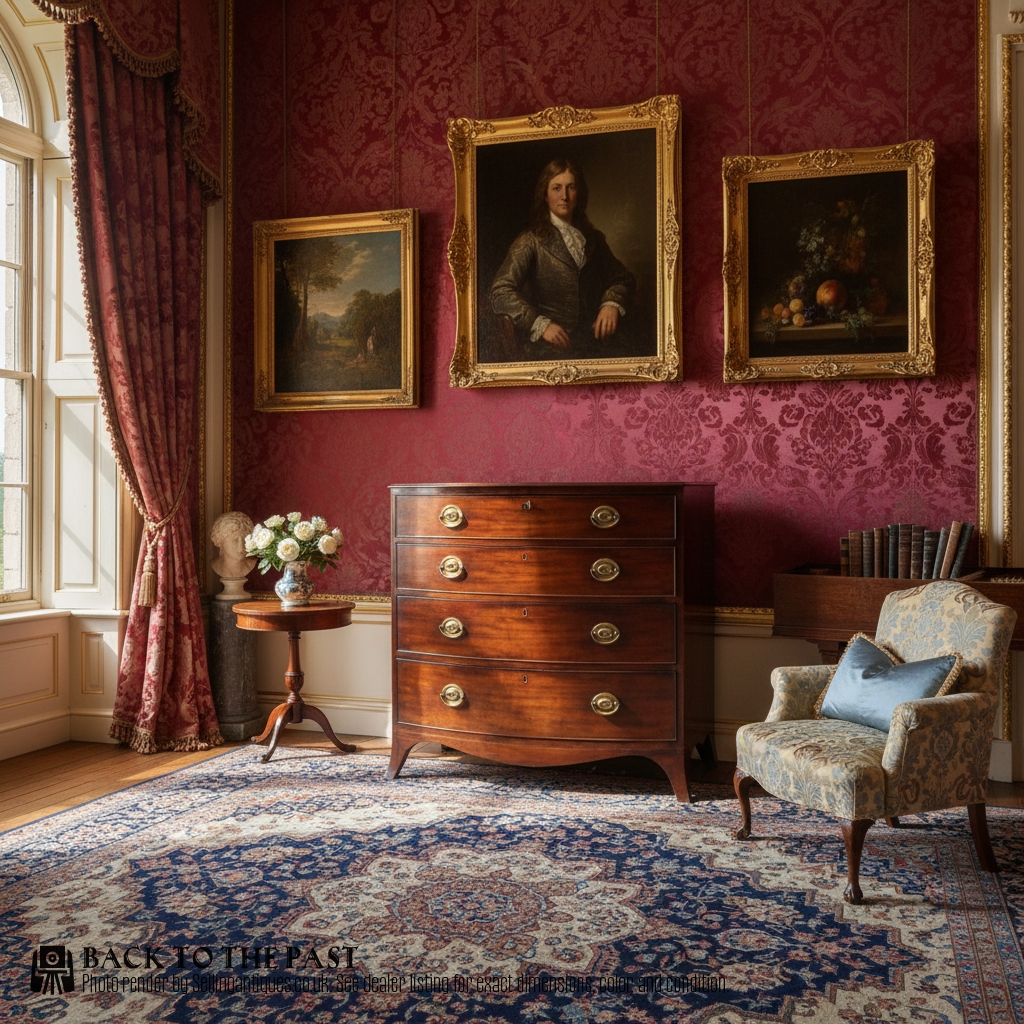
Georgian Curved Front Drawers
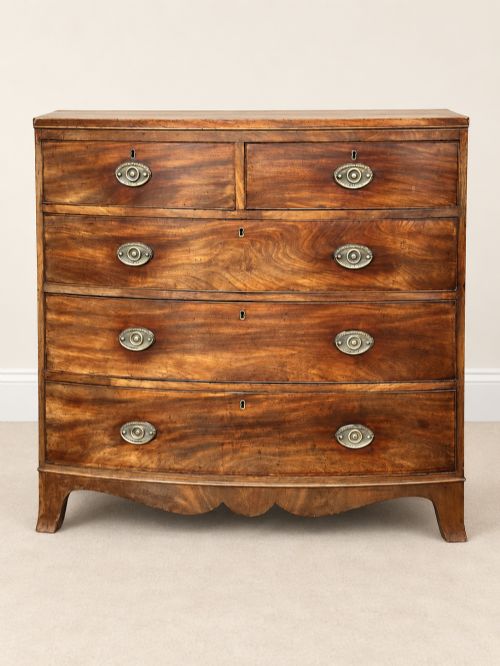
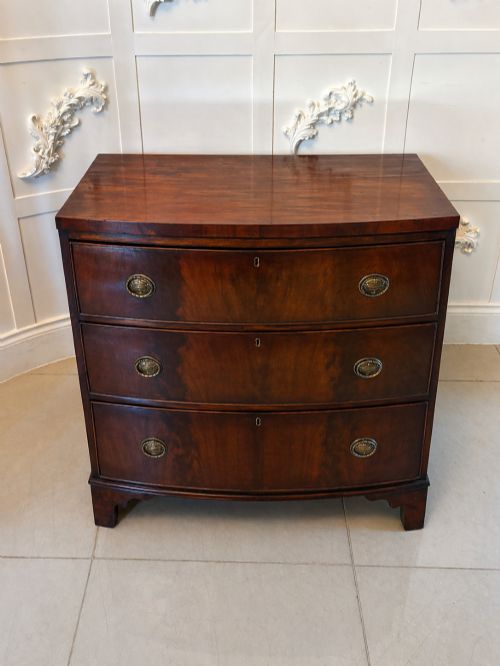
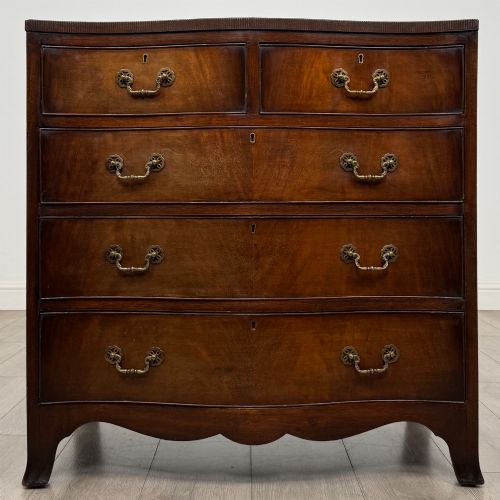
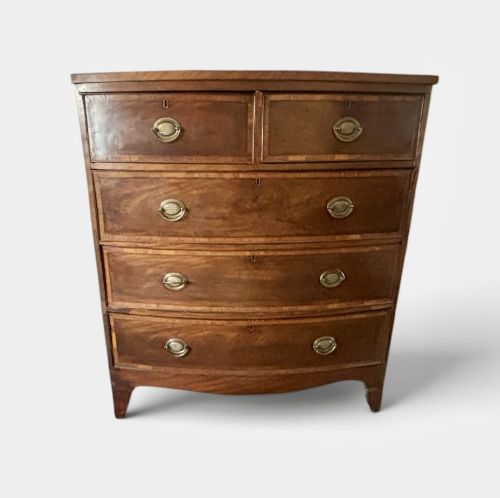
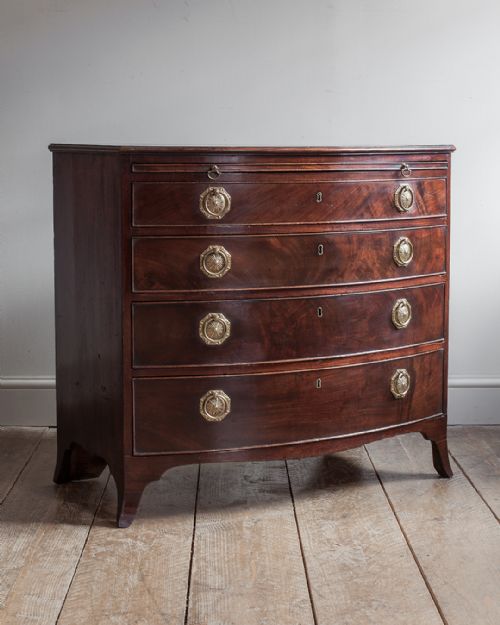
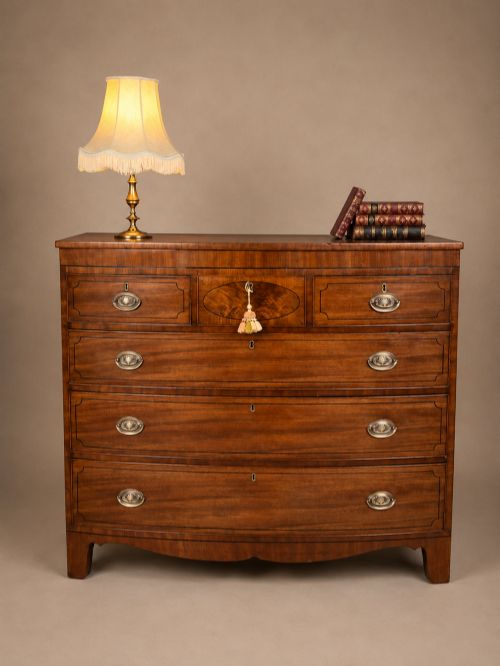
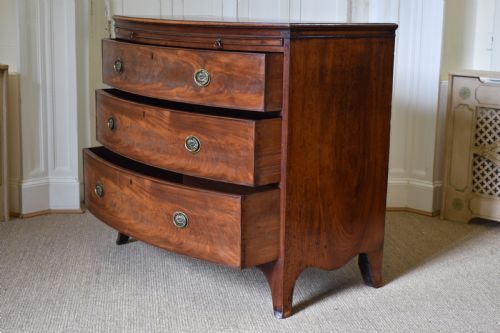
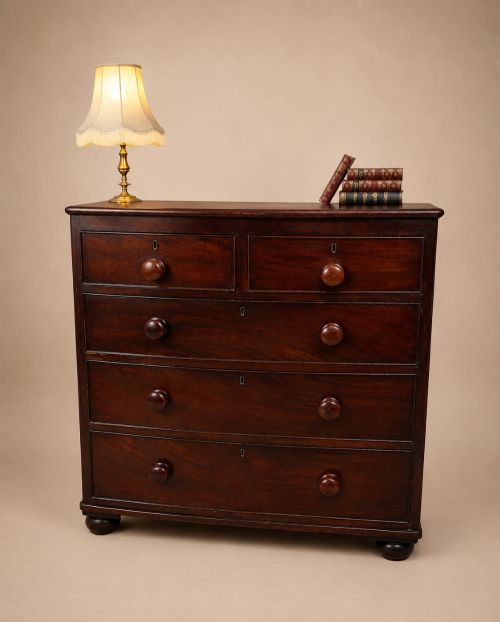
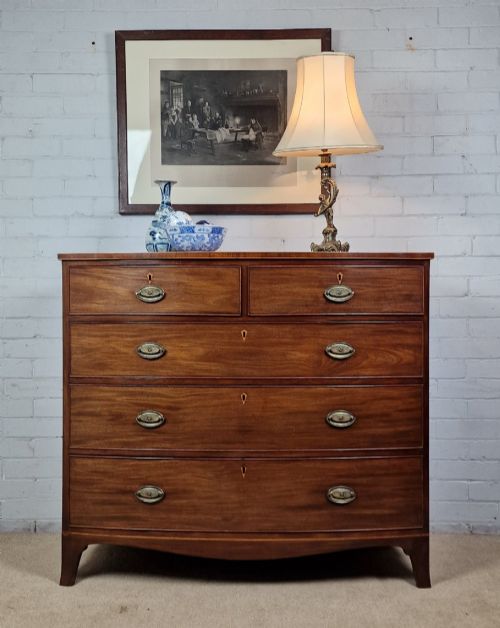
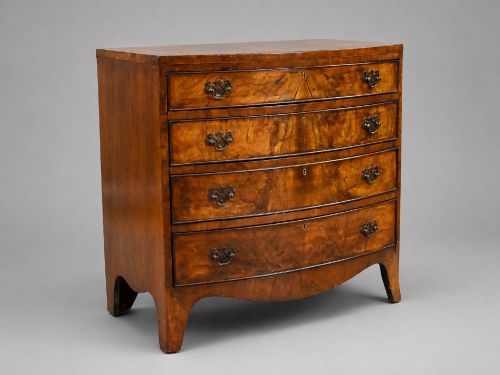
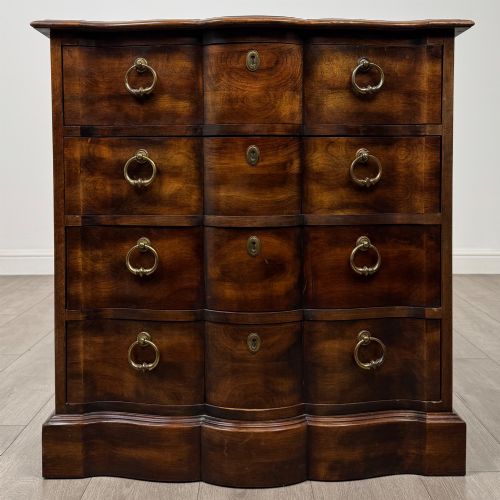
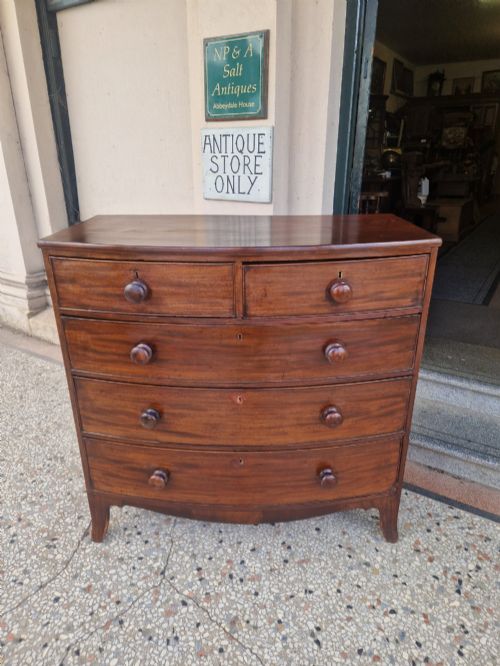
When you search for georgian curved front drawers, you encounter pieces primarily constructed as chests of drawers, often referred to in listings as bow fronts or bombes. These items originate predominantly from the Georgian, George III, and Regency periods, alongside later revivals from the twentieth century.
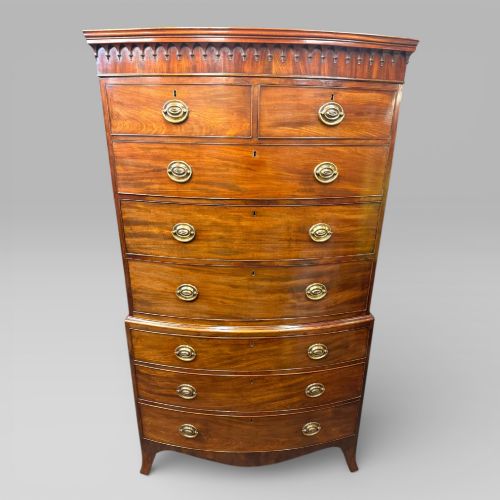
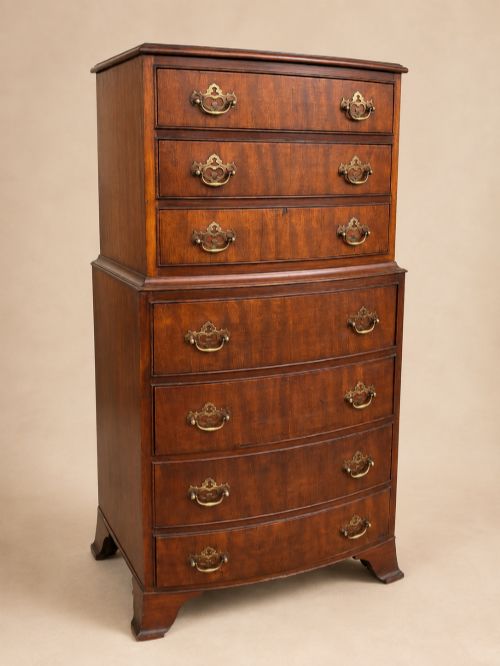
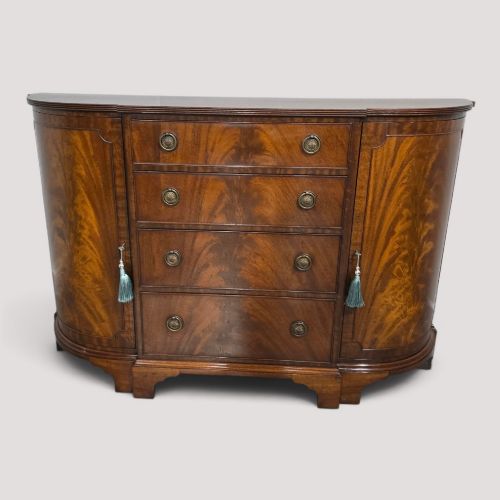
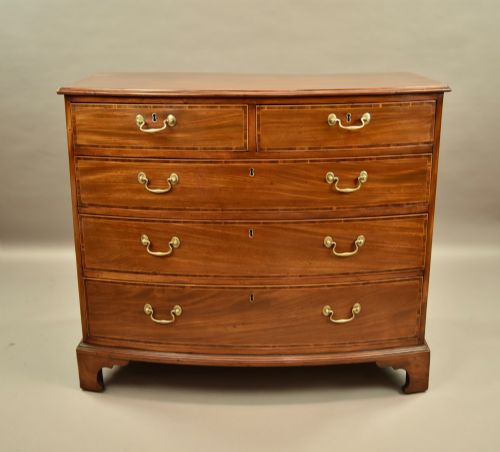
The standard form on this page is the chest of drawers featuring a rounded or bowed front elevation, though variations include sideboards, side tables, and chests on chests. Cabinetmakers designed these shapes to soften the corners of formal rooms while maximising interior storage space.
Examples span from eighteenth-century originals to later interpretations in walnut, mahogany, and painted wood. Buyers often select these pieces to anchor a bedroom or hallway with distinct period proportions and curved joinery.
How they were made
Cabinetmakers built these curved front pieces using solid timbers like mahogany, oak, and walnut, frequently applying flame mahogany veneer or satinwood to the exterior surfaces. Boxwood inlay often provides contrasting linear borders along drawer edges and top surfaces.
Constructing a convex curve required specialist bending and shaping techniques for the drawer fronts and the accompanying frame. Brass handles and escutcheons were fitted to secure the drawers and complement the polished timber grain.
Designs range from compact two-drawer side tables to tall chests on chests and narrow bow-fronted sideboards.
What varies in quality
Quality rests in the precision of the curved joinery and the selection of timber veneers, such as figured walnut or flame mahogany. Superior examples maintain smooth drawer operation and crisp inlay work without warping along the bowed facade.
The integrity of the secondary timbers used for drawer linings and the subtlety of the brass hardware distinguish finer production from simpler regional or later revival pieces.
The Georgian Curved Front Drawers Glossary
- Bow front
- A convex curved front elevation commonly found on chests of drawers and sideboards. This shape softens the profile of case furniture.
- Chest on chest
- A tall storage unit comprising one chest of drawers stacked directly upon a slightly larger lower chest. This form provides substantial vertical capacity.
- Flame mahogany
- A veneer cut from timber fork where branches meet the main trunk, creating a characteristic rippled flame pattern. Cabinetmakers prized this figure for principal drawer fronts.
- Satinwood
- A durable, yellowish timber utilised for contrasting stringing and decorative inlay work. It highlights the borders of drawer faces.
- Bombe
- A swelling, outwardly curved form seen on continental case furniture. This dramatic contour requires advanced carpentry.
Georgian Curved Front Drawers: Frequently Asked Questions
What is a bow front chest?
A bow front chest is a storage unit featuring a convex, outward-curving front facade. This design emerged prominently during the Georgian and Regency eras.
Cabinetmakers adopted the curved profile to replace flat-fronted furniture with a softer architectural silhouette. These chests provide deep internal drawers while projecting gracefully into the room.
How do I spot a Georgian piece?
Georgian pieces display traditional construction methods, including hand-cut dovetails on the drawer sides and native timbers such as mahogany and oak. Proportions follow classical design rules established during the eighteenth century.
Examination of the backboards and interior linings often reveals period tool marks and age-related timber shrinkage. Later revivals from the twentieth century utilise similar forms but lack the specific patina of eighteenth-century examples.
Where should I place a curved chest?
Curved chests suit hallways, living rooms, and bedrooms where straight lines dominate and soften the surrounding geometry. Their rounded corners prevent sharp edges in narrow circulation spaces.
Positioning them against a flat wall allows the convex drawer fronts to catch ambient light and display the grain of the wood effectively.
What maintenance do these pieces need?
These wooden items require stable indoor humidity levels to prevent timber movement or veneer cracking. Regular dusting with a dry cloth maintains the polished finish.
Avoid placing them near direct heat sources or in strong sunlight. Periodic application of appropriate wax preserves the moisture content of the antique wood.