

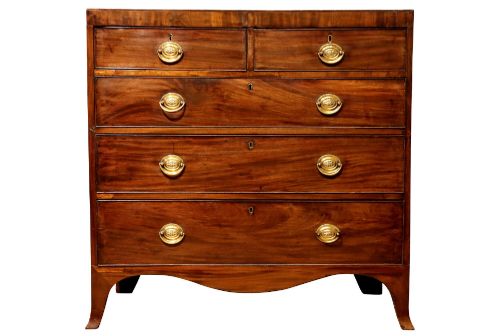
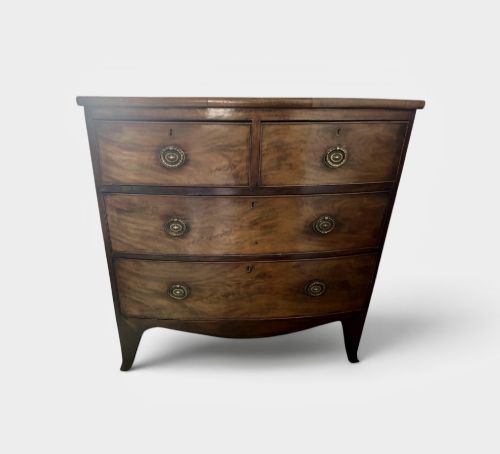
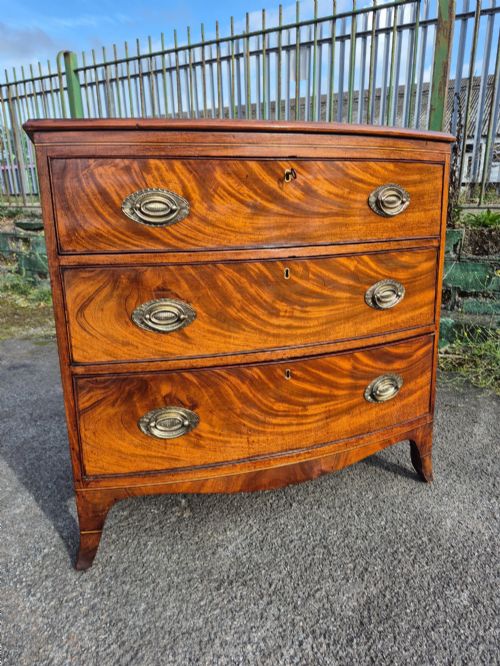
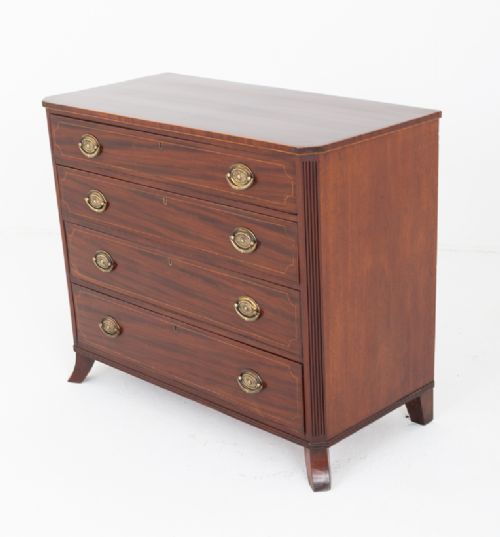
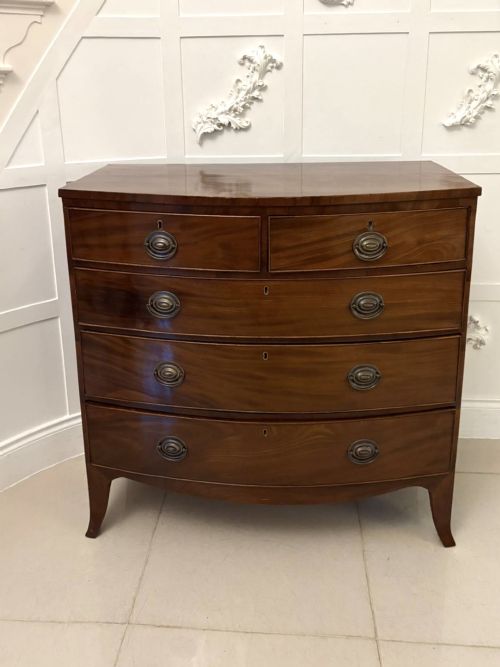
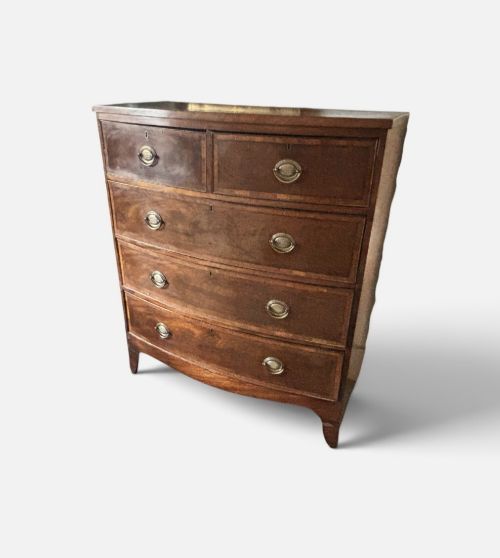
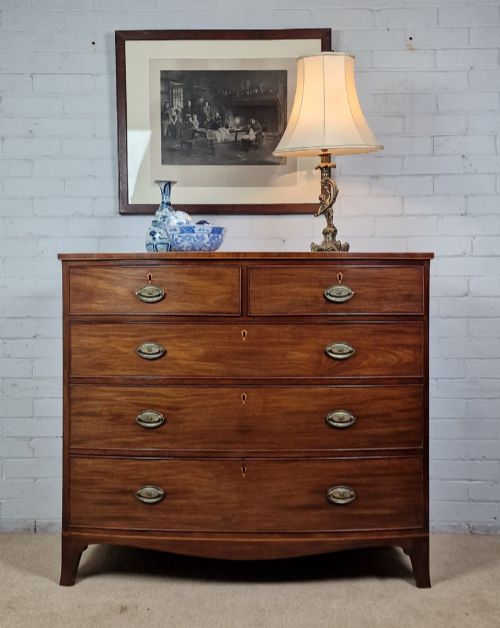
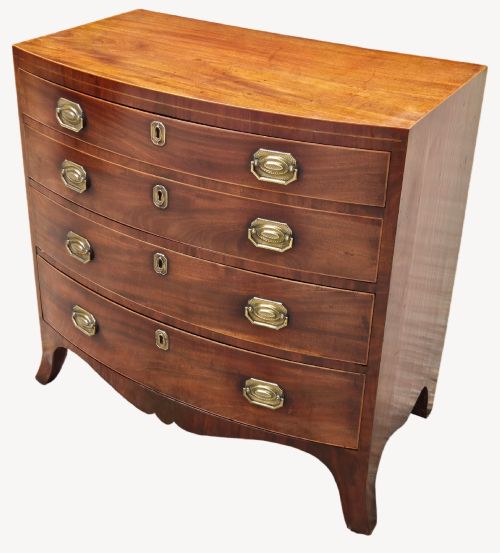
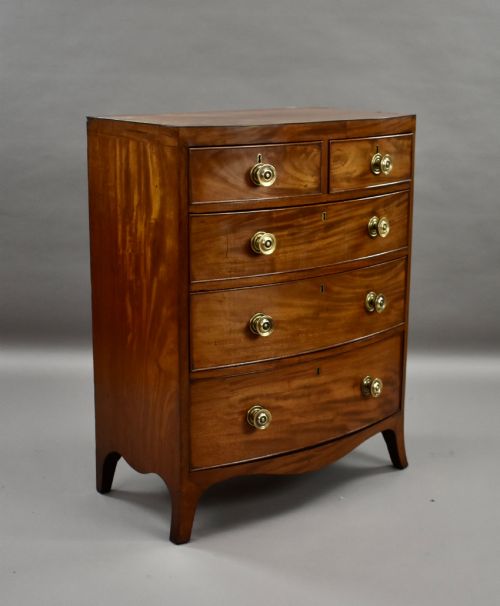

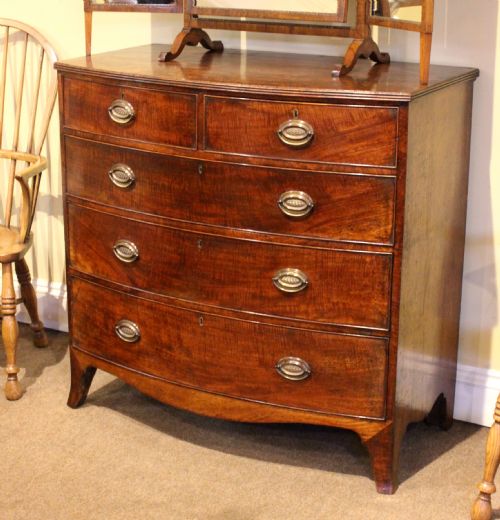

Splayed Feet Chest of Drawers
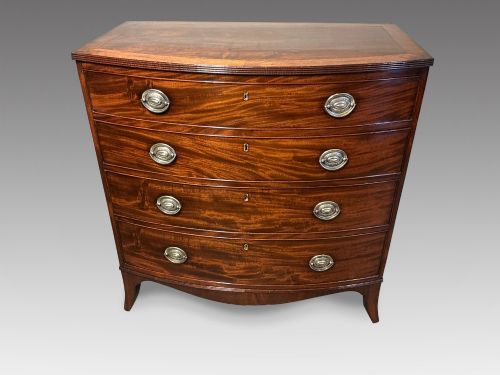
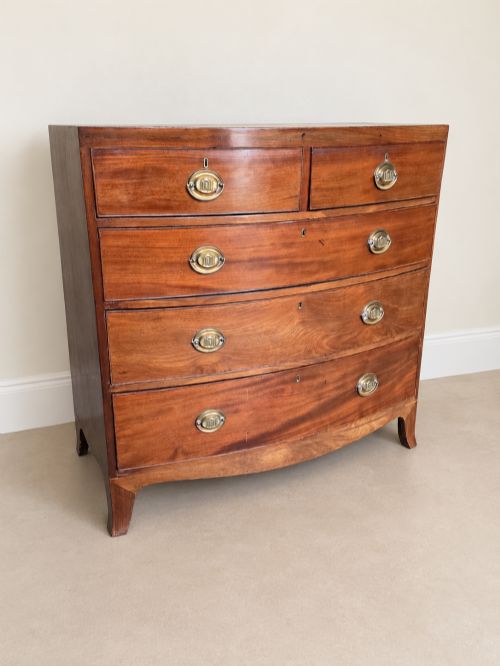
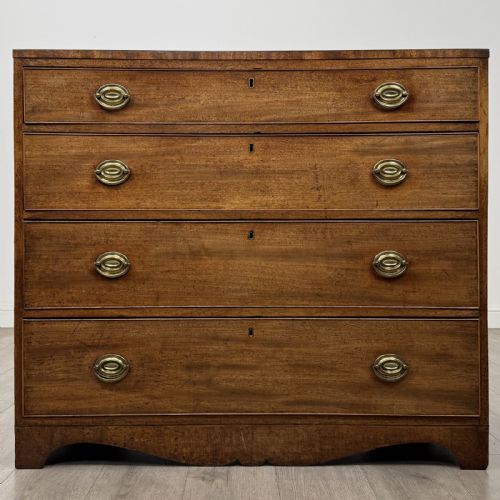
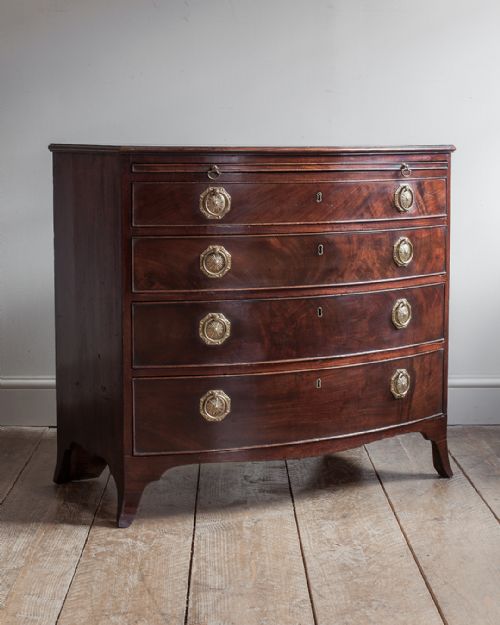
A splayed feet chest of drawers offers distinct proportions and elegant bracket supports, combining practical storage with timeless cabinet-making.
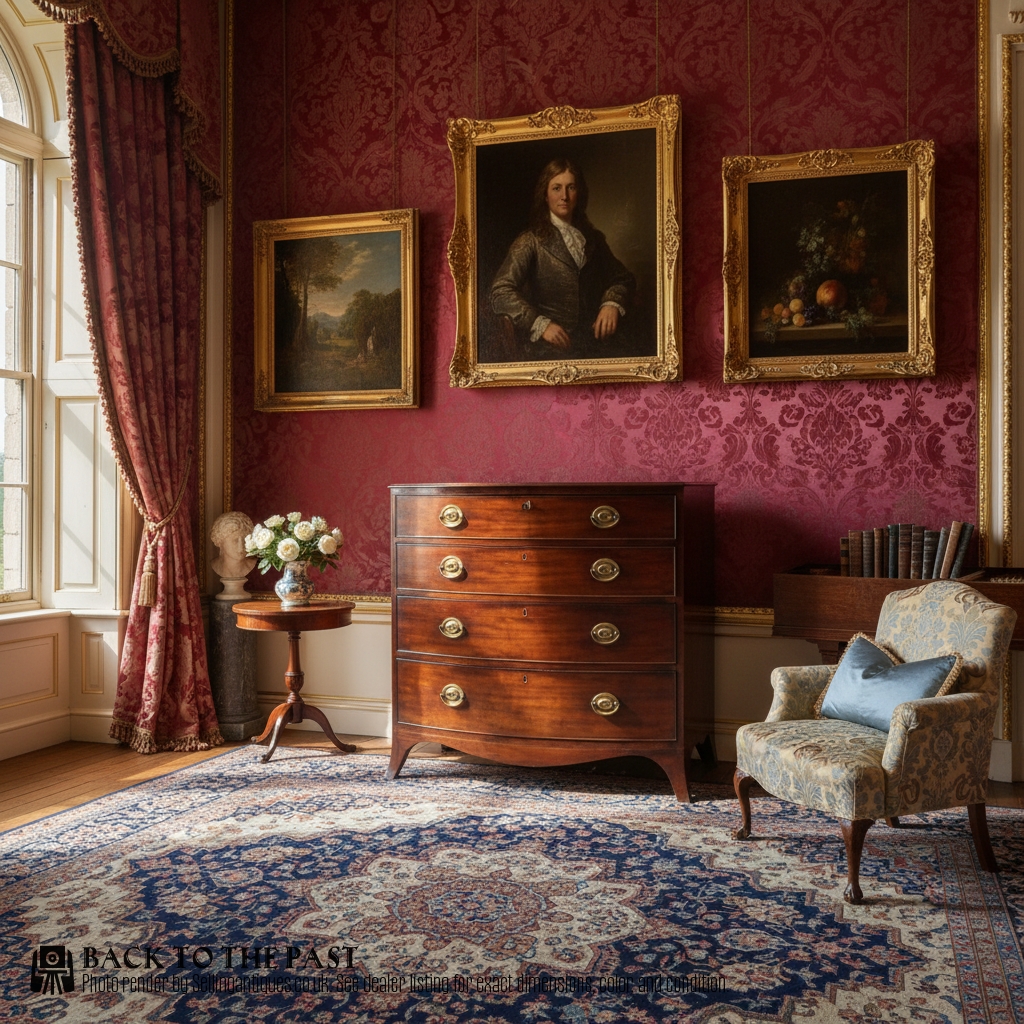
Splayed Feet Chest of Drawers
A splayed feet chest of drawers brings together standard drawer configurations and distinctive outward-slanting bracket feet that lighten the visual weight of the piece. Buyers searching for a splayed feet chest of drawers often encounter Georgian and Regency examples, alongside later 19th-century interpretations.
The pieces appearing in this selection primarily span the Georgian and Regency periods, stretching into the Edwardian era. Forms range from compact bowfront designs and narrow tallboys to larger serpentine commodes and bachelor chests.
Mahogany dominates the available forms, frequently enhanced by satinwood, boxwood inlay, and brass hardware. These storage items served traditional domestic roles in bedrooms and dressing rooms, providing functional compartments for clothing and personal items.
Craftsmanship and Proportion
Quality rests in the crispness of the inlay work, the depth of the mahogany figuring, and the structural integrity of the splayed feet where they join the base moulding. Superior examples maintain balanced proportions between the upper carcass and the supporting feet.
Finer pieces display meticulous attention to internal secondary woods, hand-cut dovetails, and original brass hardware, whereas lower tiers often show coarser timber selection or later replacement components.
Splayed Feet Chest of Drawers Retail Price Guide 2026
Typical asking prices for splayed feet chest of drawers among the pieces listed under this phrase on Sellingantiques today, from the lower quarter to the upper quarter. They describe what is for sale here now, not the wider market.
Some chests hide sliding shelves originally intended for folding neckties out of sight.
The Splayed Feet Chest of Drawers Glossary
- Splayed feet
- Outward-slanting bracket feet positioned at the base corners of a cabinet. This foot style provides both stability and a lighter visual silhouette than standard straight brackets.
- Bowfront
- A convex curved front profile popular on case furniture during the Georgian and Regency eras. This curved shape softens the rectangular outline of the storage piece.
- Crossbanding
- A strip of veneer applied to the borders of a drawer front or top with the wood grain running perpendicular to the surrounding surface. It creates a defined decorative border.
- Bratishing slide
- A pull-out shelf integrated above the top drawers used for folding garments or serving as a temporary writing surface. It remains hidden behind the main carcass when closed.
- Tallboy
- A tall chest of drawers constructed in two sections, typically stacking a smaller chest upon a larger base. These pieces maximise vertical storage space in domestic chambers.
Splayed Feet Chest of Drawers: Frequently Asked Questions
How are splayed feet constructed?
Splayed feet are formed by cutting bracket supports on an outward angle so they flare away from the base of the cabinet. Cabinet-makers attached these feet securely to the bottom frame to distribute the weight of the chest evenly while adding a decorative profile.
This method required precise woodworking joints to ensure the outward slant remained stable over decades of daily domestic use and movement across floors.
What woods were used for these chests?
Makers relied primarily on mahogany, including figured and flame mahogany veneers, supplemented by oak for internal drawer construction. Decorative highlights were achieved using contrasting timbers such as satinwood and boxwood for inlay and stringing.
Secondary woods like deal or pine occasionally appear on internal or back panels, depending on the regional workshop and the specific period of manufacture.
Where were these chests placed originally?
These storage pieces were designed principally for bedrooms, dressing rooms, and private chambers to hold folded garments, linens, and personal accessories. Their compact footprints allowed them to fit neatly against walls in smaller dressing spaces.
Certain variations equipped with brushing slides also functioned temporarily for writing or laying out garments during daily dressing routines.
How do I distinguish Georgian from Regency pieces?
Georgian pieces generally exhibit heavier proportions, restrained classical ornamentation, and substantial mahogany timbers associated with 18th-century cabinet-making traditions. Regency examples often introduce bolder veneers, finer stringing lines, and more compact curved profiles.
Examining the internal drawer construction, handles, and secondary woods helps clarify the specific period of production when stylistic overlaps occur.
Are the brass handles usually original?
Original brasses are secured with specific fastening techniques and leave distinct impressions on the wood grain if removed. Many pieces retain period-appropriate replacement hardware fitted during past centuries of use.
Evaluating the alignment of screw holes and the patina of the metal helps determine whether the hardware matches the age of the main cabinet structure.