



Georgian Curule Seating
Georgian curule seating brings ancient Roman X-frame dignity into period rooms as sturdy mahogany, rosewood, and cane stools, benches, and window seats.
Georgian Curule Seating
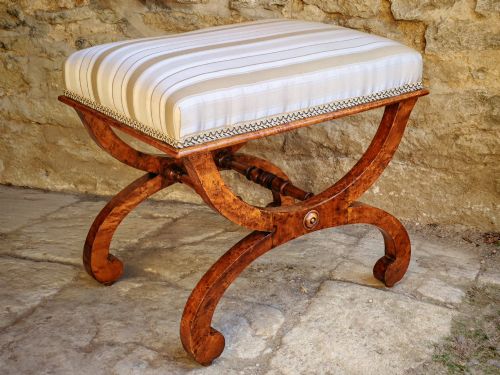
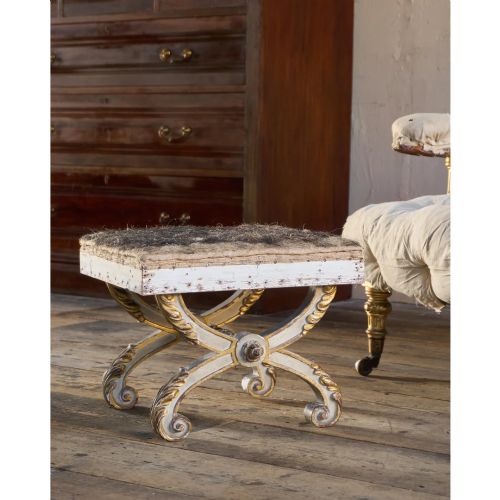
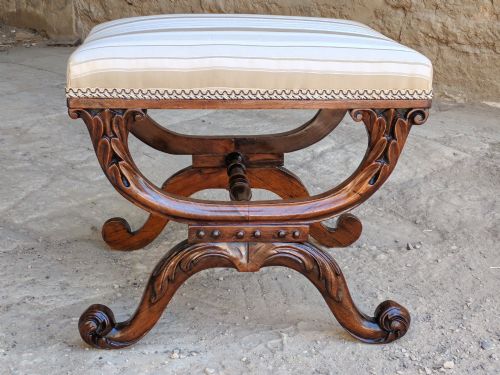
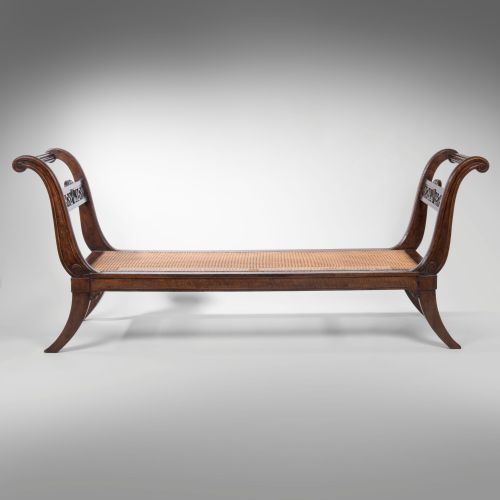
When you search for georgian curule seating, you encounter X-frame forms that draw on classical antiquity, spanning stools, footstools, benches, window seats, and open armchairs.
The pieces on this page lean heavily towards the Regency period and the wider Georgian era, alongside nineteenth-century Irish examples and mid-nineteenth-century interpretations.
Makers such as Miles & Edwards shaped these forms, while other pieces survive simply as robust mahogany, rosewood, burr maple, or painted wood designs.
How georgian curule seating was made
Cabinetmakers constructed these frames from dense timbers like mahogany and rosewood, sometimes incorporating burr maple veneers or utilising painted wood surfaces.
Metal elements such as brass mounts or iron work reinforce the X-shaped cross-frames, while seating surfaces feature woven cane, upholstery fabrics, or gilded detailing.
Georgian Curule Seating Retail Price Guide 2026
Typical asking prices for georgian curule seating among the pieces listed under this phrase on Sellingantiques today, from the lower quarter to the upper quarter. They describe what is for sale here now, not the wider market.
Roman magistrates once carried collapsible curule chairs everywhere, but your nineteenth-century Irish X-frame stool stays firmly put.
What varies in quality
Quality rests in the crispness of the X-frame joinery and the integrity of the primary timber, whether figured rosewood or rich mahogany.
Documented craftsmanship from established makers like Miles & Edwards elevates a piece, as does the survival of original cane work, brass hardware, or early upholstery.
Miles & Edwards
The Georgian Curule Seating Glossary
- Curule
- An X-shaped form derived from ancient Roman magistrate chairs. This foundational cross-frame design defines the structural silhouette of these stools and window seats.
- Regency
- A stylistic period spanning the early nineteenth century in Britain. It draws heavily on classical Greek and Roman motifs.
- Window seat
- A long, narrow form designed to sit beneath a window. These pieces often feature scrolling ends or open arms.
- Burr maple
- A wood cut from the burl growth of a maple tree, yielding highly figured grain patterns. Cabinetmakers utilised it for decorative surface impact.
Georgian Curule Seating: Frequently Asked Questions
Where did these seats go in a house?
These forms sat primarily in formal reception rooms, hallways, or beneath drawing-room windows where their classical silhouette added architectural weight.
They functioned as moveable seats for guests or as dressing stools, offering a sturdy perch rather than deep lounge comfort.
How do I identify the Regency pieces?
Regency examples display sharp classical restraint, often utilising dark rosewood or mahogany with crisp turned stretchers and elegant X-frame geometry.
They separate themselves from later nineteenth-century interpretations through a lighter touch in the carving and strict adherence to ancient Roman proportions.
Are these frames structurally strong?
The intersecting X-frame construction distributes weight effectively across the centre, making these stools and benches remarkably robust for daily use.
However, the joints where the cross-members intersect require stable humidity to prevent looseness over time.
Can I use them as footstools?
Many examples on this page serve as footstools or dressing stools, though larger versions function as window seats or benches.
Check the height and length of the specific piece to determine whether it suits seating or resting feet.