

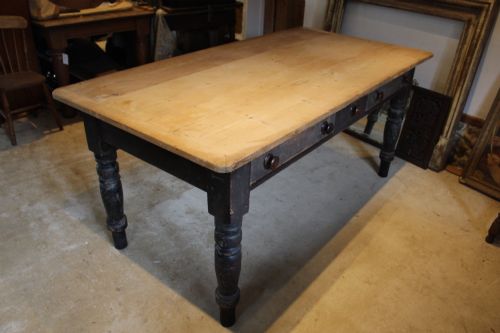
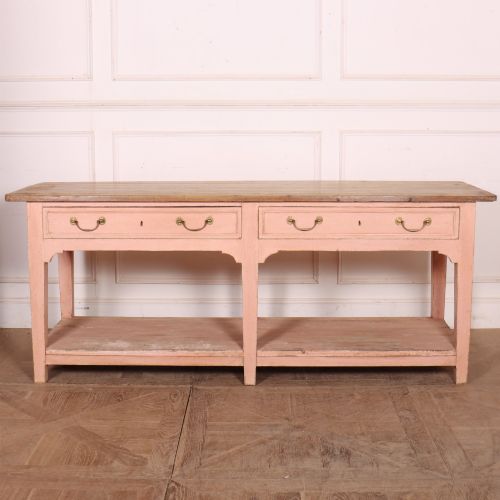
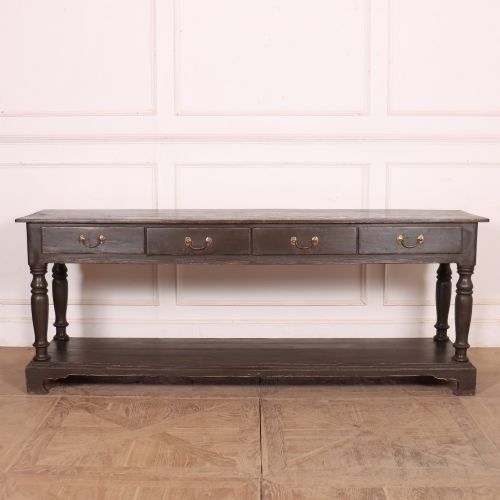
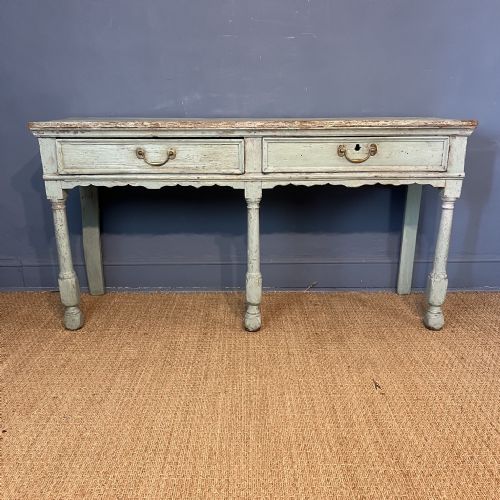
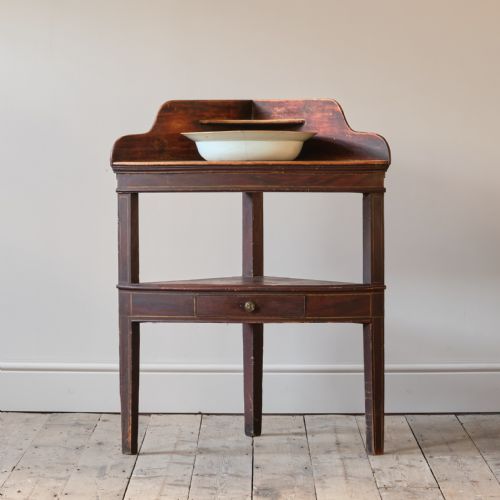
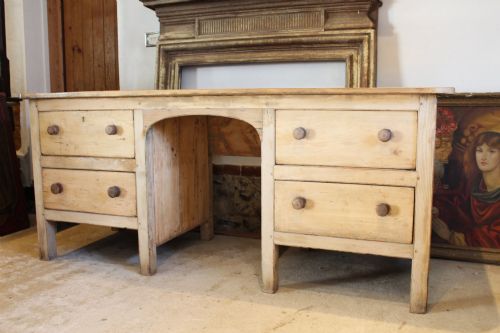
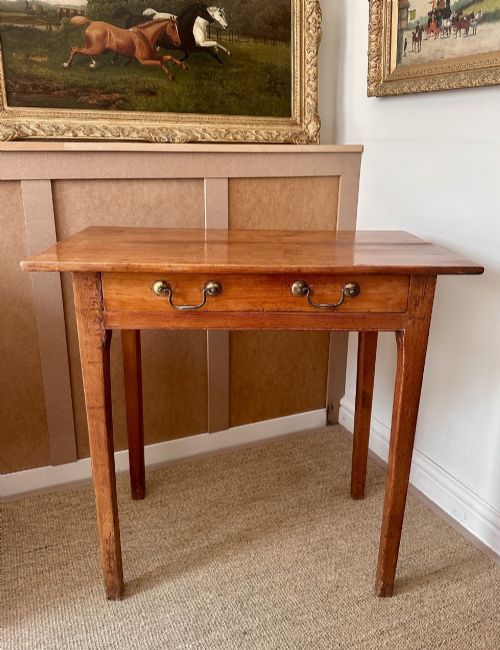
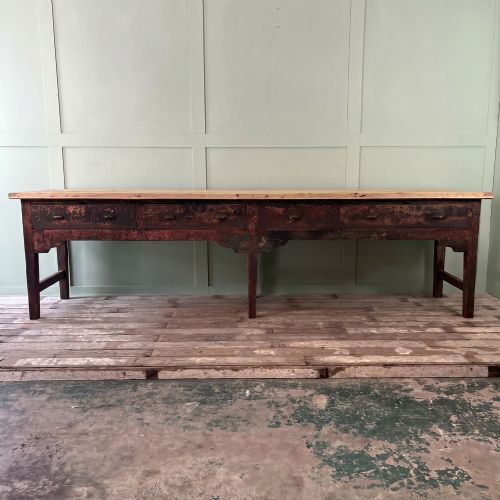
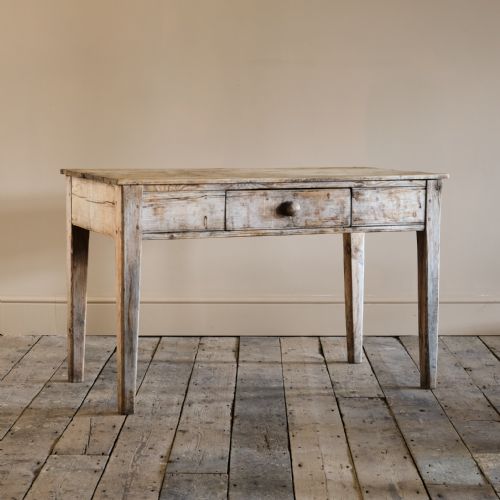

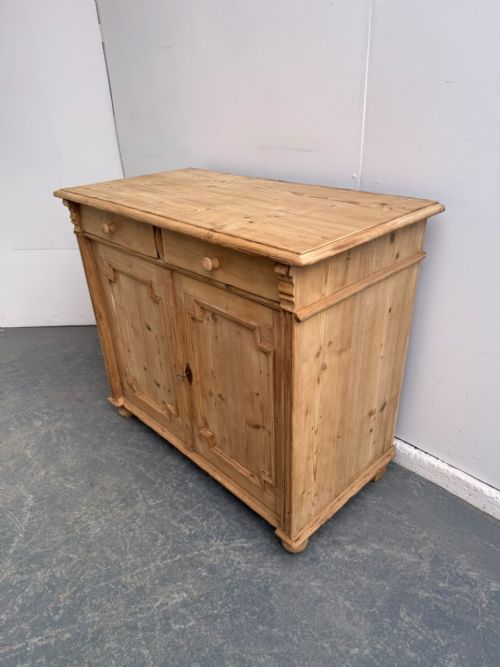


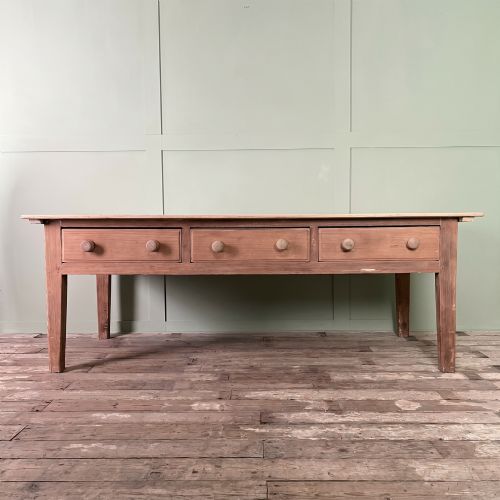

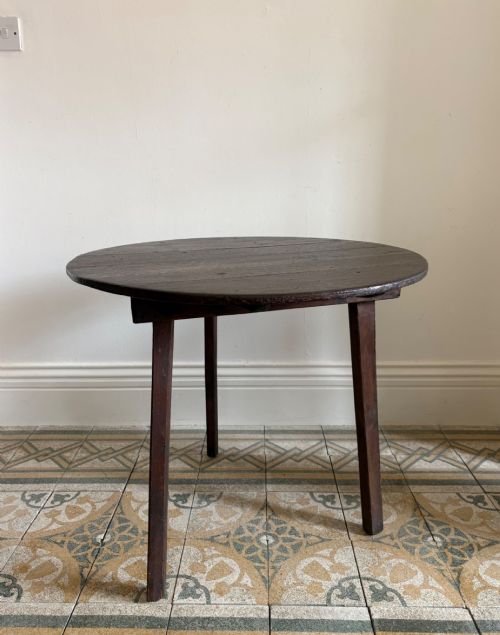
Georgian Country Pine Table
A georgian country pine table brings practical vernacular utility and honest domestic warmth into a modern interior.
Georgian Country Pine Table
A georgian country pine table encompasses diverse domestic forms built for daily service in domestic kitchens, dairies, and sculleries across the eighteenth and nineteenth centuries. Buyers searching this phrase meet an array of practical furnishings, from potboard dresser bases and side tables to dairy prep tables and cricket tables.
The regional variety spans English and Welsh workshops, featuring plank tops, pedestal supports, and occasional combinations with oak, sycamore, or ash. Surviving examples frequently display original paint finishes or mellow waxed surfaces shaped by generations of practical use.
Materials and Construction
Construction relies heavily on native pine timber, often paired with robust secondary woods such as oak, sycamore, or ash for structural elements and work surfaces. Cabinetmakers and local carpenters joined thick planks using traditional pegged mortise and tenon joints designed to withstand heavy daily labour.
Surface treatments range from plain waxed timber to historic layers of lead-based or oil paints applied to protect the soft wood. Iron or brass hardware, including drawer pulls and hinges, secures functional components like drop leaves and potboards.
Georgian Country Pine Table Retail Price Guide 2026
Typical asking prices for georgian country pine table among the pieces listed under this phrase on Sellingantiques today, from the lower quarter to the upper quarter. They describe what is for sale here now, not the wider market.
Several items double as seating, including ingenious table-chairs designed to save space in compact country cottages.
Judging Quality
Quality rests upon the integrity of the original timber structure and the honesty of the surface patina. Tables retaining their early or original paint finishes command greater interest than stripped or overly restored examples.
Proportion and utility define the finer pieces, where sturdy legs, well-balanced tops, and minimal structural alterations reflect careful regional craftsmanship rather than factory production.
The Georgian Country Pine Table Glossary
- Potboard dresser base
- A low kitchen sideboard featuring an open lower shelf used for storing pots and domestic utensils. This form provides a stable platform for food preparation.
- Cricket table
- A small, light three-legged table traditionally used on uneven flagstone floors in country cottages. The three-legged design prevents rocking.
- Vernacular
- Architecture and furniture created independently of academic architectural styles, using local materials and traditional techniques. These pieces serve immediate utilitarian needs.
- Dairy prep table
- A heavy utilitarian table constructed with scrubbed wooden tops suited for milk and cheese processing. Sycamore and pine were favoured for their resistance to splitting.
- Original paint
- The initial decorative or protective coating applied to a piece of furniture, surviving beneath subsequent layers. Its preservation determines historical value.
Georgian Country Pine Table: Frequently Asked Questions
What is a country pine table?
A country pine table is a utilitarian domestic furnishing produced by regional carpenters during the eighteenth and nineteenth centuries.
These tables were built for hard work in kitchens, dairies, and sculleries using locally sourced softwood.
How do I date an old pine table?
Dating relies on examining construction methods, tool marks, timber selection, and surface wear.
Hand-cut joints, original paint layers, and regional design traits help distinguish eighteenth-century forms from later nineteenth-century pieces.
Were these tables painted originally?
Many regional tables received protective coats of paint to seal the soft pine and brighten dark farmhouses.
Surviving historic paint surfaces provide significant insight into the working life of the piece.
How do I care for a pine table?
Care involves maintaining stable humidity levels and avoiding excessive moisture on historic timber surfaces.
Regular applications of traditional beeswax help nourish the wood and preserve the existing patina.