


Georgian Copper Bin
A georgian copper bin brings heavyweight metal and hearth warmth into a room, serving as a robust log bucket or fireside carrier.
Georgian Copper Bin
When you search for a georgian copper bin, you are looking at heavy metal vessels made for domestic service by the hearth, most frequently encountered here as log bins, coal buckets, cauldrons, and scuttles. These pieces originate from the eighteenth century, the Georgian era, and the nineteenth century, often appearing alongside brass bands, iron handles, and oak elements.
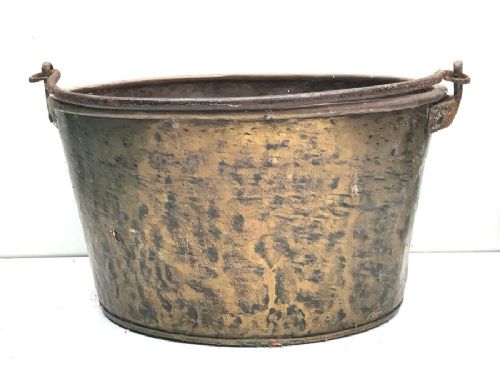
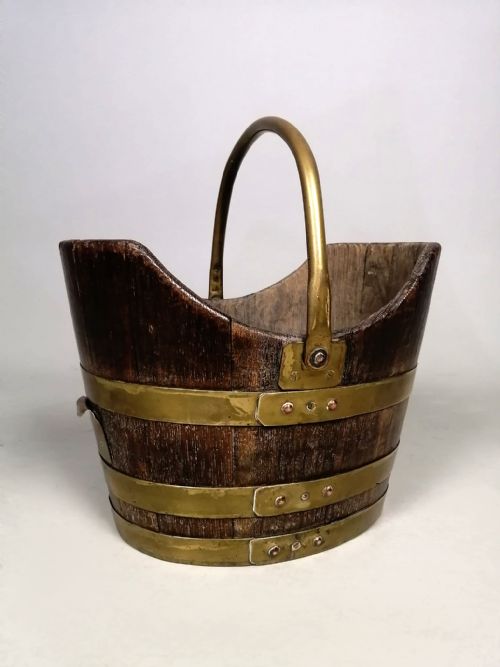
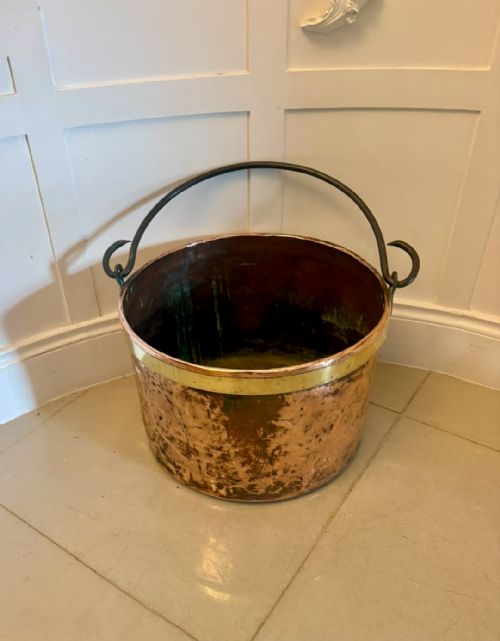
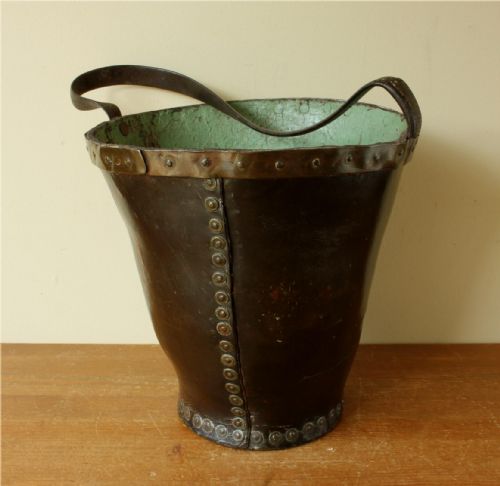
The forms on this page range from tall cylindrical log carriers and helmet-shaped coal scuttles to riveted cauldrons and lidded pots. You will also find variants adapted over time, such as leather fire buckets studded with copper or pieces repurposed as planters.
Most examples hail from the Georgian and Victorian periods, reflecting the shift from utilitarian kitchenware and hearth storage to functional country house accessories. They combine practical metalworking with strong domestic forms that suit modern firesides just as well.
How they were made
These vessels rely on sheet copper shaped by hand, joined using traditional brazed, dovetailed, or seamed construction methods to ensure a watertight and durable body. Rivets secure overlapping plates and attach handles, while smiths added wrought iron swing bails and brass bands for reinforcement.
Many items incorporate contrasting materials such as oak bases, brass feet, and iron swing handles to bear the heavy weight of logs or coal. Surface finishes show the hand-beaten marks of the metalsmith rather than uniform machine rolling.
Materials recorded across these items include copper, brass, wrought iron, iron, oak, and leather.
What varies in quality
The distinction between ordinary utility items and superior examples lies in the weight of the copper sheet and the complexity of the construction. Heavy gauge metal with tight dovetailing and neat hand-riveting separates substantial country house pieces from lighter vessels.
Quality also shows in the integrity of secondary materials, such as robust brass bands, thick wrought iron handles, and well-fitted iron or copper lids that have survived centuries of hearth use.
The Georgian Copper Bin Glossary
- Coal Scuttle
- A bucket or container designed specifically for holding and transporting coal to a fireplace, often featuring a shaped rim or helmet profile.
- Dovetailed Construction
- A method of joining sheet metal by interlocking fingers of metal at the seam, secured with solder or brazing.
- Cauldron
- A large rounded pot or vessel with a wide brim, often fitted with an iron swing handle for suspension or carrying.
- Log Bin
- A deep cylindrical container used beside a hearth for storing firewood and kindling.
- Swing Bail
- An arched handle attached to opposite sides of a bucket or bin that pivots freely.
Georgian Copper Bin: Frequently Asked Questions
What were georgian copper bins used for?
These vessels served heavy domestic duties around the fireplace, primarily hauling and storing logs, peat, or coal for heating the home.
Over time, many of these durable metal containers found secondary uses in country houses as large cauldrons, wash vessels, or indoor plant holders.
How do I clean a georgian copper bin?
Most collectors prefer to leave a warm, aged patina on antique copper rather than polishing it to a bright shine.
Light dusting and occasional gentle washing with mild soapy water will protect the surface metal without stripping away its historical character.
How can I tell an eighteenth century bin apart from a nineteenth century one?
Earlier eighteenth-century pieces often display hand-beaten surfaces, dovetailed seams, and heavier wrought iron elements forged by local blacksmiths.
Later nineteenth-century examples tend toward more standardised rolling and riveting techniques, sometimes combining broader brass bands with machine-finished sheet metal.
Can I use these bins to hold logs today?
These robust metal vessels remain entirely suitable for holding firewood beside a modern hearth, exactly as they did centuries ago.
Their heavy construction and durable copper walls easily withstand the daily weight and friction of logs.