



Riveted Copper Bin
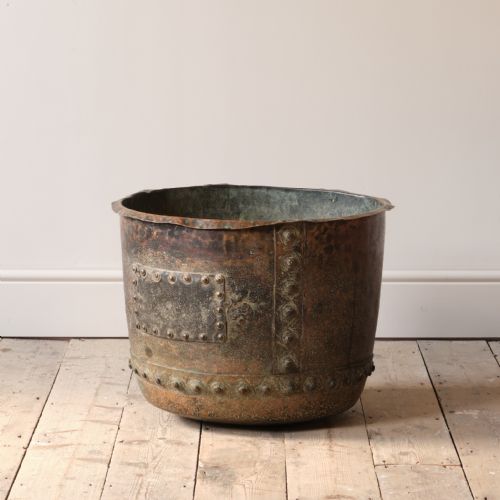
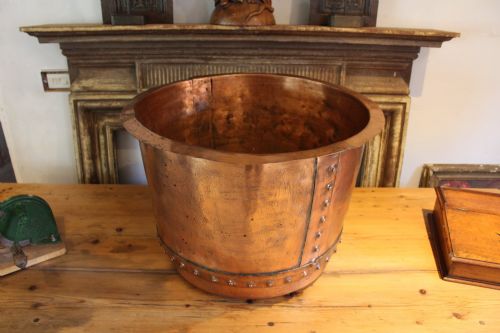
These riveted copper bin pieces are heavy utilitarian vessels built for hearth and harvest, offering robust metalwork for modern firesides.
Riveted Copper Bin
A riveted copper bin serves primarily as a sturdy receptacle for logs, coal, or household grain, bringing functional weight into domestic spaces. When you search for a riveted copper bin, you encounter heavy Victorian and Georgian forms designed for everyday labour rather than quiet display.
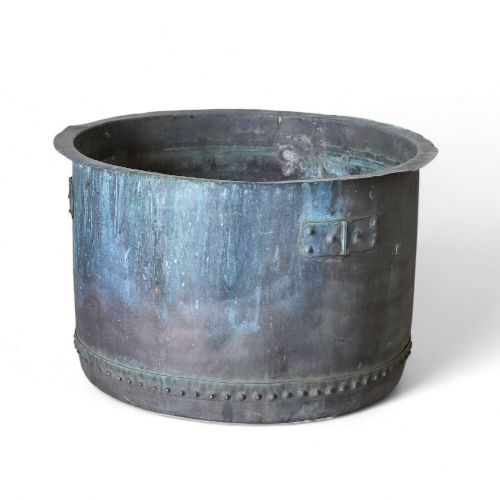
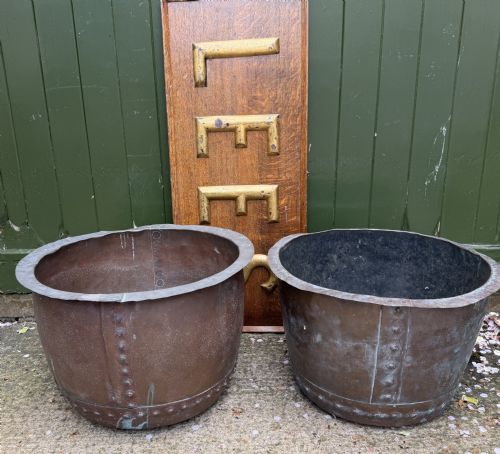
The most common examples on this page date from the nineteenth century, taking the shape of wide log buckets, planters, boilers, and round coppers. They appear in styles ranging from rustic farmhouse and Victorian utilitarian to industrial and French country.
Makers originally fashioned these vessels for practical tasks beside the hearth or within farmyards, utilising durable sheet metal. Today, buyers repurpose them as planters, umbrella stands, or fireside storage.
How They Were Made
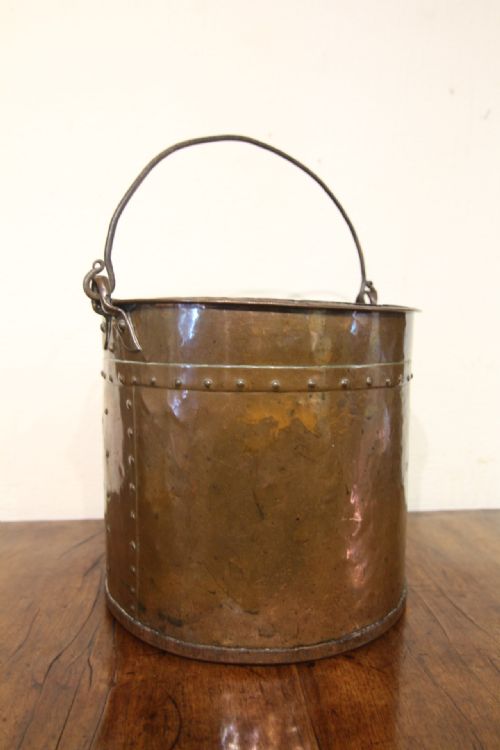
Craftsmen shaped heavy sheets of copper into cylindrical or oval forms, overlapping the seams to secure them permanently. They joined these sections using hand-driven metal rivets, which provided both structural strength and visual definition along the sides.
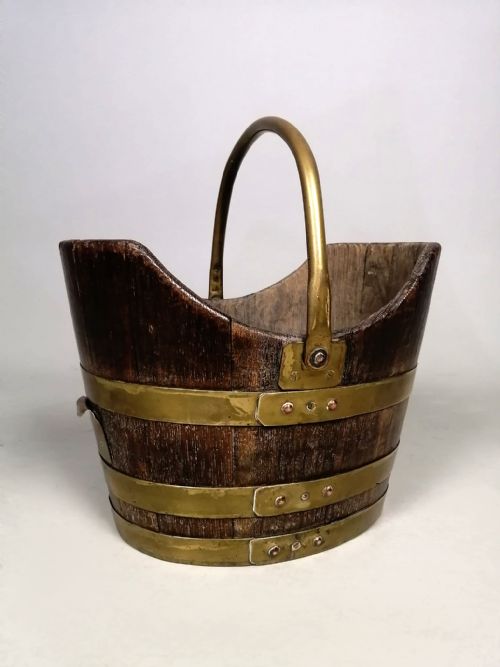
Many vessels incorporate additional materials such as iron, brass, and oak to reinforce rims, bases, and handles. Wrought iron swing handles and brass bands appear frequently, riveted directly into the body to support the weight of heavy loads like coal or damp wood.
Listings feature items spanning the eighteenth century through to the nineteen-thirties, constructed from copper, brass, iron, and oak.
What Varies in Quality
Quality rests in the thickness of the copper gauge and the integrity of the original hand-hammered rivets. Thicker metal holds its shape against heavy fuel and decades of use, whereas thin sheets buckle and dent easily under pressure.
The surface condition and natural patina distinguish superior examples from ordinary ones. A rich, weathered surface with genuine verdigris and undisturbed hand-wrought iron attachments marks an honest piece with considerable age.
The Riveted Copper Bin Glossary
- Patina
- The surface oxidation and natural colour change that develops on copper over decades of exposure to air and handling. A deep patina indicates considerable age and honest weathering.
- Verdigris
- The green crust or film that forms naturally on copper and brass through prolonged atmospheric exposure. This turquoise layer is prized by collectors for its visual depth.
- Wrought iron
- Tough, malleable iron that can be heated and hammered into shape by a blacksmith. It provides the heavy drop handles and structural bands found on many nineteenth-century vessels.
- Ferrat
- A traditional French term for a metal vessel or container used in agricultural or household storage. These pieces often feature hand-riveted seams and heavy bottom plates.
- Log bin
- A deep container designed to hold firewood beside an open fireplace. In antique pieces, this form frequently overlaps with converted agricultural boilers and grain measures.
Riveted Copper Bin: Frequently Asked Questions
How do I clean a copper bin?
Dust the surface gently with a soft dry cloth to remove loose debris.
Avoid harsh chemical polishes that strip away the authentic patination built up over centuries.
Can I use these bins outdoors?
Copper withstands external weather conditions exceptionally well due to its natural corrosion resistance.
Many buyers utilise them as garden planters or outdoor log stores.
What is the difference between a log bin and a coal bucket?
Log bins generally take a wider, deeper cylindrical form suited to bulky firewood.
Coal buckets often incorporate hinged lids, swing handles, or smaller spouts for pouring fuel.
How can I tell a nineteenth-century piece from a later one?
Examine the construction of the seams and the shape of the individual metal rivets.
Hand-hammered seams and irregular rivet placement point towards earlier utilitarian manufacture.