


Georgian Childs Armchair
A georgian childs armchair is a miniature domestic seat, crafted for the nursery and built with the sturdy integrity of full-scale seating.
Georgian Childs Armchair
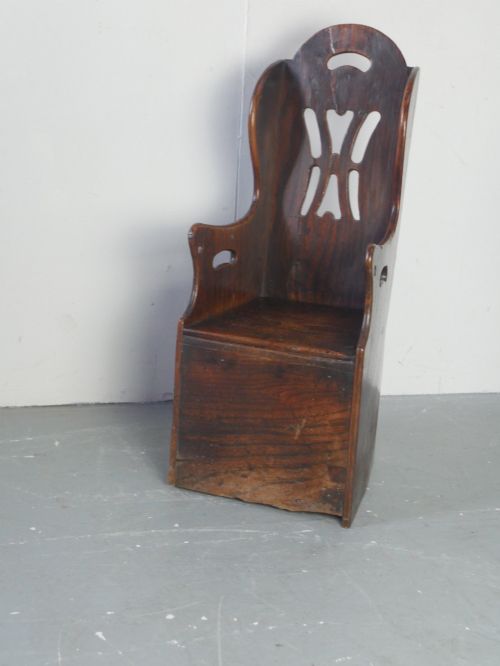
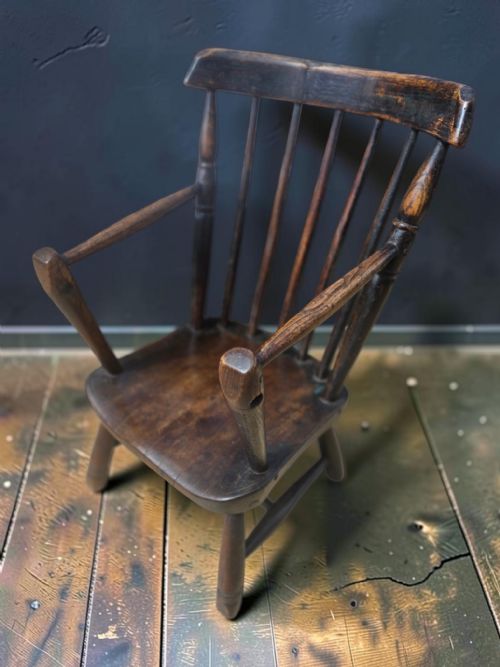
A georgian childs armchair is a scaled-down piece of historic seating designed for the young, encompassing forms from simple vernacular stools and chairs to elaborate windsor models and metamorphic high chairs. These pieces span the eighteenth and nineteenth centuries, taking shape as ladderbacks, stick backs, and rockable seats tailored for domestic nurseries.
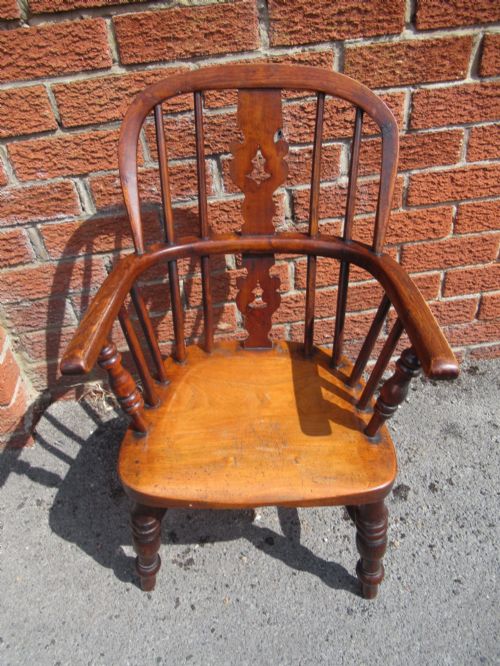
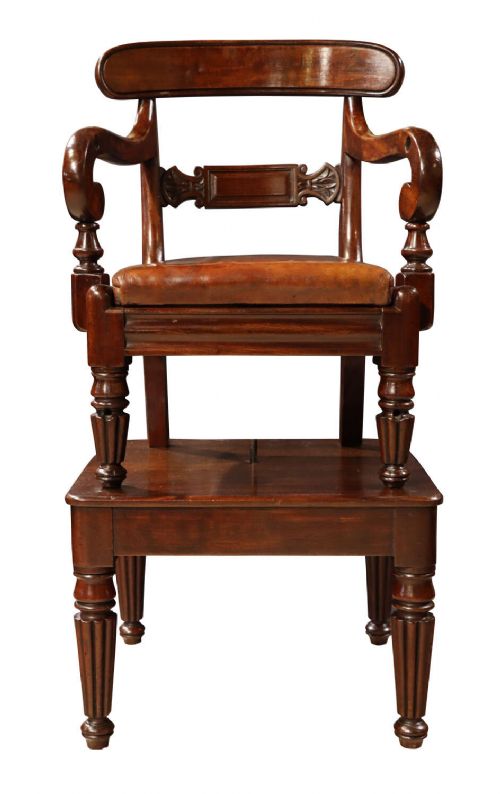
The versions most commonly met on this page include elm, ash, and yew windsors alongside mahogany armchairs reflecting georgian, regency, and william iv tastes. Many survive with regional variations, including welsh stick chairs and west country examples, showing how provincial makers adapted adult furniture styles for children.
Beyond standard armchairs, the selection incorporates specialised forms such as potty chairs, high chairs, and variants mounted on wooden stands. These diverse functional types illustrate the practical requirements of historic child-rearing translated into timber and rush.
How they were made
Makers utilised a combination of local native timbers, turning to elm, ash, yew, and beech for sturdy country windsor frames, while employing dense mahogany and walnut for formal metropolitan commissions. Turnery and bentwood techniques shaped the spindles, hoops, and arms, creating robust frameworks capable of withstanding heavy nursery use.
Seats often combined solid timber planks with woven rush seating, secured with traditional joinery such as wedged tenons and stretcher supports like the crinoline stretcher. Brass fixtures appear on specific metamorphic high chairs, allowing the seating arrangement to convert for different domestic uses.
Georgian Childs Armchair Retail Price Guide 2026
Typical asking prices for georgian childs armchair among the pieces listed under this phrase on Sellingantiques today, from the lower quarter to the upper quarter. They describe what is for sale here now, not the wider market.
Listings feature woods such as elm, ash, mahogany, yew, oak, brass, rush, beech, walnut, and fruitwood across the centuries.
What varies in quality
Quality rests on the integrity of the timber selection and the retention of original surfaces, where richly patinated yew wood or figured mahogany elevates an example far above standard utility items. The sophistication of the turnery on spindles and legs, alongside balanced proportions, marks the distinction between provincial workshop output and finer cabinet-maker production.
Originality of components defines the upper tier of the range, distinguishing chairs that retain their original stands, rush seats, or crinoline stretchers from those assembled with later replacements. The harmony between the miniature scale and the structural joinery reveals the maker's mastery.
The Georgian Childs Armchair Glossary
- Windsor chair
- A chair built with a solid wooden seat into which the legs and back spindles are direct-inserted. This construction method provides notable strength for everyday nursery seating.
- Crinoline stretcher
- A bowed or curved horizontal brace connecting the legs of a chair below the seat. It adds structural rigidity while offering a characteristic shape found on windsor models.
- Metamorphic chair
- A multifunctional piece of furniture designed to transform from a high chair into a low chair and table combination. These clever mechanical conversions served practical domestic needs.
- Bergere
- An enclosed upholstered armchair featuring cane lattice work on the back or sides. Historic examples demonstrate refined weaving techniques within miniature frames.
- Vernacular
- Furniture made by local regional artisans using traditional techniques and native woods rather than following strict metropolitan academic styles. These pieces reflect distinct geographical building traditions.
Georgian Childs Armchair: Frequently Asked Questions
What is a georgian childs armchair?
A georgian childs armchair is a historic miniature seating piece produced during the eighteenth and early nineteenth centuries. These chairs mirror the styles of adult furniture, adapted specifically for the proportions of children.
They appear in various forms, from country windsor designs made of elm and ash to formal mahogany armchairs reflecting regency and william iv aesthetics.
How were these chairs used historically?
These small chairs served daily domestic functions in nurseries and family parlors, providing secure seating for young children during meals or quiet times. Specialised variants included high chairs for dining and potty chairs featuring recessed seats.
Their robust construction in timbers like oak, beech, and fruitwood allowed them to withstand the rigorous demands of generations of children.
How do I live with a historic child chair?
Living with a historic child chair involves treating it as a decorative object of historic interest rather than active daily seating. Placing them away from direct heat sources and strong sunlight protects the aged timbers and delicate rush work.
Their compact scale makes them versatile accents for corners, mantel displays, or alongside larger antique furniture collections.
How do I tell different periods apart?
Distinguishing periods relies on observing stylistic details, wood choices, and construction methods characteristic of specific eras. Earlier eighteenth-century examples often display regional vernacular traits in elm and ash, while regency and william iv pieces favor mahogany with bolder classical lines.
Turnery shapes and leg profiles also shift from simple rustic stick backs to more refined architectural supports as the nineteenth century progresses.