

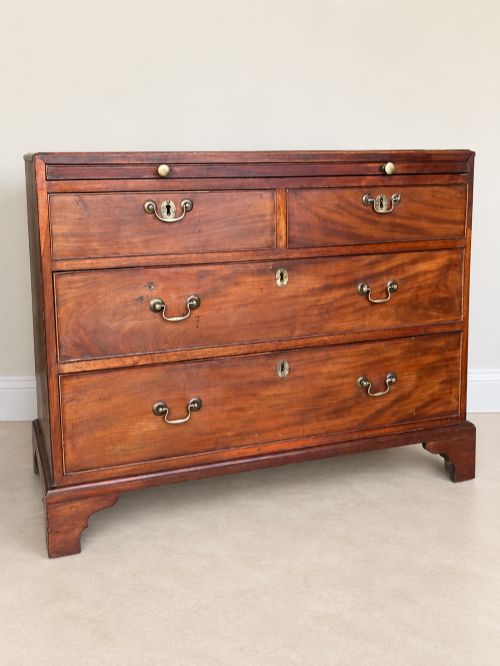
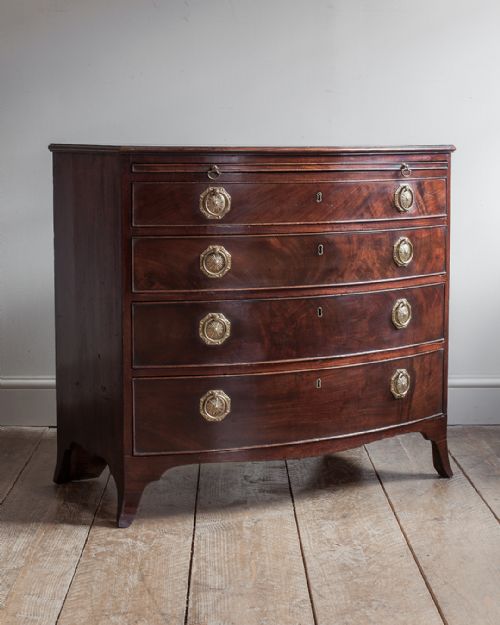
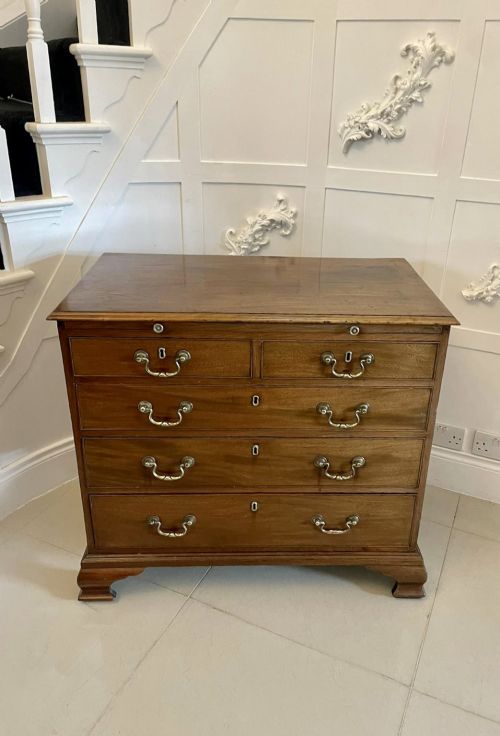

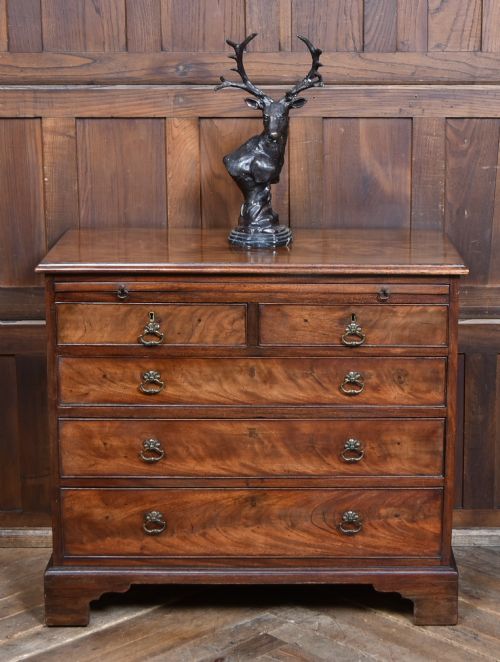
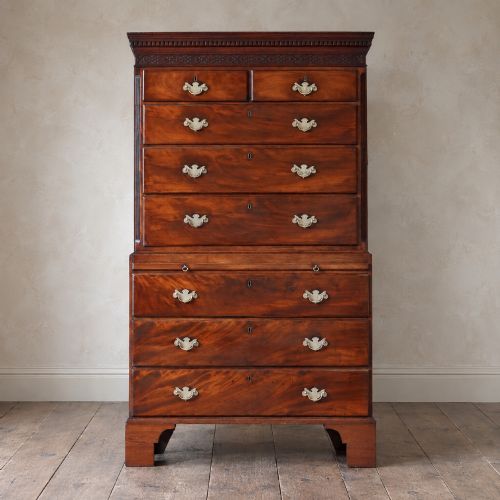
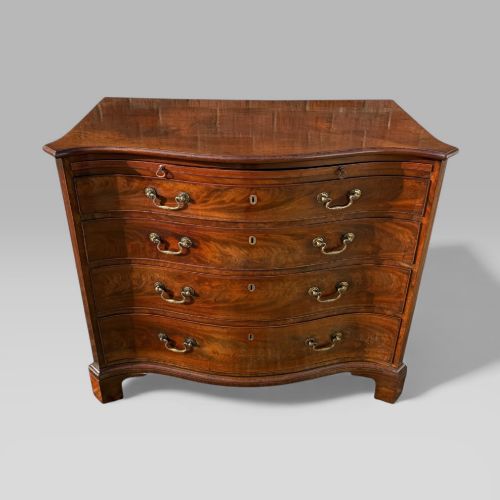
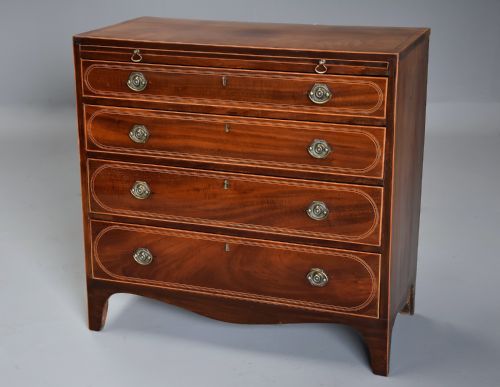
Georgian Chest with Brushing Slide
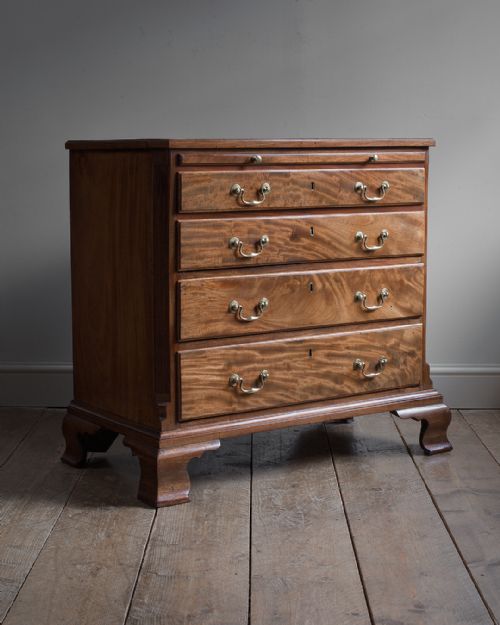
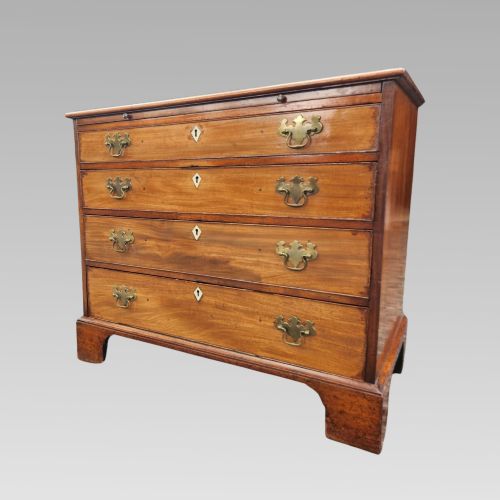
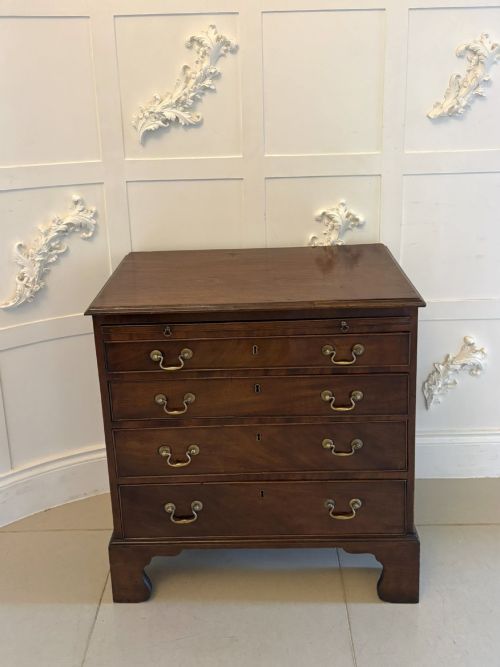
A georgian chest with brushing slide combines deep drawer storage with a pull-out shelf that once served as a writing desk or dressing surface.
Georgian Chest with Brushing Slide
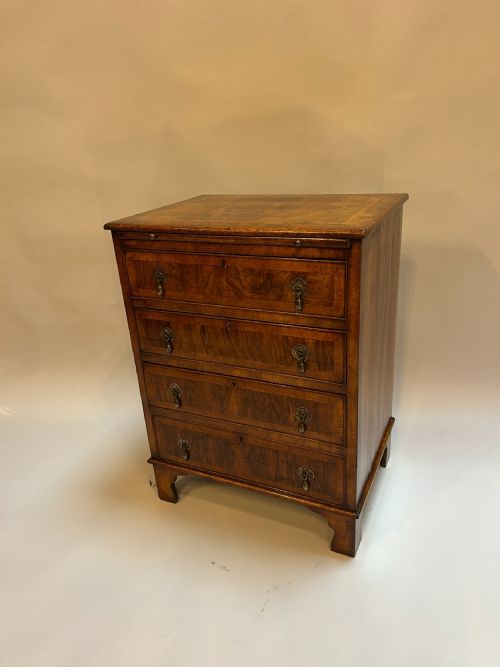
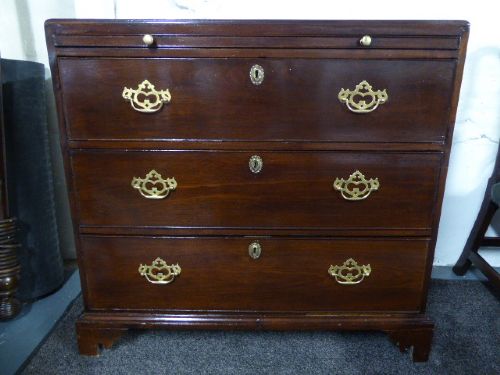
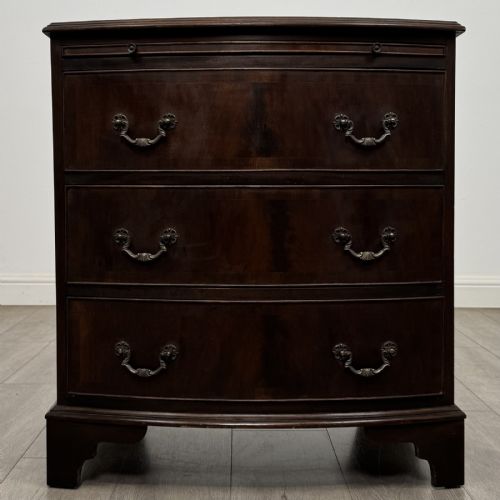
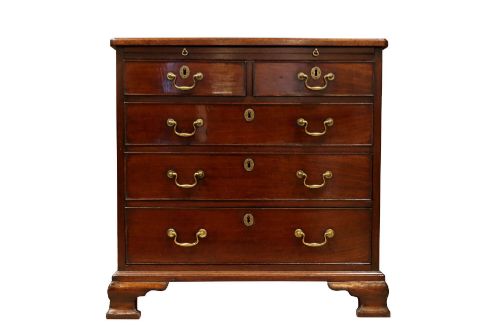
A georgian chest with brushing slide is a case furniture piece designed for domestic spaces, incorporating a horizontal pull-out panel fitted directly above the primary drawers. The listings demonstrate that these pieces appear predominantly in 18th-century forms, alongside later revivals from the 19th and early 20th centuries.
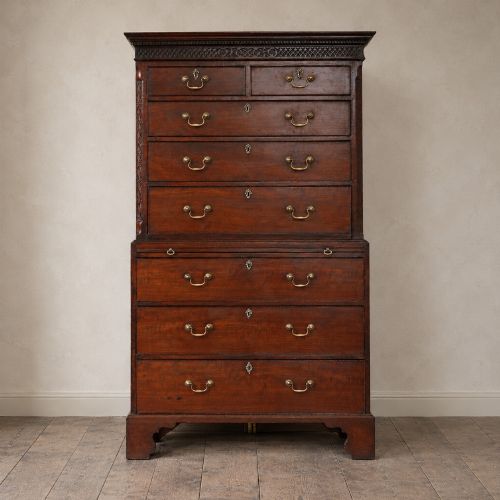
The most common incarnation on this page is the mahogany chest of drawers, though variants include walnut, burr walnut, oak, and flame mahogany. These range from low bachelor chests to taller chest on chest structures, often referred to as tallboys.
Makers of the 18th century built these pieces with proportion in mind, frequently constructing smaller proportions suitable for intimate chambers. Regional variations and revival pieces from the Edwardian era and the 1930s also populate the selection.
Materials and Construction Techniques
Cabinet makers relied heavily on dense timbers such as mahogany and oak, often selecting figured veneers and flame mahogany to elevate the visual grain on drawer fronts. Solid pine frequently served as a secondary wood for drawer linings and internal framing.
The sliding mechanism for the brushing slide typically relies on smooth timber runners housed within the upper rail of the case frame. Brass hardware, including drop handles and escutcheons, secures the drawers and provides functional pulls.
Georgian Chest with Brushing Slide Retail Price Guide 2026
Typical asking prices for georgian chest with brushing slide among the pieces listed under this phrase on Sellingantiques today, from the lower quarter to the upper quarter. They describe what is for sale here now, not the wider market.
Listings span multiple centuries, showing walnut and oak examples from the early 18th century alongside mahogany pieces from the Georgian and Regency eras.
Distinctions in Quality and Finish
The calibre of a piece is evident in the depth of the original patina and the crispness of the timber selection, such as closely matched flame mahogany or burr walnut veneers. Untouched surfaces retain a warmth and texture that heavier modern restoration can obscure.
Proportion and scale dictate the upper tier of the range, with smaller proportions commanding particular attention from collectors. The precision of the drawer dovetailing and the smooth operation of the brushing slide indicate the original skill of the cabinet maker.
The Georgian Chest with Brushing Slide Glossary
- Brushing slide
- A pull-out wooden shelf positioned above the drawers, traditionally used for writing letters or grooming before the morning mirror.
- Bachelor's chest
- A compact chest of drawers, often associated with the 18th century, featuring a built-in sliding shelf.
- Chest on chest
- A tall case furniture form comprising a smaller upper chest stacked upon a deeper lower chest, also known as a tallboy.
- Flame mahogany
- A distinct timber grain pattern resembling flickering flames, achieved by cutting diagonally across the bough of the tree.
- Patina
- The surface sheen and softening of colour developed by old wood through decades of handling, polishing, and exposure to light.
Georgian Chest with Brushing Slide: Frequently Asked Questions
What was the brushing slide used for?
The slide served as a temporary writing surface or a place to brush clothes and lay out personal items in smaller bedrooms.
It was tucked away beneath the top moulding when not in use to save space.
How do I identify a bachelor's chest?
These pieces are typically smaller in scale than standard bedroom chests and feature the characteristic pull-out slide.
They appear in walnut and mahogany across 18th-century and later revival periods.
Are these chests suitable for modern bedrooms?
Their compact dimensions and deep drawers make them practical for clothes storage in contemporary homes.
The surface provides a convenient ledge without needing a separate desk.
What is the difference between an 18th-century chest and a revival piece?
Original pieces display period construction methods, timber maturity, and natural wear patterns accumulated over centuries.
Edwardian and 1930s revivals replicate the classic forms using slightly later machinery and wood preparation techniques.