
Georgian Carver Chair Set
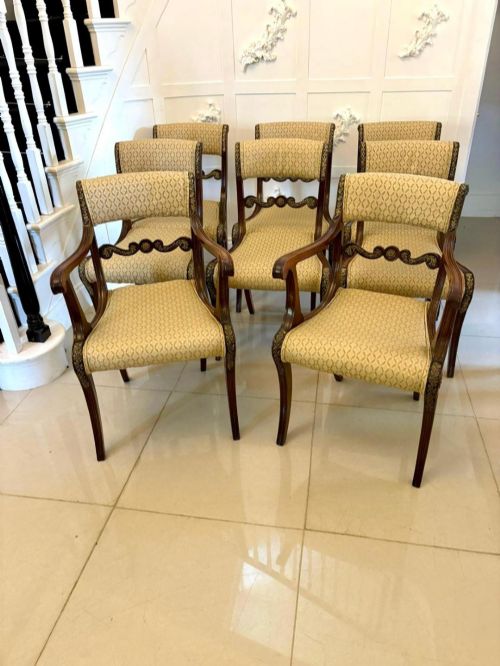
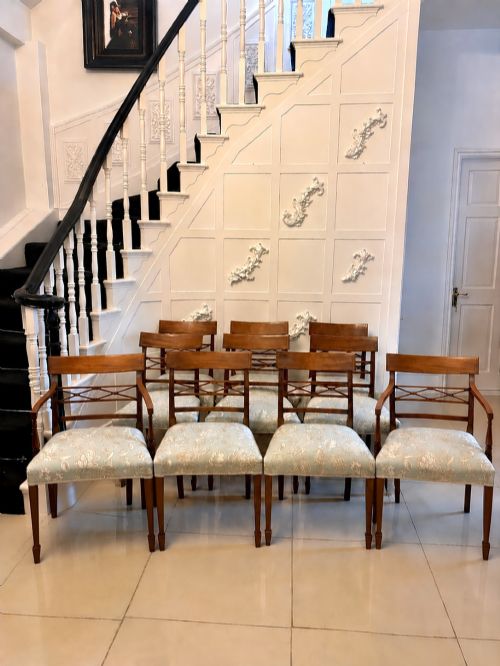
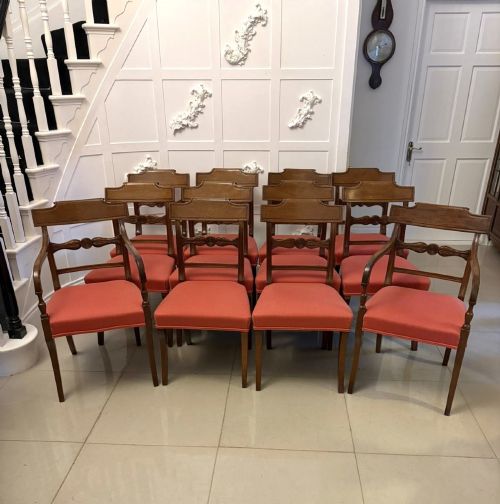
A georgian carver chair set brings grounded presence to a room, offering the structured support of armchairs alongside matching single chairs.
Georgian Carver Chair Set
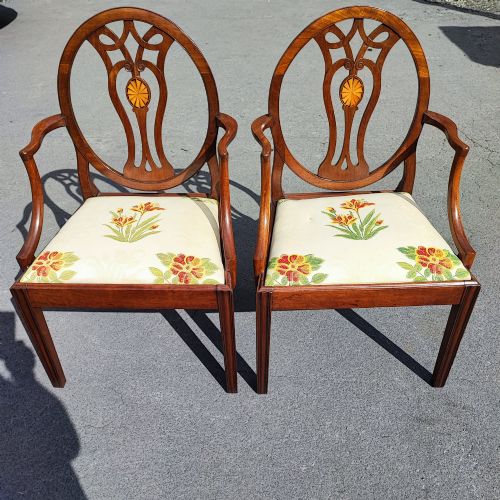
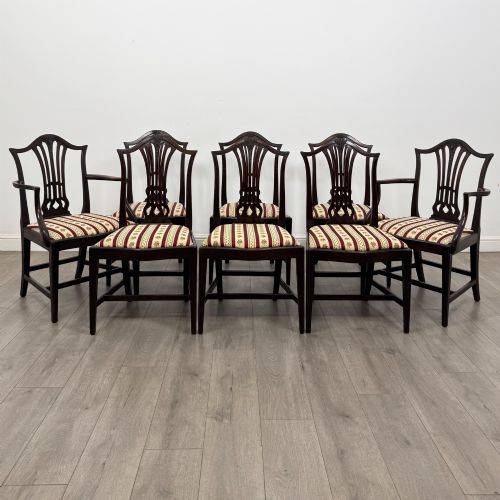
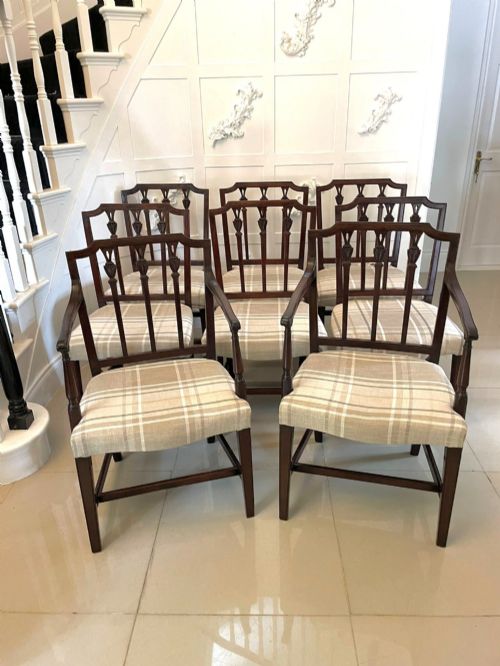
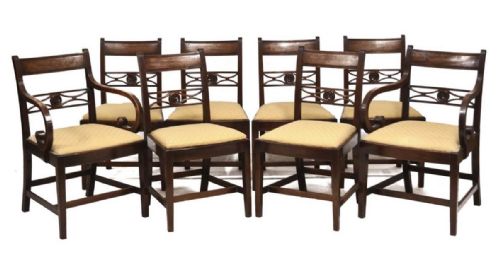
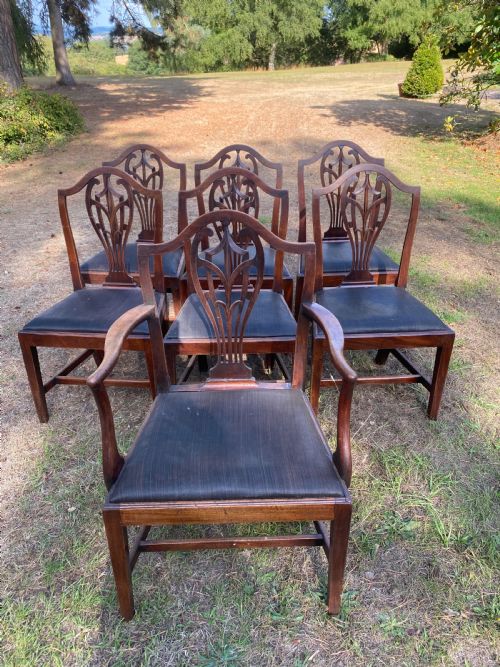
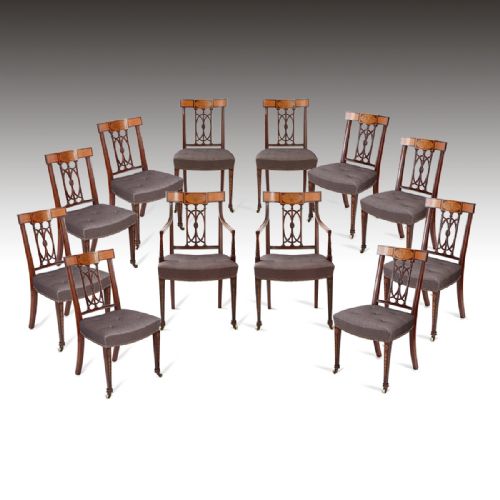
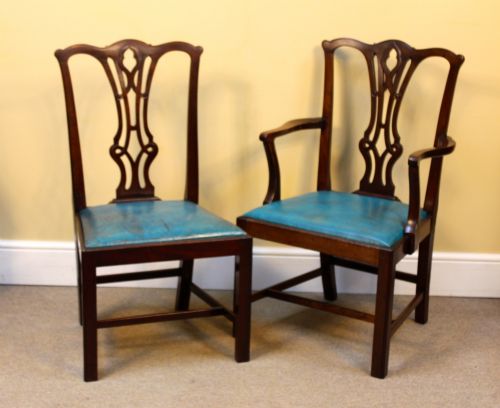
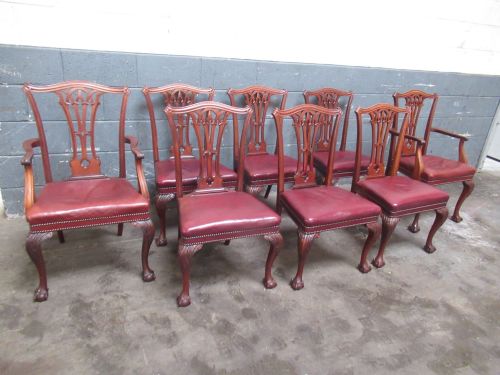
A georgian carver chair set typically comprises matching dining chairs that include one or more armchairs designed for the heads of a table. These groupings frequently emerge from the eighteenth and nineteenth centuries, alongside later revival periods that emulate those classic proportions.
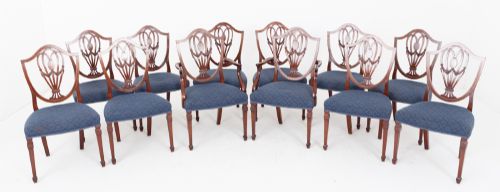
The configurations vary from small sets of six up to expansive collections of twelve or more, often pairing a majority of single chairs with a pair of carvers. Materials lean heavily toward mahogany and walnut, occasionally incorporating ash, elm or painted finishes.
Buyers encounter genuine period pieces alongside later interpretations built in the Hepplewhite, Chippendale or Sheraton manner. These seating arrangements serve both practical dining functions and historical interior design schemes.
Materials and construction
Makers relied primarily on solid timbers such as mahogany and walnut, turning to secondary woods like oak or elm for structural framing. These dense hardwoods allowed craftsmen to carve intricate splats and reeded legs without compromising the integrity of the frame.
Joinery involved precise mortise and tenon joints, secured with pegging where necessary to withstand daily use at the dining table. Seat frames frequently accommodated drop-in pads upholstered in leather, horsehair fabric, velvet or modern textiles.
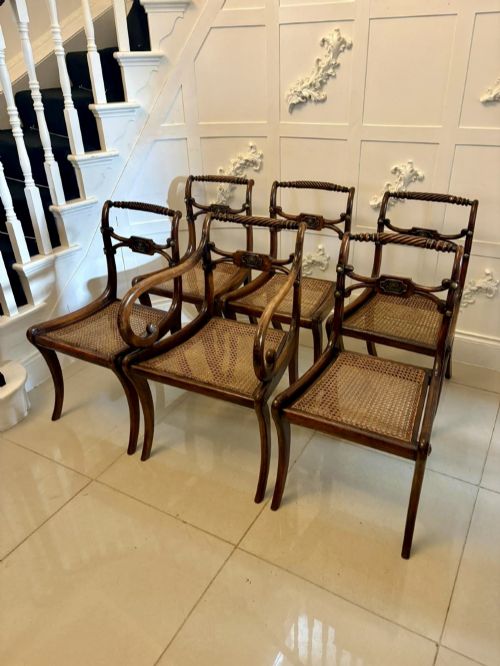
Surface treatments ranged from polished mahogany finishes to hand-painted decorations on satinwood or maple. Brass accents and cane inserts appeared in specific regional designs and Regency-era variants.
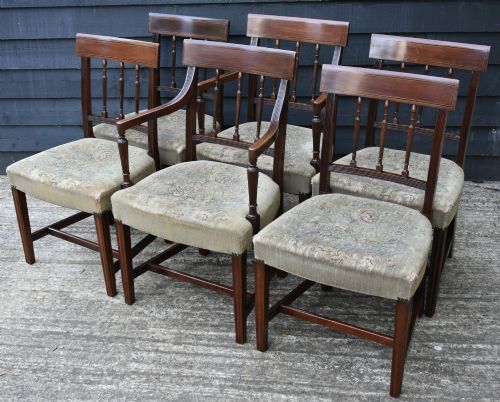
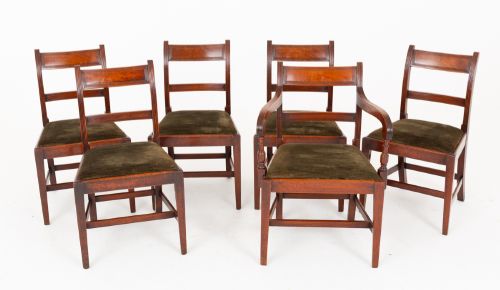
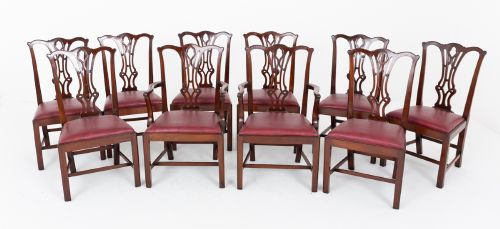
Listings feature mahogany, walnut, and oak frames paired with leather, fabric, and cane seating across eighteenth, nineteenth, and twentieth-century periods.
Distinctions in quality
The standard of carving on the back splats and arms dictates much of the distinction between ordinary and superior sets. Crisp detailing and deep relief work reflect the investment of time by skilled hands.
Proportion and matching across the entire group influence desirability, as uniform grain patterns and consistent timber selection elevate a collection. Sets that retain their original carvers alongside the matching singles hold greater integrity than assembled groups.
Waring & Gillow
The Georgian Carver Chair Set Glossary
- Carver
- An armchair designed with elbow rests, traditionally placed at the head of a dining table to match the surrounding single chairs.
- Shield Back
- A chair back shaped like a heraldic shield, popularized by designers such as George Hepplewhite during the late eighteenth century.
- Splat
- The vertical wooden strip down the centre of a chair back, often carved or pierced in styles associated with Chippendale or Sheraton.
- Reeded
- A decorative moulding consisting of parallel convex strips resembling bundled reeds, commonly found on chair legs during the Regency period.
- Vernacular
- Furniture made by regional craftsmen using local woods and traditional methods, differing from high-style urban workshop pieces.
Georgian Carver Chair Set: Frequently Asked Questions
How do I spot a true period carver?
Examine the timber shrinkage, the method of joint construction beneath the seat, and the hand-cut tool marks left by early cabinetmakers. These physical indicators reveal the age of the wood.
Compare the carving depth and proportion against documented examples from the same era to confirm authenticity.
What is the difference between singles and carvers?
Single chairs feature a standard narrow frame without arms designed to tuck neatly beneath the dining table edges. Carvers include supportive armrests that require extra clearance and provide seating for hosts.
Both share matching leg styles and back designs to maintain visual continuity around the dining arrangement.
Can I mix these chairs with modern tables?
The rich timber tones and classic silhouettes pair effectively with simple contemporary dining tables, creating a balanced contrast of eras. Ensure the table height allows the arms of the carver to slide underneath if required.
Allow enough physical space around the table perimeter to accommodate the wider frame of the armed chairs.
How do I care for antique upholstery?
Vacuum textile and leather surfaces gently using soft brush attachments to remove dust particles without abrading the fibres. Keep the seating away from direct heat sources and strong sunlight to prevent timber warping and fabric fading.
Condition leather periodically with appropriate specialist balms to maintain flexibility.