




Georgian Carved Wood Mask
Georgian carved wood mask elements appear on mirrors, seating and console tables, bringing classical character to a room.
Georgian Carved Wood Mask
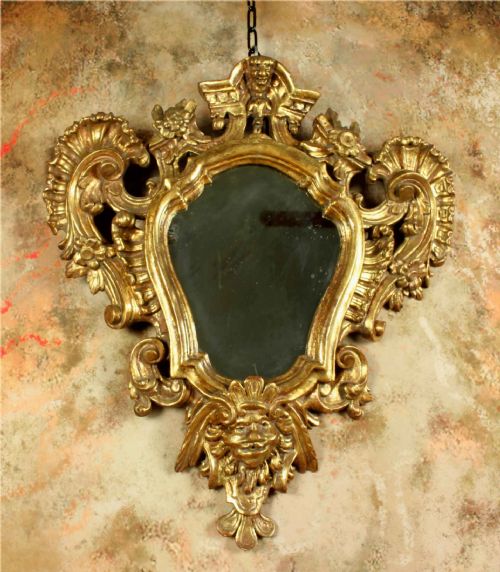
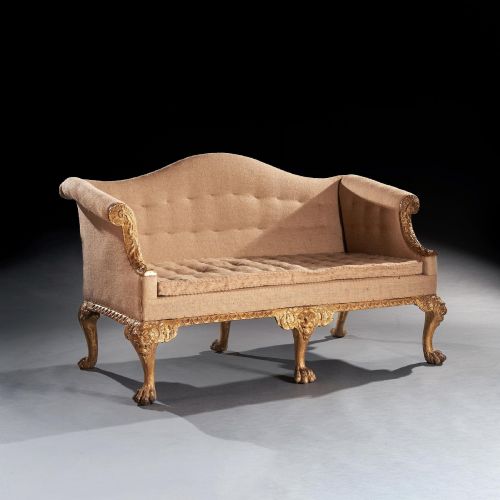
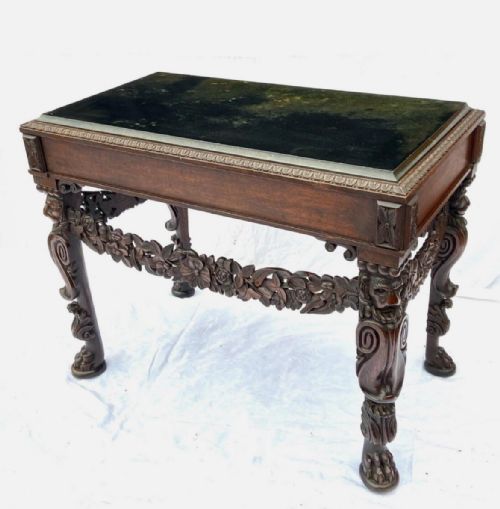
When you search for a georgian carved wood mask, you encounter architectural salvage, wall mirrors, sofas, sideboards and console tables bearing sculpted wooden faces. These pieces originate across the eighteenth century, the Regency era and later revival periods, bringing sculptural detail into functional furniture and wall ornaments. You are most likely to meet carved lion heads and classical masks integrated into mahogany, walnut and giltwood forms.
The objects vary from large architectural wall mirrors and sideboards to console tables and seat furniture resting on carved paws. Makers utilised the mask motif to accent knees of tables, feet of sofas and crests of looking glasses in distinct regional styles including Irish Rococo Revival and Regency Egyptian Revival.
How they were made
Surfaces received various finishes including gold leaf over gesso on giltwood wall mirrors and pier consoles, or polished polish on flame mahogany sideboards and chests. Upholstery fabric and brass hardware frequently complement the carved woodwork on larger furniture forms.
Giles Grendey occasionally pops up guarding a sofa on lion mask hairy paw feet.
What varies in quality
Proportion and harmony also dictate quality, as finer consoles, mirrors and sideboards integrate the carved mask as a structural element rather than a surface afterthought. The choice of materials, from figured flame mahogany to solid walnut and genuine giltwood, further separates the standard of execution.
Giles Grendey
The Georgian Carved Wood Mask Glossary
- Giltwood
- Wood that has been coated with gold leaf over a prepared gesso ground. This finish is frequently found on eighteenth-century wall mirrors and console tables.
- Flame mahogany
- Mahogany timber displaying a distinctive swirling grain pattern resembling flickering flames. Cabinetmakers utilised this veneer on high-end Georgian chests and sideboards.
- Console table
- A table designed to be fixed against a wall, often supported by front legs and secured to the wallwork. These pieces frequently feature carved masks and paw feet.
- Pier glass
- A tall mirror specifically designed to hang on the wall space between windows. They often incorporate elaborate carved wood frames and water gilding.
- Architectural salvage
- Elements rescued from buildings, such as carved wooden lion heads. These standalone items display the sculptural woodwork of a specific era.
Georgian Carved Wood Mask: Frequently Asked Questions
What periods do these pieces date from?
The items span from the eighteenth century through the Regency period and into later nineteenth and early twentieth-century revivals. You will encounter dates ranging from the 18th Century and George II eras through to William IV, Regency and Georgian Revival periods.
Each period brought distinct stylistic interpretations to the carved mask motif, shifting from Rococo curves to Neoclassical and Egyptian Revival geometries.
Where were carved masks placed on furniture?
Carved masks and lion heads typically appear on prominent structural points of furniture and mirrors. They anchor the corners of console tables, accent the feet of sofas, and crown the crests of wall mirrors.
Cabinetmakers used these sculptural faces to draw the eye to key architectural transitions, such as where legs meet aprons or frames cap a mirror plate.
How do I care for giltwood and carved wood?
Giltwood requires particular caution because the water gilding and gesso layers are sensitive to moisture and friction. Dust surfaces gently with a dry, soft brush rather than a damp cloth.
Mahogany and walnut furniture benefit from occasional waxing with traditional beeswax to maintain the timber's natural lustre without building up heavy chemical residues.
What is the difference between Georgian and Regency styles?
Georgian design, spanning the eighteenth century, often incorporates flowing Rococo asymmetry, rich mahogany and naturalistic carved details like lion masks on hairy paw feet. Regency style, emerging around 1800, leans towards classical antiquity and Neoclassical or Egyptian Revival influences.
Regency pieces frequently utilise gilt wood, architectural symmetry and specific motifs drawn from ancient Rome, Greece and Egypt.