
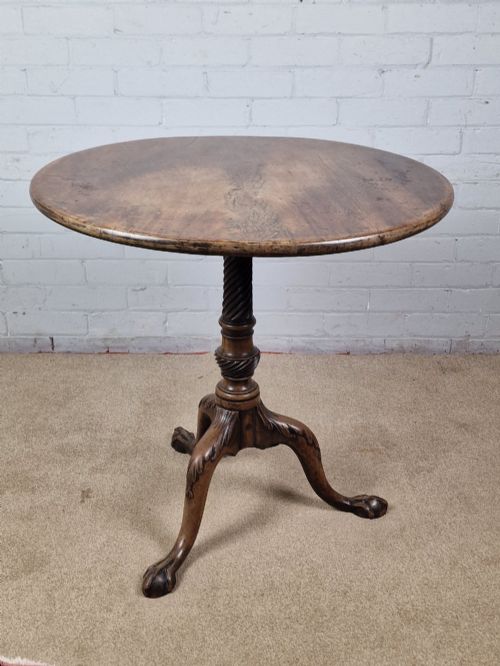
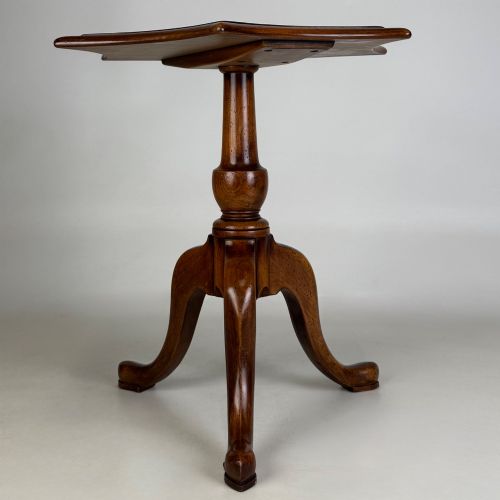
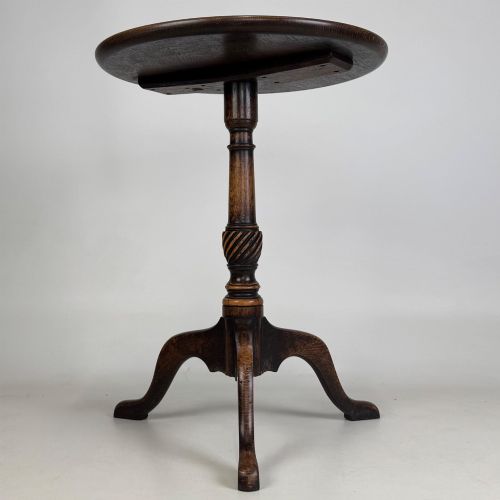
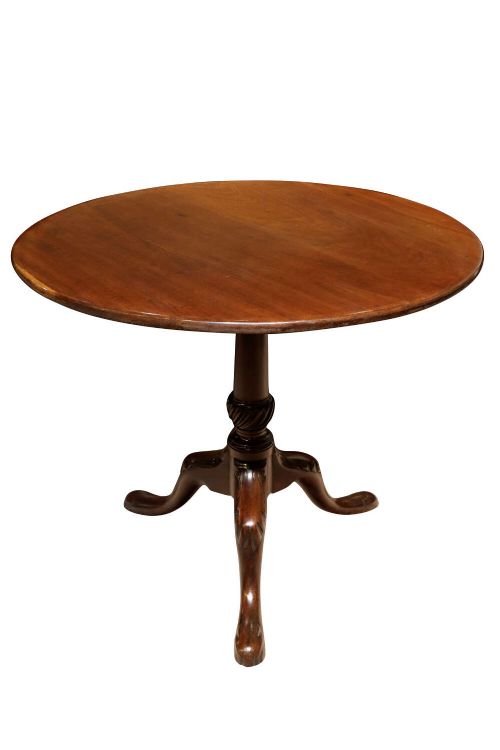
Georgian Carved Wine Table
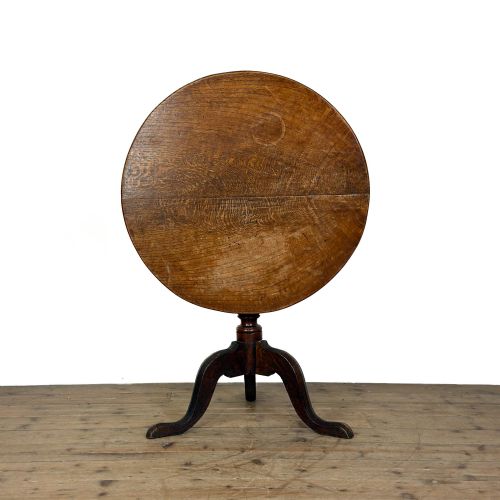
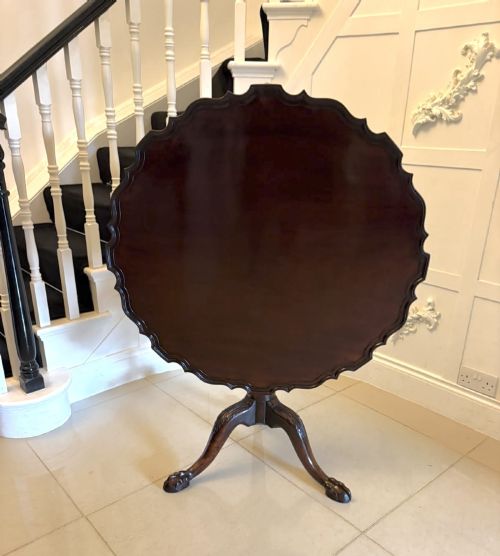
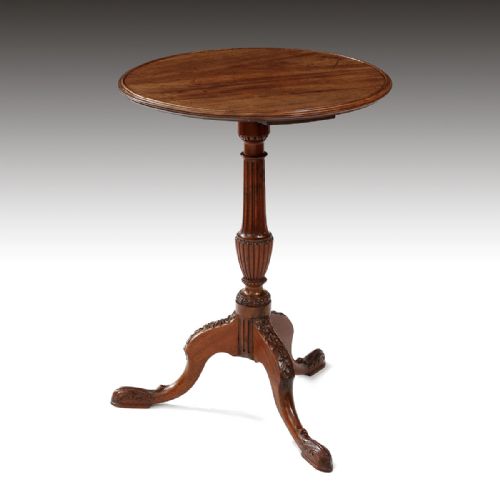
A georgian carved wine table brings compact elegance to a room, offering a sturdy tripod base and a circular top designed for portable service.
Georgian Carved Wine Table
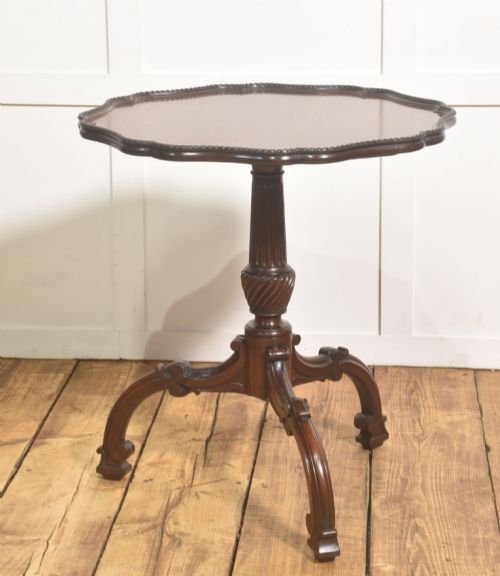
A georgian carved wine table is a small occasional piece designed primarily for holding drinks or small items near seating, featuring a central pillar supported by three legs. The selection spans authentic 18th-century pieces from the George II and George III periods alongside later revivals from the Victorian, Edwardian, and 20th-century eras.
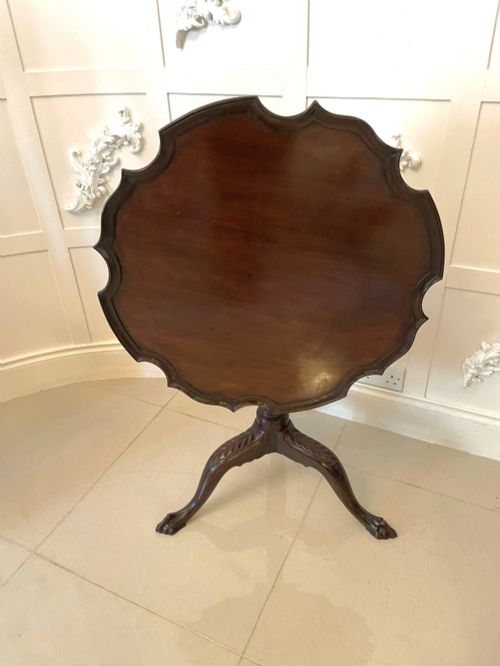
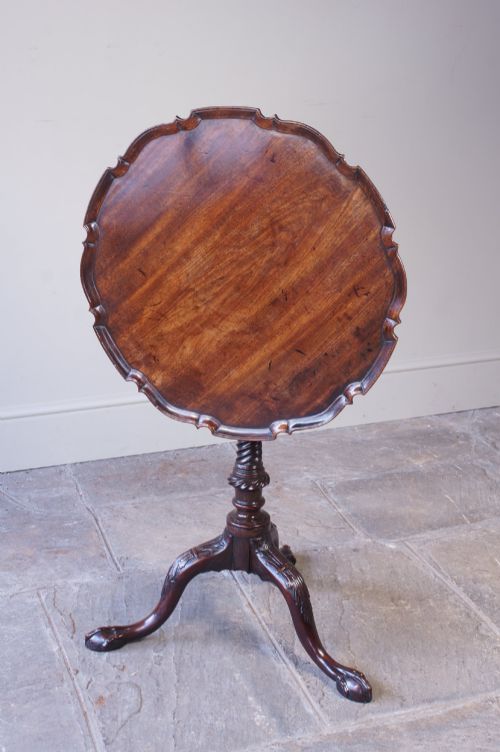
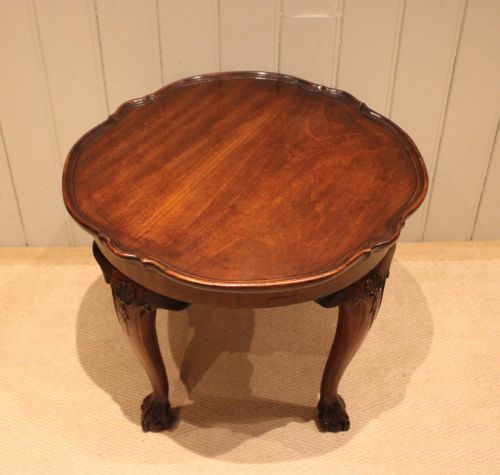
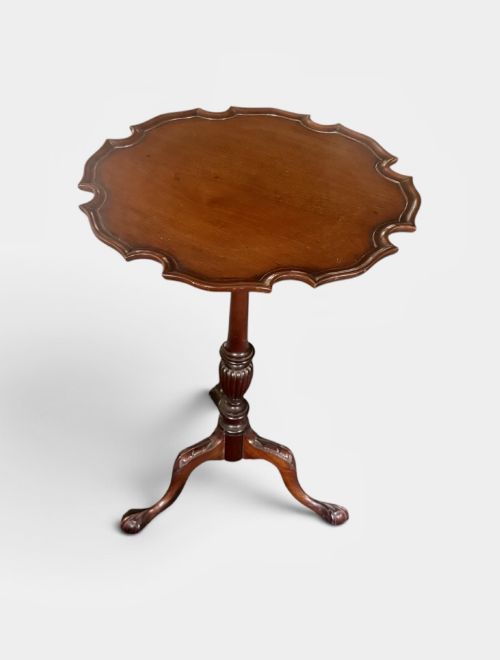
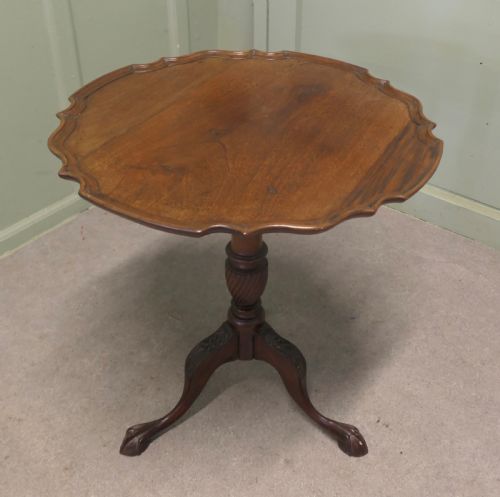
The most common formats on this page include tilt-top mechanisms that allow the surface to fold away when not in use, alongside fixed tops with shaped edges. Woods like mahogany and walnut dominate the offerings, often shaped with tripod bases terminating in pad or claw feet.
Materials and construction
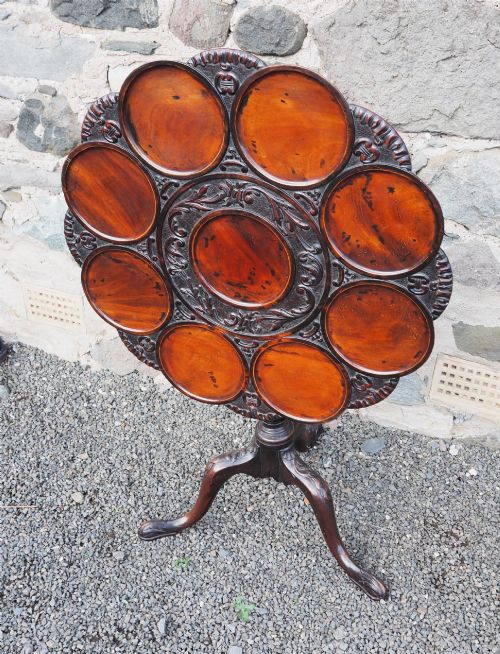
Cabinet makers utilised dense timbers such as mahogany, walnut, and rosewood, which took fine carver's chisel work particularly well along the tripod legs and borders. Solid construction methods ensured stability despite the slender pillar proportions necessary for these small tables.
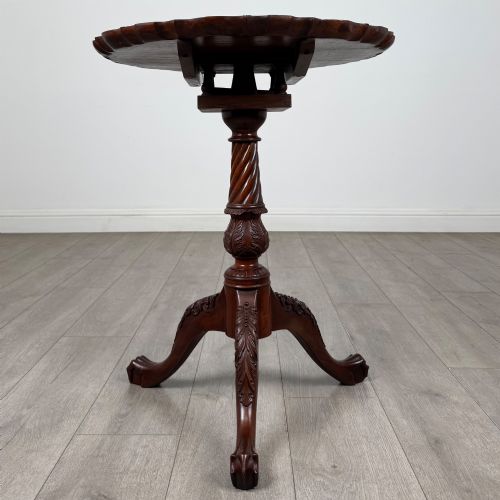
Complex mechanical elements like birdcage mechanisms and tilt-top pivots were engineered to allow the circular surface to rotate and fold flat against the stem. Edges were frequently carved by hand into pie crust or dished profiles to prevent glassware from sliding off.
Some tables feature tiny birdcage blocks so secret gossip could revolve away from listening ears.
Variations in quality
Quality rests heavily on the crispness of the hand carving along the knees and feet of the tripod base, where superior pieces exhibit deep undercut details rather than shallow, mechanical shaping. The choice of timber also dictates standard, with well-figured flame mahogany or rich walnut elevating the visual depth of the surface.
Structural integrity at the pivot point separates standard production from finer examples, as a well-fitted birdcage or tilt mechanism operates smoothly without lateral wobble in the central pillar. Original patination and untouched surface finishes further distinguish museum-grade examples from later restored items.
Gillow
The Georgian Carved Wine Table Glossary
- Tripod table
- A small freestanding table supported by a single central pillar resting on three legs. This construction prevents rocking on uneven historical floors.
- Tilt top
- A hinged table surface that rotates to a vertical position when not in use. It allowed the furniture to stand flat against a wall to save space in period rooms.
- Pie crust rim
- A raised, decoratively carved circular edge shaped to resemble pastry crust. It served the practical purpose of keeping cups and decanters secure on the surface.
- Birdcage mechanism
- A wooden framework beneath the table top that permits the surface to both rotate and tilt. This intricate assembly is found on higher-quality examples.
- Patina
- The surface sheen and colour acquired by wood through decades of handling, polishing, and oxidation. A rich patina indicates age and careful maintenance.
Georgian Carved Wine Table: Frequently Asked Questions
What was a wine table used for?
These small tables were positioned beside seating to hold glasses, bottles, or kettles during social gatherings in the evening. Their portable nature meant servants could move them easily around the room as needed.
Over time, their utility shifted from strictly serving drinks to general occasional use as lamp tables or display surfaces in drawing rooms and parlours.
How do I identify a Georgian period table?
Authentic pieces from the 18th century often display dense, heavy mahogany or walnut with hand-cut dovetails and traditional joinery methods. Look for signs of age in the timber shrinkage and the wear patterns around the pillar attachment.
Later Victorian and Edwardian revivals frequently copy these Georgian proportions but tend to use different secondary woods and machine-cut elements beneath the surface.
How do tilt-top mechanisms work?
A catch or latch beneath the circular surface releases the top so it pivots on a horizontal hinge connected to the central pillar. When swung upright, a small sliding wooden wedge secures the top in place against the stem.
This clever engineering allowed large numbers of tables to be stored compactly against the walls of grand houses when the rooms were cleared for dancing.
Where should I place a wine table at home?
Their compact footprint makes them ideal for tight spaces, such as beside an armchair, between two reading chairs, or in an empty corner as a lamp stand. The raised edges on many models provide practical security for drinks or small decorative objects.
Avoid placing them in direct sunlight or beside active heat sources, as historical timbers can dry out and crack when exposed to extreme temperature changes.