




Georgian Carved Snuff Box
These georgian carved snuff box examples combine practical pocket containers with tactile folk art carved from coquilla nut, fruitwood, horn, and maple.
Georgian Carved Snuff Box
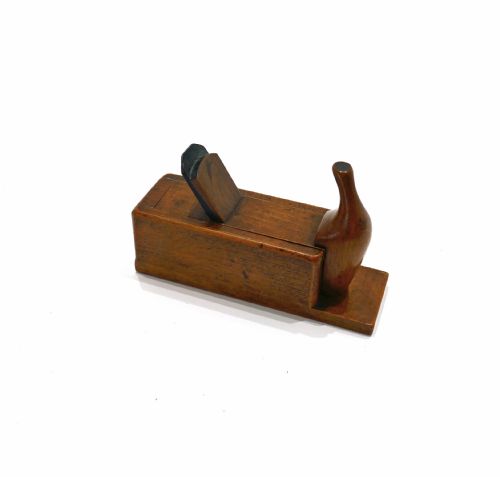
A georgian carved snuff box is a small lidded container designed to hold ground tobacco, shaped into pocket formats, miniature shoes, and natural forms. These pieces span the eighteenth and nineteenth centuries, taking various utilitarian and whimsical shapes carved by hand.
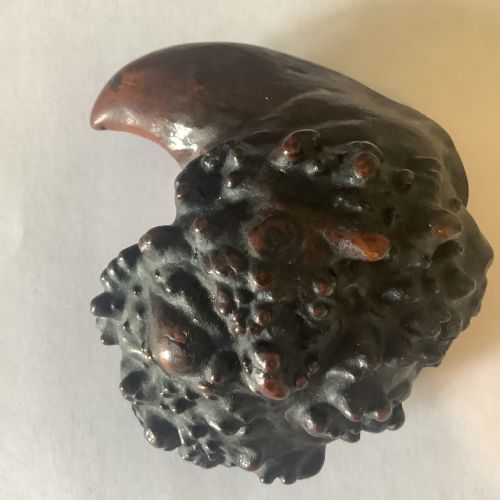
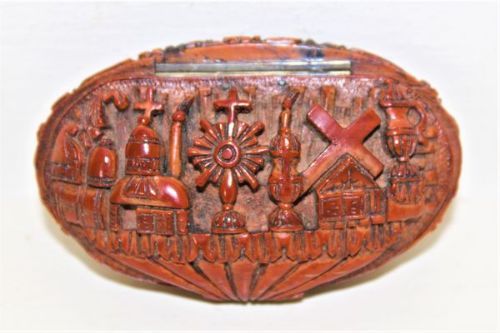
The versions most commonly met on this page include coquilla nut containers, fruitwood items, and horn boxes. Makers also fashioned items from burr walnut, mahogany, and cowrie shell, sometimes integrating silver mounts and brass pique work.
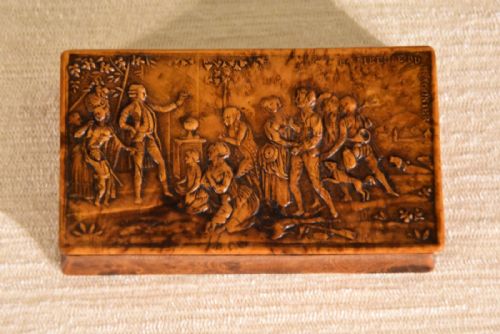
Makers produced items ranging from simple waistcoat pocket accessories to large table snuff boxes and patch boxes. Many examples display regional folk art traditions, utilising the natural grain and texture of timber and nut.
How they were made
Craftsmen shaped these containers primarily from hardwoods, fruitwood, coquilla nut, and horn using hand-carving and turning techniques. Nut shells and burls required patient carving to exploit their dense, varied grains.
Makers embellished surfaces with inlaid brass pique work, engraved lines, and pressed maple details. Artisans often combined organic materials like mother-of-pearl and cowrie shell with silver mounts to finish the pieces.
Materials span natural horn, coquilla nut, fruitwood, maple, and brass alongside silver mounts.
What varies in quality
The depth of carving and the sharpness of detail distinguish finer examples from plain containers. Crisp lines on shoe toes, distinct foliage patterns, and well-executed brass inlay elevate a piece.
Material choice and surface condition dictate the hierarchy of these objects. Dense coquilla nuts with high contrast or timbers possessing a rich, deep patina command greater visual interest than worn or featureless wood.
The Georgian Carved Snuff Box Glossary
- Coquilla nut
- The hard, mottled seed of the South American piassava palm. Craftsmen prized it for intricate turned and carved small boxes.
- Treen
- Small handmade wooden household objects. These items display the daily turning and carving skills of past centuries.
- Pique work
- A method of decorating surfaces with tiny points of metal such as brass or silver. Artisans tapped wire into pre-cut grooves to form floral and geometric patterns.
- Patch box
- A small container originally used for holding cosmetic beauty patches. These boxes often mirror the construction of snuff containers.
Georgian Carved Snuff Box: Frequently Asked Questions
What did they hold?
These containers held finely ground tobacco known as snuff, which users inhaled or placed against the nasal mucosa.
People carried them in waistcoat pockets or kept them on tables for social use during the eighteenth and nineteenth centuries.
Why are some shaped like shoes?
Shoe-shaped snuff containers were popular folk art items loaded with cultural symbolism relating to travel, luck, and courtship.
Carvers utilised the natural tapered toe of the wooden block to form the heel and sole configuration.
How do I date them?
Dating relies on material combination, hinge construction, and stylistic clues like brass pique work or Georgian silver mounts.
Earlier pieces often employ cowrie shell or pressed maple, while later Victorian versions utilise varied exotic hardwoods.
How should I clean wood?
Maintenance requires only a soft brush to remove dust from carved crevices and hinges. Avoid modern polishes and liquids that damage the historic patina.