
Georgian Carved Oak Drawers
Georgian carved oak drawers bring solid timber storage into a room, spanning chests, lowboys, and dressers shaped by centuries of use.
Georgian Carved Oak Drawers
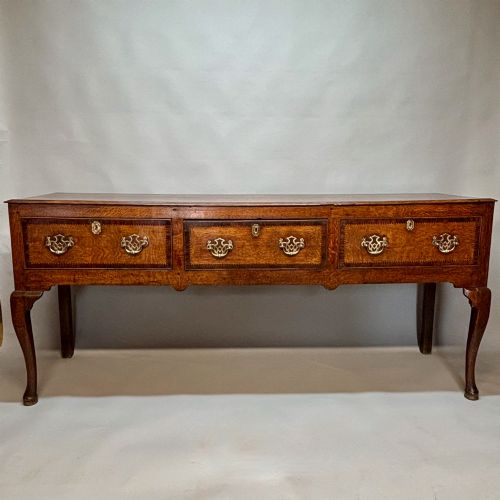
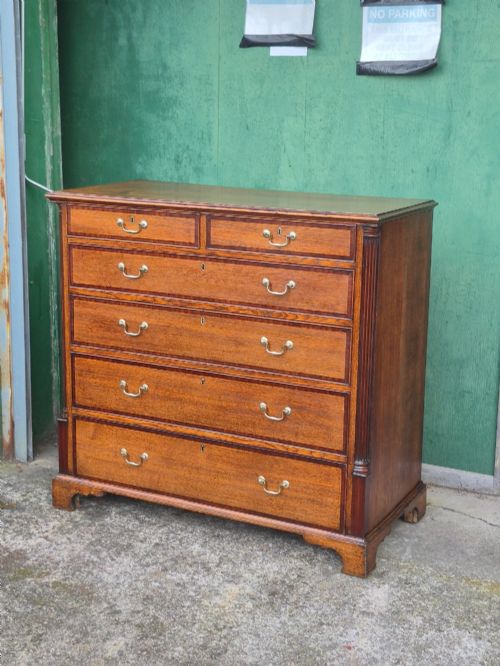
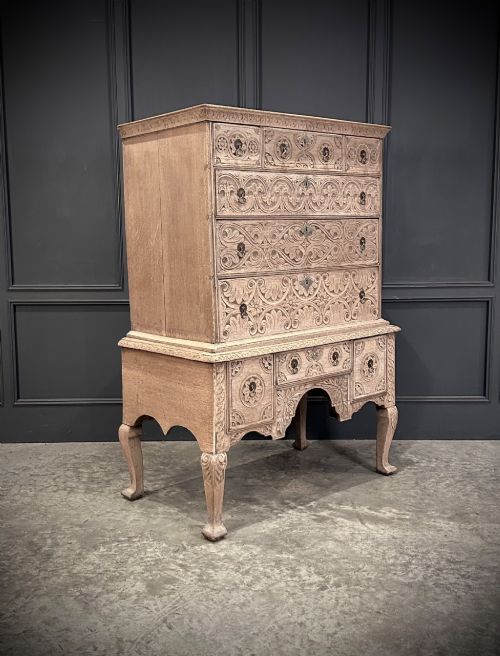
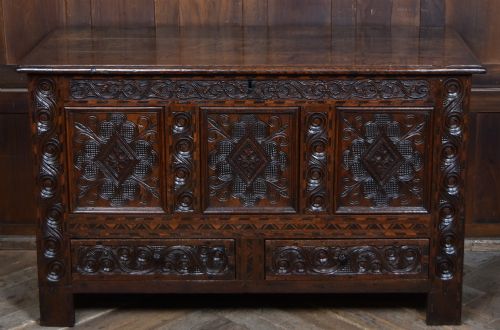
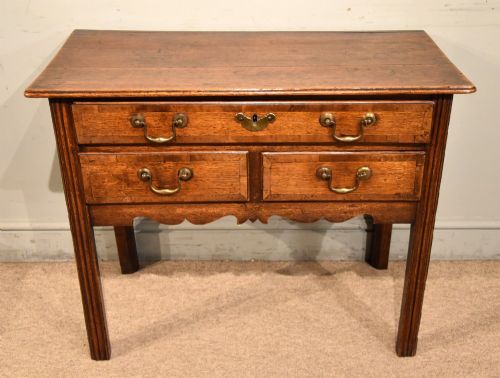
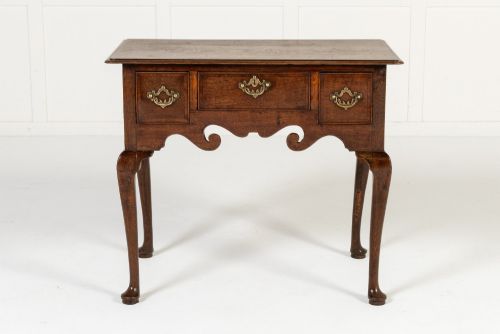
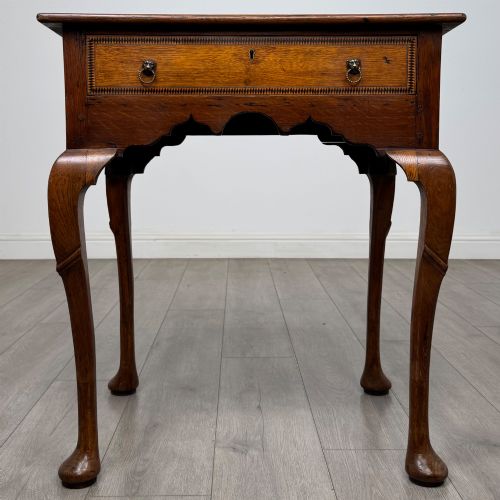
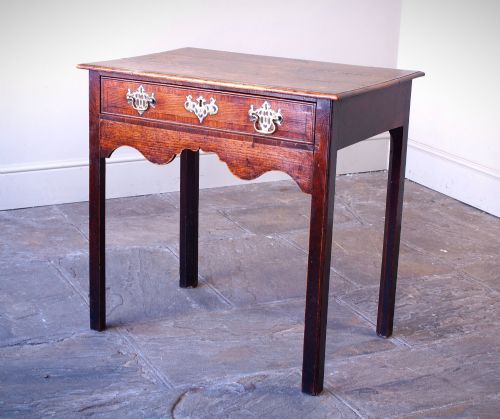
When you search for georgian carved oak drawers, you encounter sturdy timber furniture designed for domestic storage across the eighteenth century and neighbouring periods. The selection runs from lowboys and side tables to mule chests, dressers, and tall chests on stands.
Most pieces you meet here belong to the Georgian era or the broader eighteenth century, alongside occasional seventeenth-century examples and later nineteenth-century interpretations. These items reflect both formal Georgian proportions and regional vernacular traditions from English and Welsh country workshops.
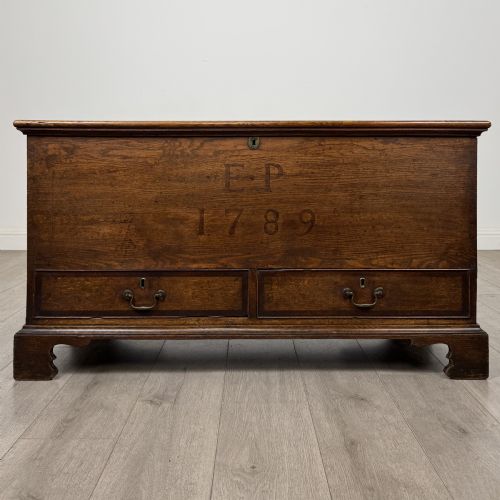
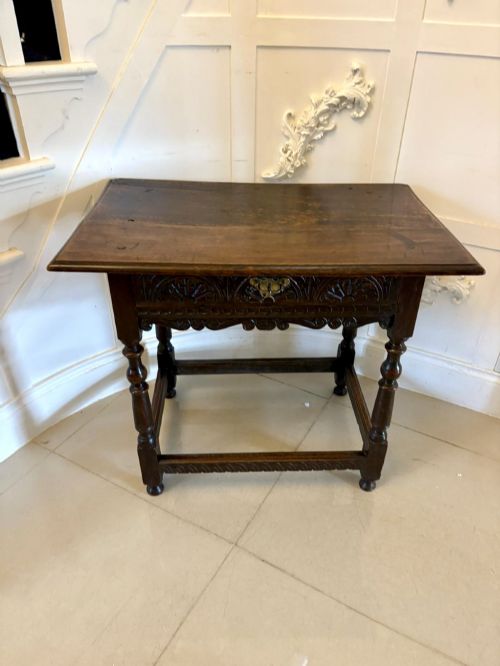
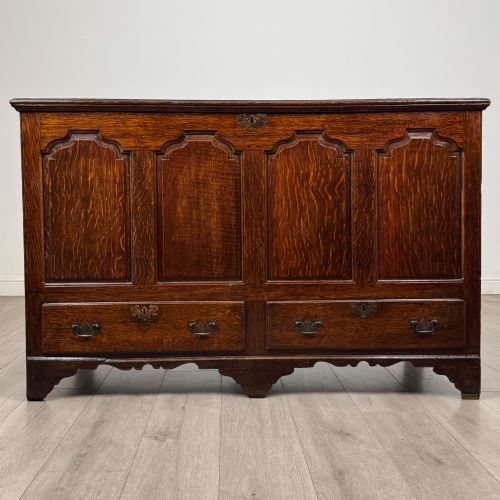
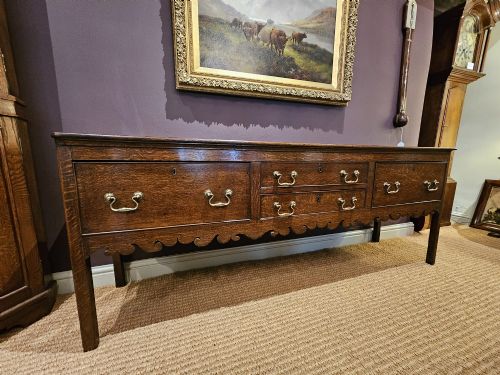
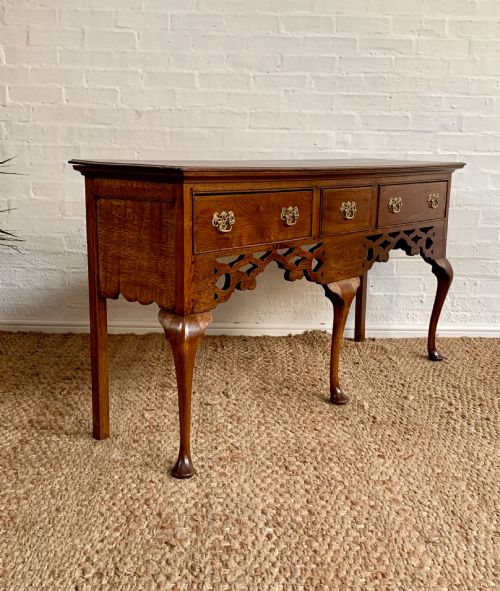
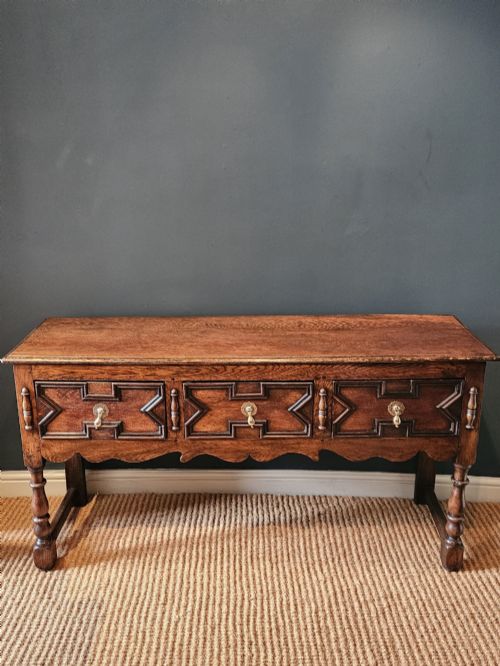
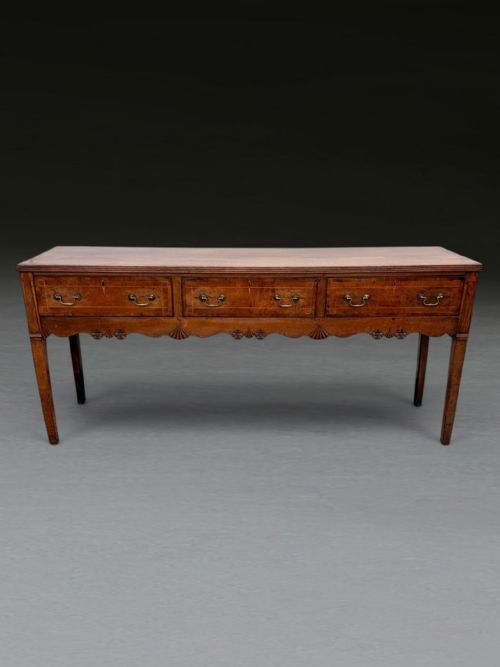
Chest of drawers forms dominate the selection, often featuring carved panels, geometric moulding, or brass handles fitted to solid timber carcases. Dresser bases and side tables with multiple drawers also appear frequently, serving as practical surfaces with integrated storage.
How they were made
Carpenters built these pieces primarily using solid oak for structural carcases, drawer fronts, and panels, sometimes supplemented by secondary timbers such as pine and mahogany. Burr elm panels and wood inlay occasionally provide contrasting detail on drawer fronts and coffer lids.
Metal components such as brass handles and iron fixings secure the drawers and doors, often reflecting the period of manufacture from original mounts to later replacements. Carving, geometric moulding, and bleached finishes are applied directly to the timber surfaces.
One listed coffer bach comes equipped with tiny drawers, proving that even eighteenth-century households needed somewhere to hide very small secrets.
What varies in quality
The standard of a piece depends on the crispness of the oak carving and the integrity of the timber joints. Pieces featuring figural side carving or intricate geometric moulding demand greater joinery skill than plain plank construction.
Hardware retention alters the character of a piece, as original brass handles and hinges carry more historical weight than modern replacements. The choice between bleached oak, golden tones, and unadorned surfaces reflects differing levels of past maintenance and natural ageing.
The Georgian Carved Oak Drawers Glossary
- Lowboy
- A small table with one or more rows of drawers, typically standing on four legs and used as a dressing or side table. These pieces often feature cabriole legs or straight vernacular supports.
- Mule chest
- A storage chest fitted with one or more drawers at the base beneath the main compartment. This form bridges the traditional coffer and the chest of drawers.
- Chest on stand
- A case of drawers elevated on a separate framework of legs rather than resting directly on the floor. This form lightens the visual weight of tall storage units.
- Dresser base
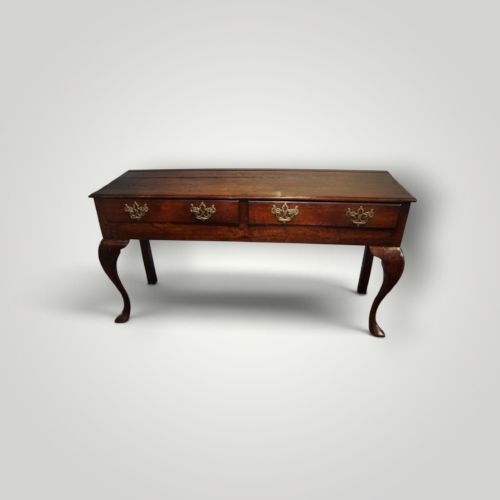
- A low sideboard fitted with drawers, sometimes accompanied by cupboards, originating from country kitchens and dining rooms. They provide expansive surface areas alongside practical drawer storage.
- Coffer
- A heavy wooden chest with a hinged lid, used primarily for storing textiles and valuables. Examples often incorporate panelled construction and carved detailing.
Georgian Carved Oak Drawers: Frequently Asked Questions
How do I identify a Georgian oak chest?
Look for hand-cut dovetails on the drawer sides and pegged mortise and tenon joints in the frame. These structural indicators separate period pieces from later reproductions.
Examine the timber for natural grain variation and patination built up through centuries of handling. Period oak often exhibits a deeper colour and surface texture that modern manufacturing cannot replicate.
Where were these oak pieces made?
Many items originate from regional English and Welsh country workshops where local cabinetmakers utilised native oak timber. Vernacular styles often reflect the specific traditions of these rural areas.
More formal pieces follow metropolitan Georgian design trends while retaining the durable hardwood construction typical of provincial furniture production.
How should I care for antique oak furniture?
Keep wooden pieces away from direct heat sources and dramatic humidity fluctuations to prevent the oak from splitting or warping. Natural beeswax applied sparingly helps maintain the lustre of the timber.
Avoid using modern silicone-based polishes that can penetrate the grain and damage the historic surface patination. Gentle dusting with a dry cloth is sufficient for routine maintenance.