



Georgian Carved Dresser Base
A georgian carved dresser base provides substantial storage and a commanding presence, making it a practical centrepiece for any traditional dining room or kitchen.
Georgian Carved Dresser Base
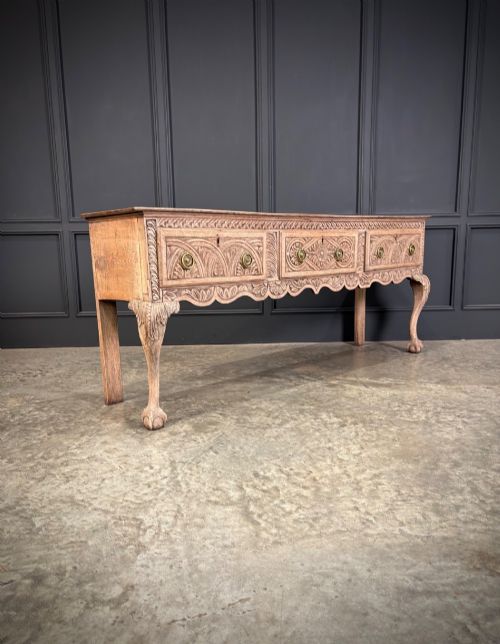
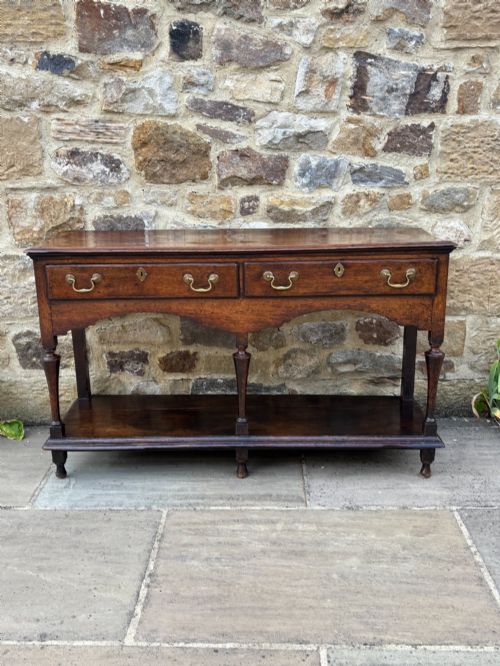
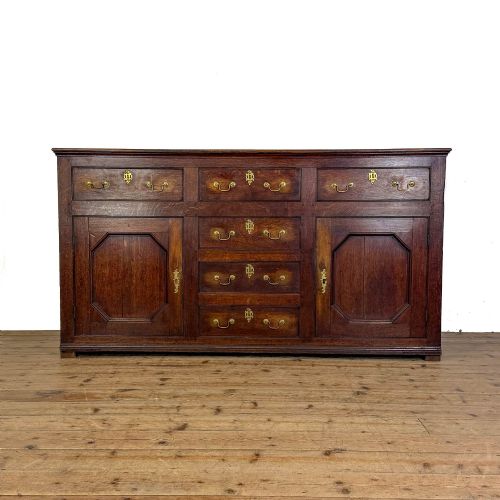
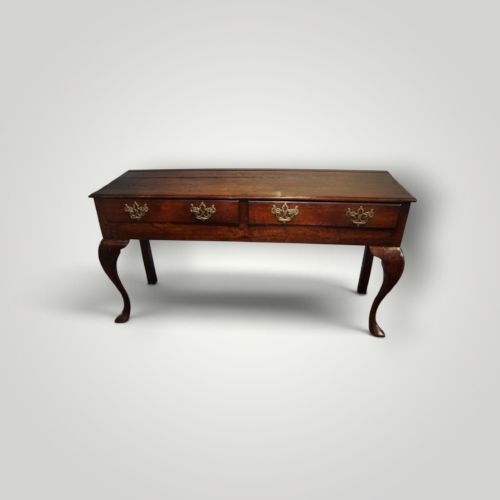
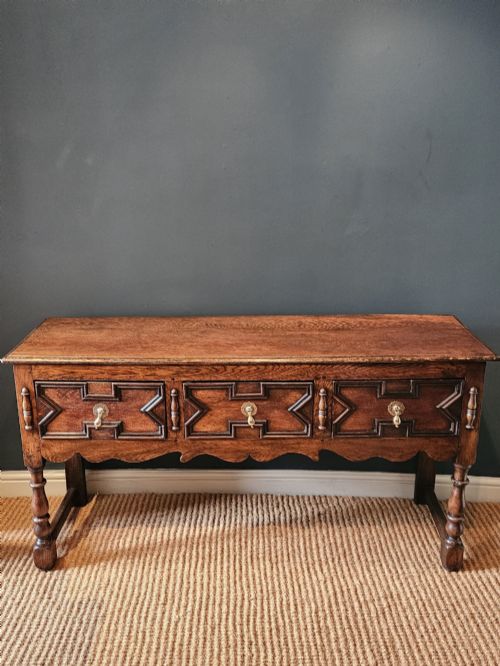
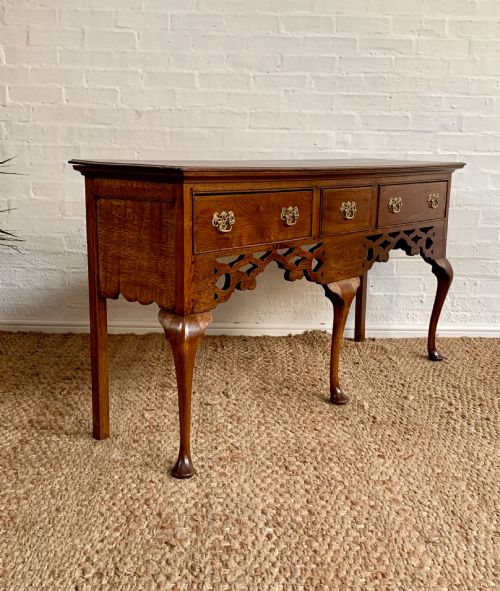
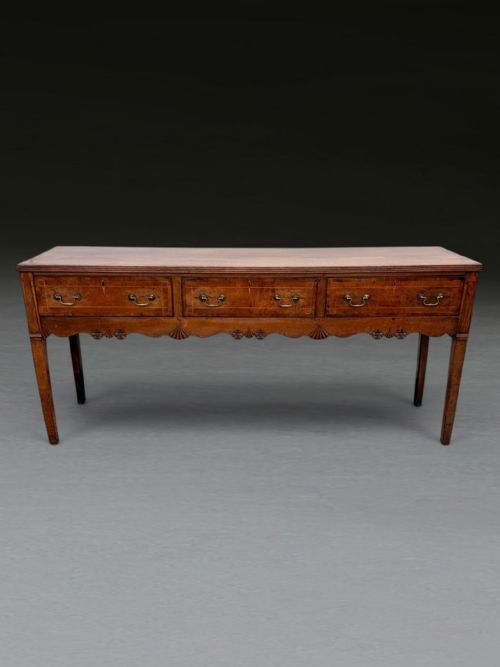
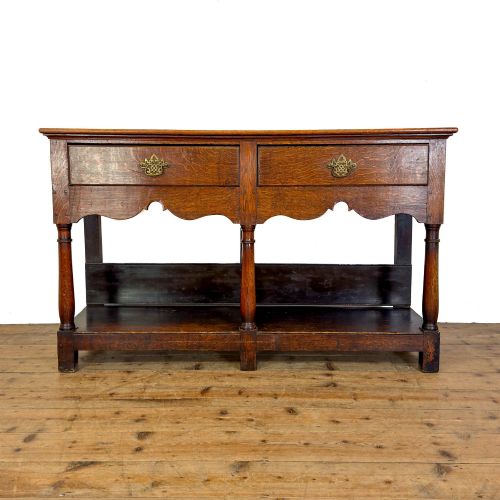
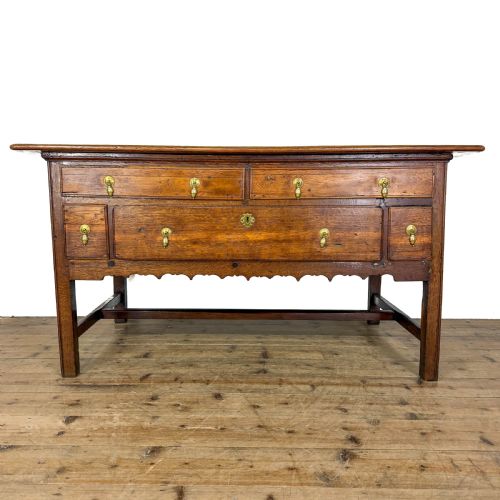
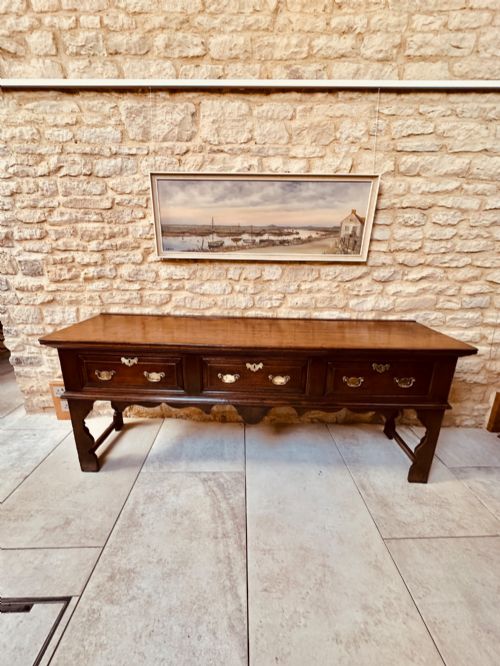
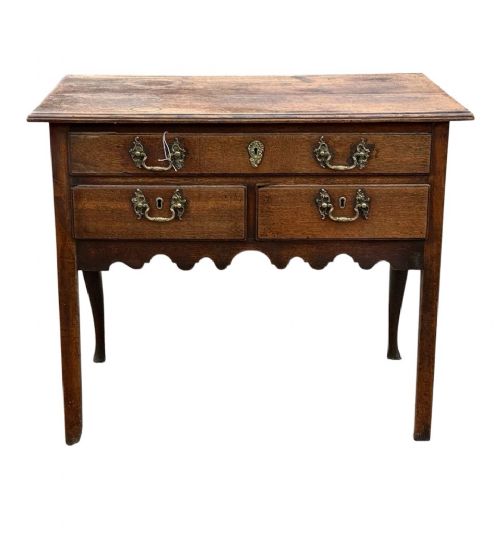
A georgian carved dresser base is a substantial low storage furniture piece designed for domestic utility and serving. The pieces encountered here span the eighteenth and nineteenth centuries, including George III examples and country variations from Wales and Lancashire.
Most items take the form of low wooden tables fitted with multiple drawers across the front, sometimes featuring open potboards beneath. Regional differences emerge in the leg shapes, ranging from straight cabriole supports to geometric mouldings and silhouette designs.
Materials and Joinery
Makers relied principally on native oak for these carcass structures, complemented by occasional uses of mahogany, walnut and chestnut. Timber selection depended on regional availability, resulting in dense native grain patterns that developed rich patination over centuries.
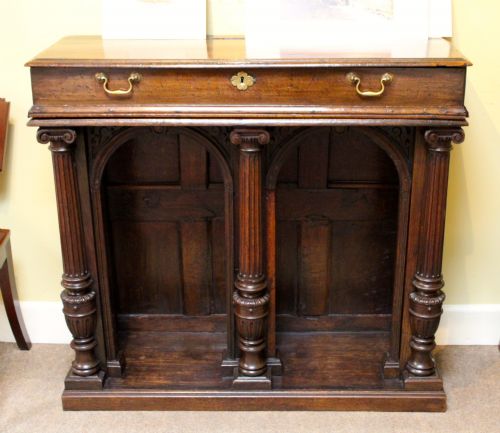
Hardware components incorporate brass drop handles and escutcheons alongside iron structural supports. Carving appears directly on the drawer fronts and friezes, executed with hand chisels rather than mechanical routers.
Georgian Carved Dresser Base Retail Price Guide 2026
Typical asking prices for georgian carved dresser base among the pieces listed under this phrase on Sellingantiques today, from the lower quarter to the upper quarter. They describe what is for sale here now, not the wider market.
Early makers occasionally concealed spare carpentry measurements scratched directly into drawer linings.
Gradation in Quality
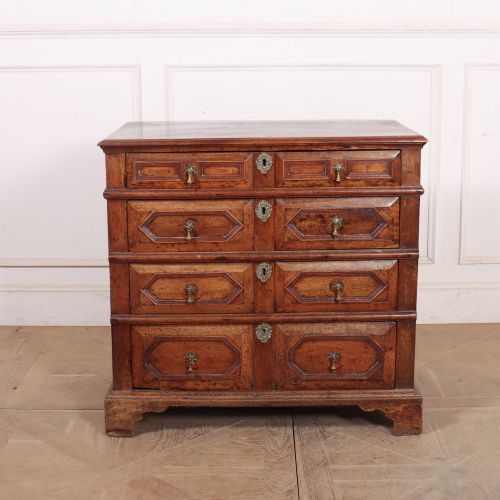
The standard of carving dictates much of the distinction between ordinary utility items and finer workshop pieces. Crisp execution of geometric mouldings and panel relief work separates superior examples from plain vernacular builds.
Originality of surface finish and timber integrity define the remaining separation. Pieces retaining untouched surfaces and early brass furniture display superior historical authenticity compared to those with extensive timber replacement.
The Georgian Carved Dresser Base Glossary
- Potboard
- An open lower shelf fitted beneath a dresser base for storing pots and serving dishes. This platform is typically raised slightly off the floor on feet or base rails.
- Tridarn
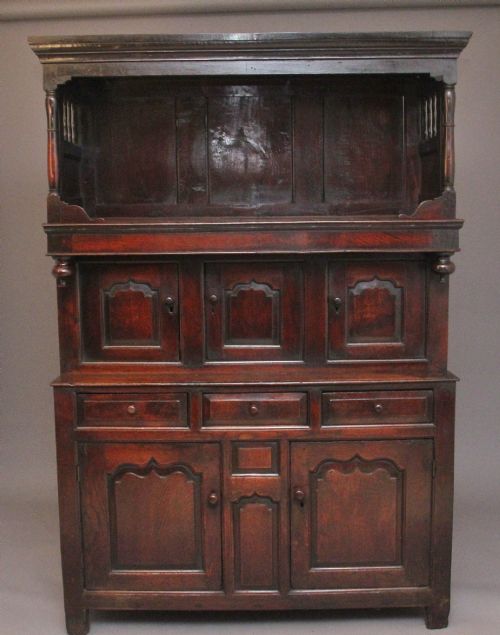
- A three-tier Welsh oak cupboard featuring enclosed storage sections stacked vertically. It represents a larger architectural variant related to standard base furniture.
- Deuddarn
- A traditional two-section Welsh oak cupboard used for domestic storage. These pieces incorporate panelled doors and substantial timber framing.
- Lowboy
- A small oak side table fitted with drawers, often sharing construction methods and proportions with dresser bases. They function as compact serving or writing surfaces.
- Cabriole leg
- A furniture support that curves outward at the knee and tapers inward toward the foot. This style appears on several eighteenth-century regional pieces.
Georgian Carved Dresser Base: Frequently Asked Questions
What is a dresser base?
A dresser base is a low wooden storage unit featuring a flat top surface for serving and multiple drawers across the front. These utilitarian pieces were historically used in kitchens and dining rooms to store tableware and linens.
Unlike tall cabinet dressers, the base omits upper shelving racks, presenting a cleaner sideboard profile. They serve effectively today as credenzas or console tables in living spaces.
How do I identify a Georgian piece?
Georgian furniture is characterised by balanced proportions, restrained classical carving, and the predominant use of native oak during the earlier decades. Look for hand-cut dovetail joints in the drawer construction and period-appropriate brass hardware.
Regional country pieces often display simpler vernacular details compared to urban workshop productions, while maintaining the same structural framework.
Where were these dressers made?
These items originated across various English regions, with distinct concentrations of survivals originating from Wales and Lancashire. Local cabinet makers utilised regionally available timber stocks, particularly native oak.
Country workshops adapted fashionable metropolitan styles to suit rural domestic requirements, producing varied leg forms and surface mouldings.
How do I care for antique oak?
Maintain antique oak by keeping the timber away from direct heat sources and rapid humidity fluctuations. Apply natural beeswax periodically to nourish the dry wood grain and preserve the historic surface finish.
Avoid silicone-based polishes which can degrade the patination built up over centuries of handling and use.