


Georgian Cane Seat Armchair
A georgian cane seat armchair brings exceptional texture and comfort to a room, offering fine woodwork paired with woven panels.
Georgian Cane Seat Armchair
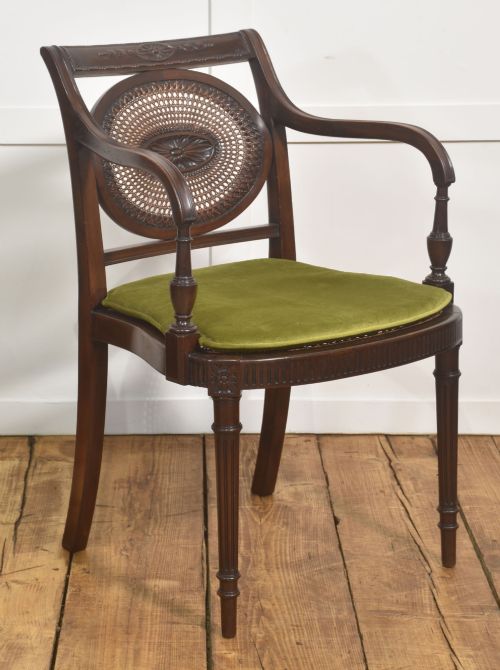
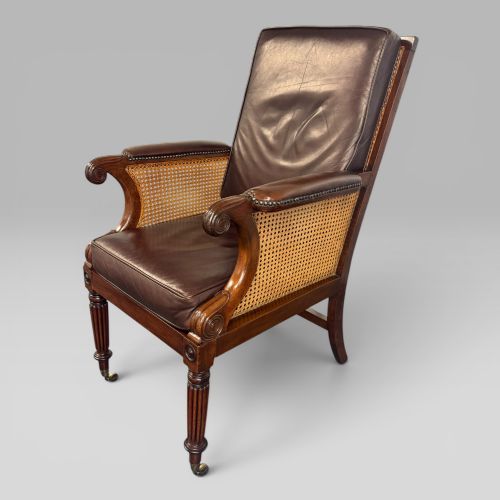
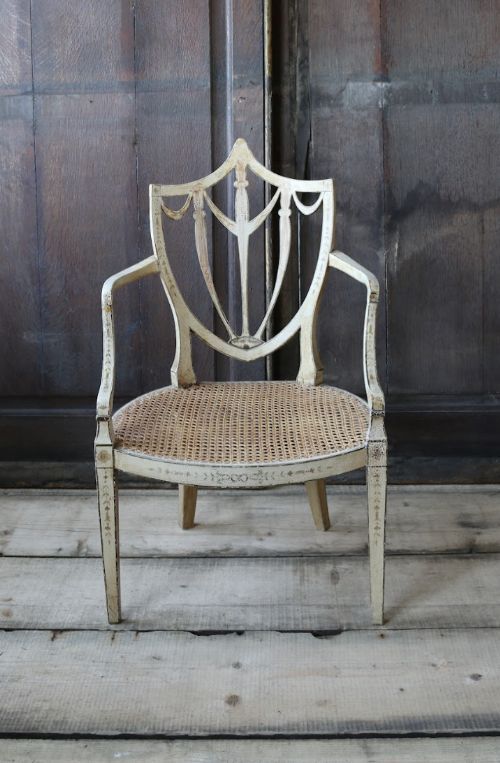
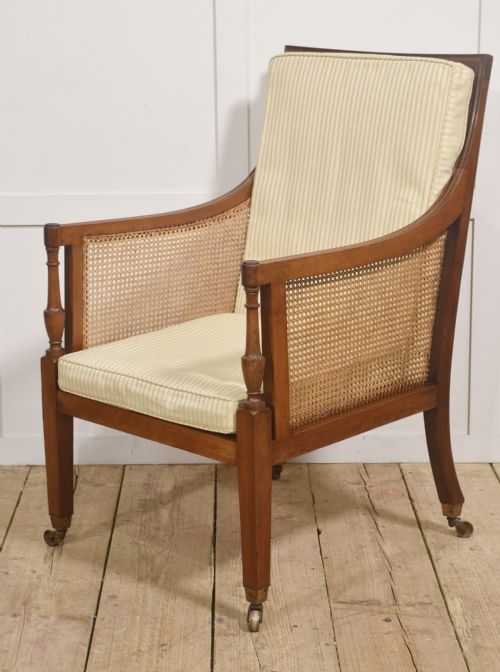
When you search for a georgian cane seat armchair, you encounter seating designed for the library, parlour, or drawing room during the late eighteenth and early nineteenth centuries. These pieces encompass library armchairs, bergères, and child's armchairs that utilise woven seating panels.
How They Were Made
Cabinet makers constructed these frames predominantly using solid mahogany, rosewood, and ebonised wood, alongside painted and decorated surfaces. Selected timbers provided the structural integrity required to support both the timber framework and the tension of woven seating.
Cane panels were meticulously hand-woven into the seat rails and back frames to provide a resilient, flexible surface. Additional decorative elements include brass mounts, leather accents, velvet squab cushions, and parcel gilt detailing.
Listings feature mahogany, rosewood, and ebonised wood frames alongside painted and decorated finishes across the Georgian and Regency periods.
What Varies in Quality
The standard of a piece rests heavily on the crispness of the timber carving and the overall balance of proportions. Well-drawn examples display generous dimensions and harmonious lines that reflect the skill of the original workshop.
The integrity of the woven panels and the survival of original painted or polished surfaces distinguish finer examples from heavily restored alternatives. Subtle details such as simulated graining or parcel gilding elevate the visual impact of the frame.
Gillows
The Georgian Cane Seat Armchair Glossary
- Bergère
- An enclosed upholstered armchair, often featuring cane sides and back panels designed for domestic comfort. These seats commonly accommodate loose squab cushions.
- Cane
- Woven material prepared from the outer portion of rattan palms, utilised for flexible seating and back panels. This technique lightened the visual weight of heavy timber frames.
- Shield-back
- A chair back shaped in the outline of a heraldic shield, popularised during the late eighteenth century. This design frequently incorporates delicate pierced splats.
- Curule
- An antique style of X-shaped cross-frame seating derived from classical Roman folding chairs. Examples feature sweeping outward-curving legs joined by a central stretcher.
Georgian Cane Seat Armchair: Frequently Asked Questions
What is a bergere chair?
A bergère is an enclosed upholstered armchair characterised by solid sides and back panels, frequently filled with woven cane. They were designed for comfortable lounging in private libraries and withdrawing rooms.
These armchairs usually include a loose upholstered squab cushion for the seat base. The wooden frame often receives polished mahogany or painted decoration.
How are these chairs used today?
These armchairs serve as functional seating in studies, living rooms, and bedrooms, adding period character to contemporary interiors. Their generous proportions provide comfortable support for reading and relaxing.
They pair well with low side tables and reading desks. Care should be taken to place them away from direct heat sources to protect the wood and cane.
How do I identify a Regency period chair?
Regency seating typically dates from the early nineteenth century and draws inspiration from classical Greek, Roman, and Egyptian motifs. Look for Saber legs, reeded framing, and contrasting timber finishes.
Many examples utilise mahogany, rosewood, or painted faux bamboo. The proportions tend to be bold and architectural compared to earlier Georgian designs.
Did these chairs always have cushions?
Original seating arrangements almost invariably included loose squab cushions filled with traditional materials to sit upon the cane base. The cane provided a resilient suspension system beneath these cushions.
Upholstery fabrics on these cushions varied from leather to silk velvet depending on the room's status. Surviving cushions are frequently modern replacements matching historical styles.