

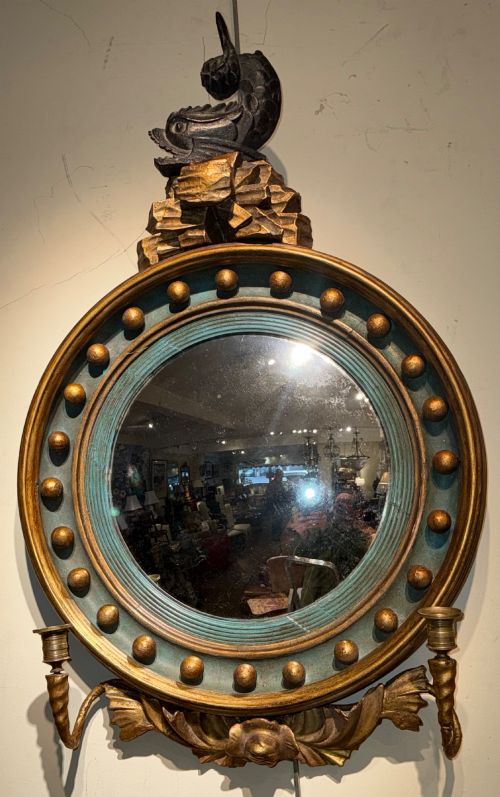


Georgian Candle Sconces
Georgian candle sconces bring candlelit warmth to a room, offering brass, giltwood, and glass forms that reflect light softly.
Georgian Candle Sconces
When you search for georgian candle sconces, you encounter wall lighting and wall mirrors designed to hold candles and bounce their light around eighteenth-century rooms. The pieces appearing here span the Georgian and Regency periods, alongside later revivals from the nineteenth and twentieth centuries.
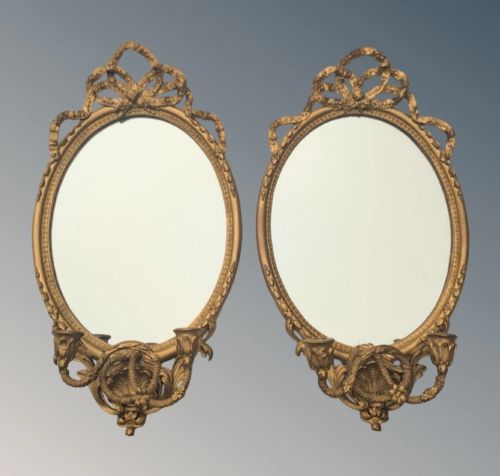
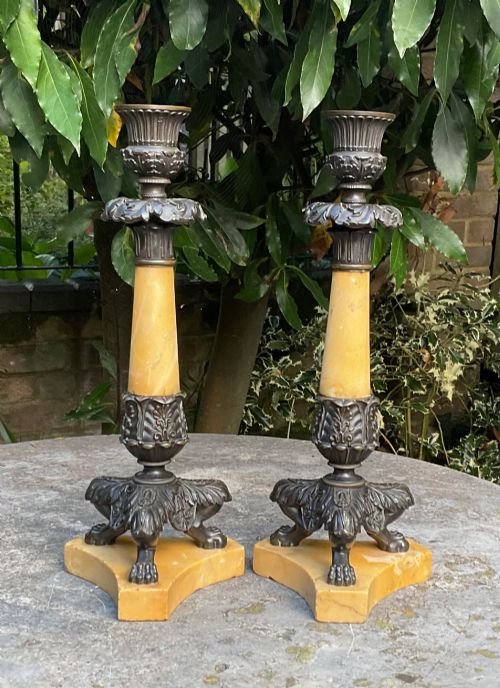
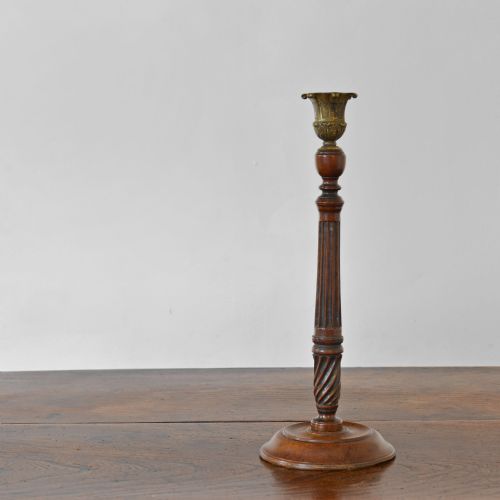
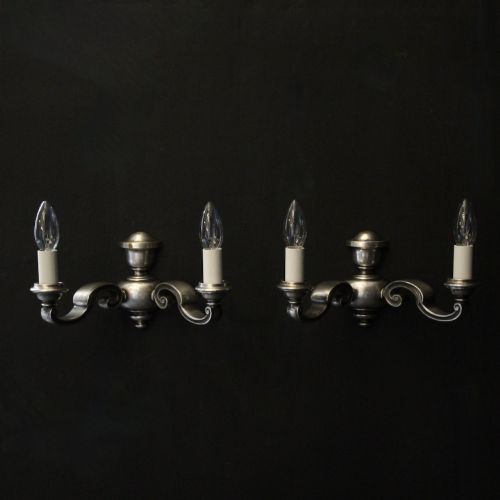
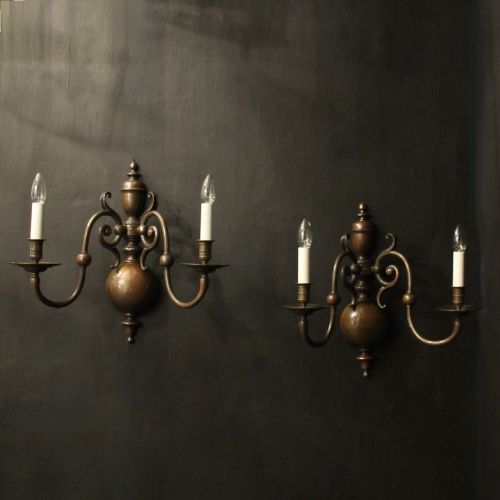
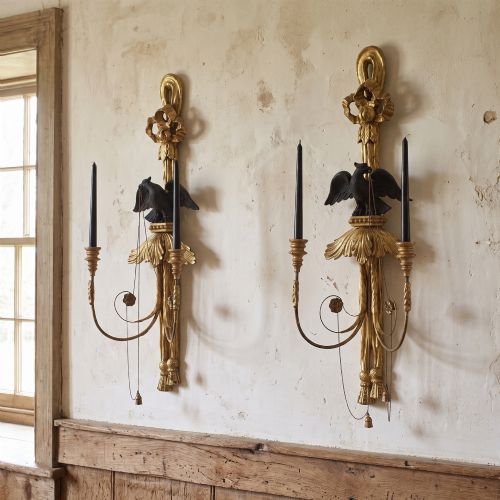
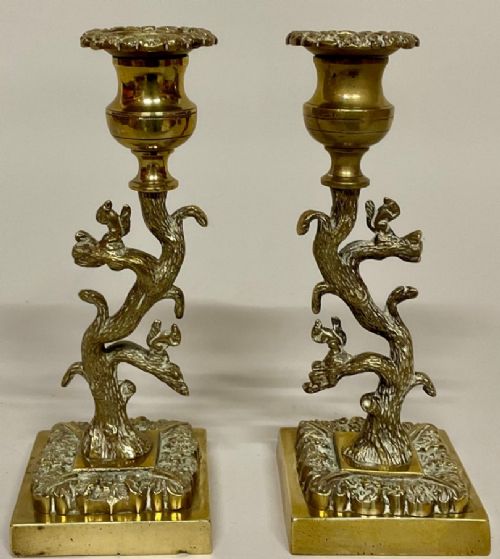
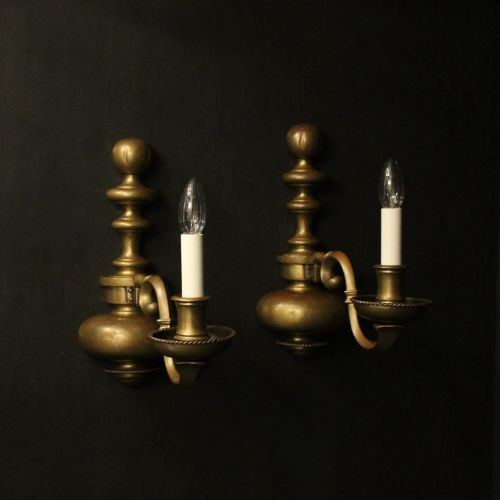
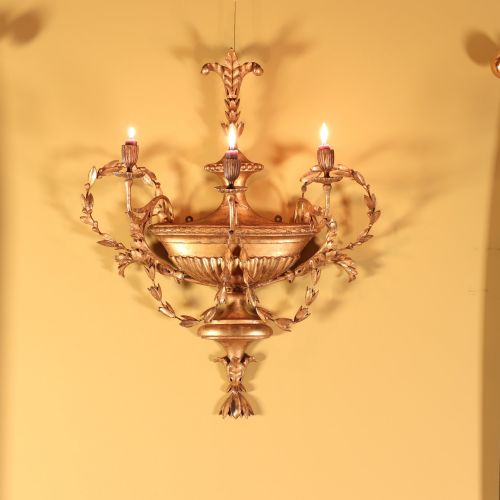
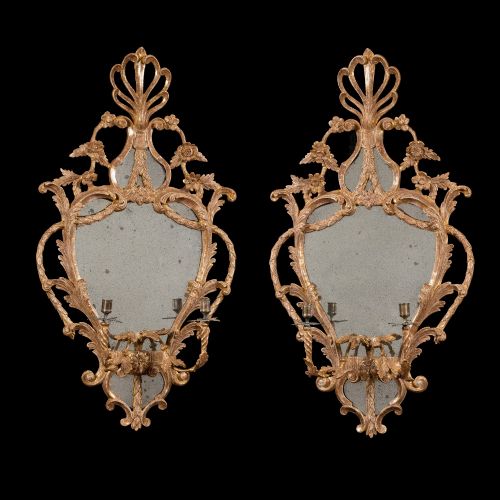
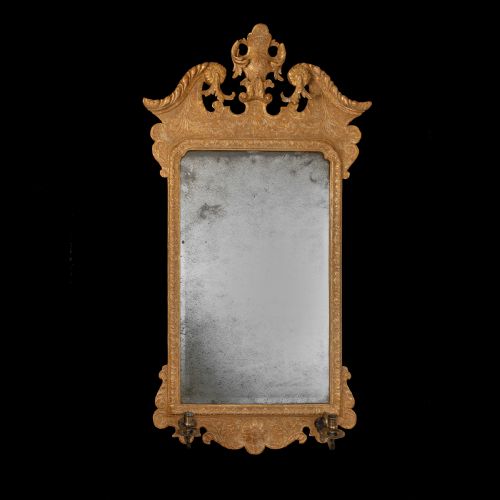
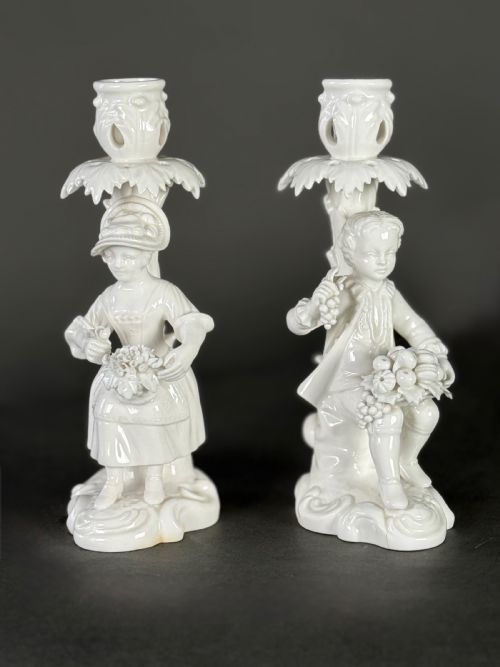
The forms range from single brass candleholders and silver plated wall lights to elaborate giltwood girandole mirrors with multiple arms. You will also find sculptural bronze designs and porcelain figures incorporated into the sconce arrangement.
Most examples survive as pairs, designed to flank a chimney piece, doorway, or pier glass. The selection draws on brass, mahogany, and giltwood constructions typical of domestic lighting from the period.
How They Were Made
Makers utilised cast and turned brass, heavy giltwood, and carved mahogany to construct these lighting pieces. Giltwood and gesso mirror frames required skilled hand carving before layers of gold leaf or gesso were applied.
Metal components involved casting bronze, brass, or silver plate, sometimes incorporating cut glass drops and silver or gold finishes. Porcelain elements from factories such as Derby brought modelled figures and floral bocage into the lighting design.
Listings feature brass, giltwood, glass, and bronze materials across eighteenth and nineteenth-century periods.
What Varies in Quality
Quality rests upon the crispness of the carving in giltwood and the precision of the casting in brass or bronze. Superior examples display sharply defined ornament, balanced proportions, and original gilding or surface patination.
The complexity of the form dictates distinction, separating simple brass candleholders from multi-branch giltwood girandoles with integrated mirror plates. Intact original components, such as removable sconces and matching arms, elevate the standing of a piece.
John Cafe·Minton
The Georgian Candle Sconces Glossary
- Girandole
- A branched wall light or a wall mirror fitted with candle arms. These pieces project illumination into a space by combining reflective glass surfaces with metal or wooden candle nozzles.
- Bocage
- An ornamental background of carved or modelled foliage and flowers. This technique appears behind porcelain figures on figural candlesticks from the eighteenth century.
- Campana
- A vase-shaped candle socket resembling an inverted bell. This profile recurs frequently on metal and gilt bronze sconces.
- Gesso
- A plaster-based mixture applied to wood surfaces as a preparation for gilding. Skilled artisans carved intricate details into this layer before applying gold leaf.
- Old Sheffield Plate
- A composite material formed by fusing a sheet of silver to a copper base. This technique produced domestic metalware before electroplating became common.
Georgian Candle Sconces: Frequently Asked Questions
How do I clean brass candle sconces?
Cleaning requires a soft dry cloth to remove dust and surface dirt without disturbing the aged metal surface. Avoid harsh chemical polishes that strip away historical patination.
Gentle wiping preserves the darker tones and oxidation accumulated over centuries. Professional conservation is advisable for pieces retaining delicate gilding or fragile structural elements.
Are these sconces wired for electricity?
Many surviving examples retain their original candle sockets and remain configured for wax candles. Some pieces have undergone conversion for electric lighting by later owners.
Buyers should examine the wiring status in the description before purchase. Unconverted items maintain their original form for traditional display.
How do I distinguish revival styles from original pieces?
Distinguishing the periods involves examining the wood timbers, metal casting techniques, and wear patterns on the finish. Eighteenth-century pieces show construction methods and tool marks characteristic of period workshop practice.
Revival pieces from later centuries often employ standardised fixings or machine-assisted finishes. Comparing the weight, patination, and joining methods helps clarify the date of manufacture.