


18th Century Girandoles
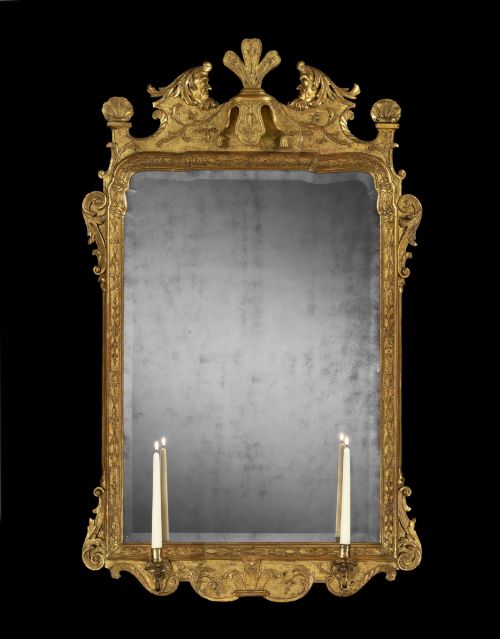
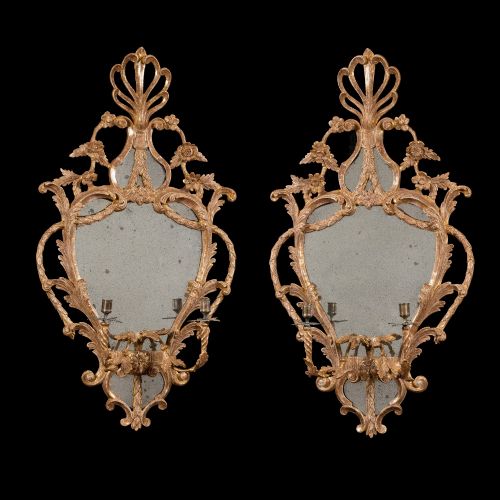
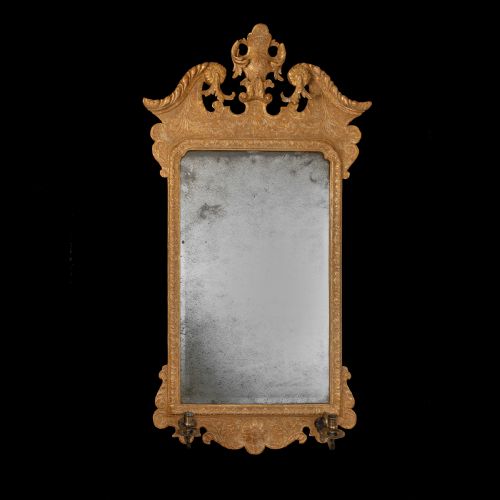
These 18th century girandoles bring remarkable carved giltwood and gesso candle-bearing brilliance to any wall.
18th Century Girandoles
When you search for 18th century girandoles, you encounter ornate candle-bearing wall mirrors designed to reflect candlelight across a room. These pieces combine mirror plates with candle arms, originating primarily from the Georgian period.
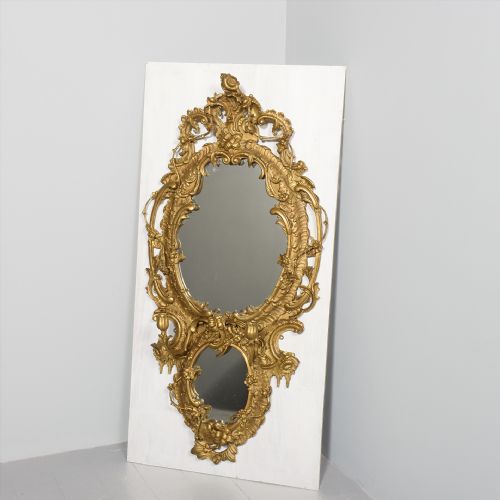
The versions you meet most frequently on this page span George I, George II, and later Georgian eras, alongside Italian Rococo and Victorian interpretations. They appear mainly as matched pairs of carved giltwood and gesso mirror forms.
How they were made
Carvers shaped solid timber bases before applying fine layers of gesso to build up intricate relief decoration. Artisans then gilded these surfaces with gold leaf, achieving the luminous metallic sheen characteristic of the period.
Makers integrated candle branches directly into the wooden or gesso structure, allowing the reflective glass plate to amplify the flickering light. Skilled hands combined glass, brass, and silver elements to complete each assembly.
What varies in quality
The depth and crispness of the carving separate standard examples from superior pieces, particularly in how sharply the acanthus leaves and rococo scrolls are defined. Master carvers achieved an organic fluidity in gesso and wood that lesser workshops missed.
The preservation of the original gold leaf surface dictates the desirability of an example, alongside the clarity and age of the glass plate. Harmonious proportion between the mirror plate and the extending candle arms determines visual balance.
Benjamin Goodison
The 18th Century Girandoles Glossary
- Girandole
- A decorative wall mirror featuring attached candle branches designed to illuminate the reflective glass. These fixtures were principal ornaments in formal Georgian interiors.
- Giltwood
- Timber coated with gold leaf over a prepared base, creating a brilliant metallic finish. This material defines the luxurious aesthetic of high-status 18th century wall furniture.
- Gesso
- A fluid mixture of plaster of Paris and chalk applied to wood surfaces and carved once set. It provided a smooth, responsive medium for intricate relief ornament.
- Rococo
- An exuberant artistic style characterised by asymmetric scrolls, C-curves, and naturalistic plant motifs. It heavily influenced mid-18th century mirror frames across Britain and Italy.
- Pier mirror
- A tall glass designed specifically to hang on the wall space between windows. These mirrors maximised natural light in dimly lit historic rooms.
18th Century Girandoles: Frequently Asked Questions
What is an 18th century girandole?
An 18th century girandole is an ornate wall mirror equipped with integrated candle arms designed to catch and multiply candlelight.
Craftsmen built these pieces from carved wood and gesso before applying gold leaf to create a brilliant decorative fixture.
Where were girandoles hung?
These mirrors traditionally hung in principal reception rooms, often positioned between windows on the pier wall to bounce light inward.
They served as both primary illumination devices and high-status decorative art during the Georgian era.
How do I spot a George II period piece?
George II pieces typically exhibit bold architectural lines, heavy carving, and energetic rococo scrolls executed in giltwood or gesso.
These examples display confident craftsmanship with deep relief work and substantial proportions.
Are girandoles always paired?
While many survive as matched pairs intended to flank a fireplace or window, single examples were also produced for smaller spaces.
Pairs offer symmetrical balance in formal interior schemes, making them particularly sought after by collectors.