
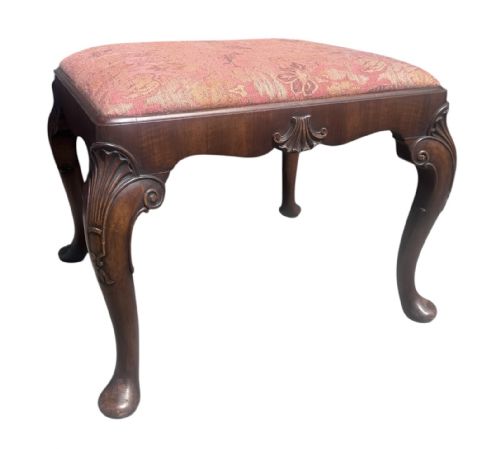
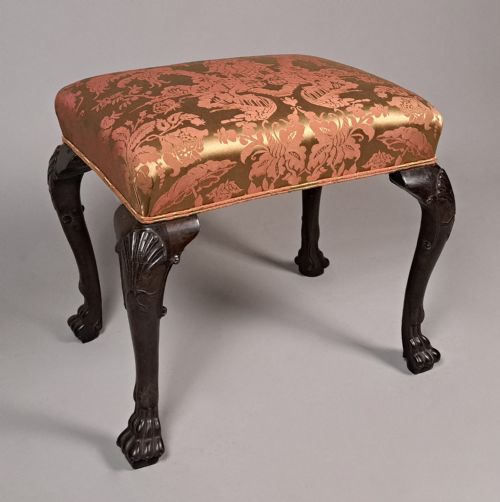


Georgian Cabriole Footstool
A georgian cabriole footstool brings tactile elegance and historic seating comfort to any room, combining robust timber frames with graceful curved supports.
Georgian Cabriole Footstool
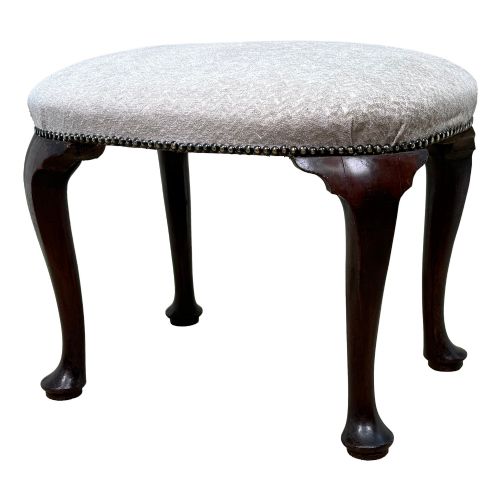
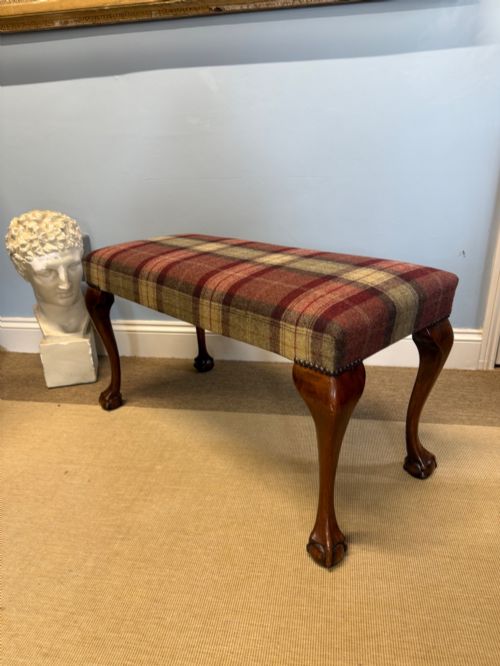
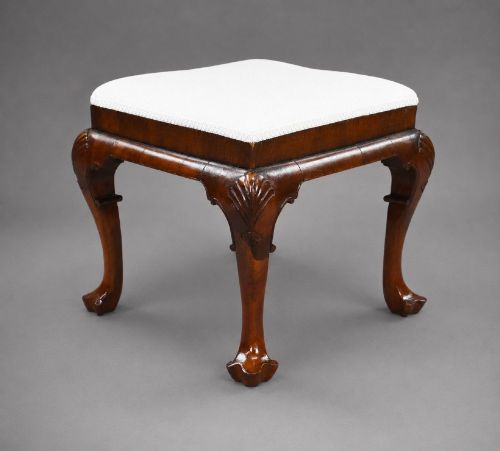
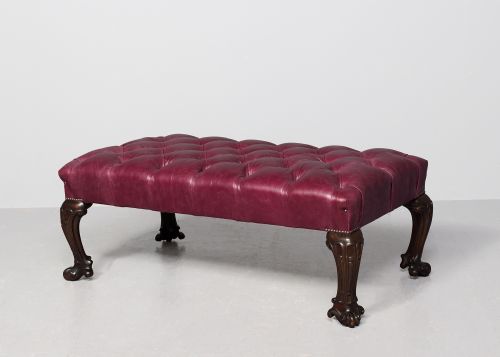
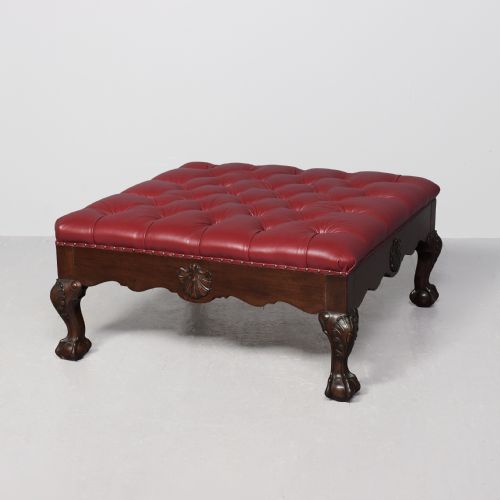
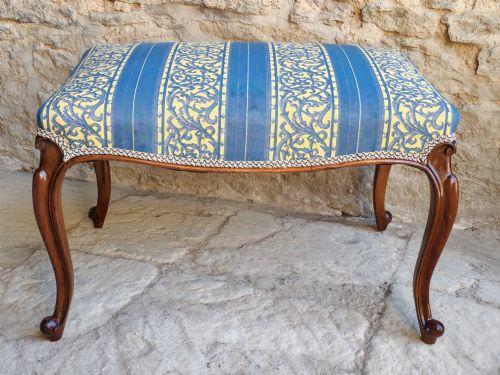
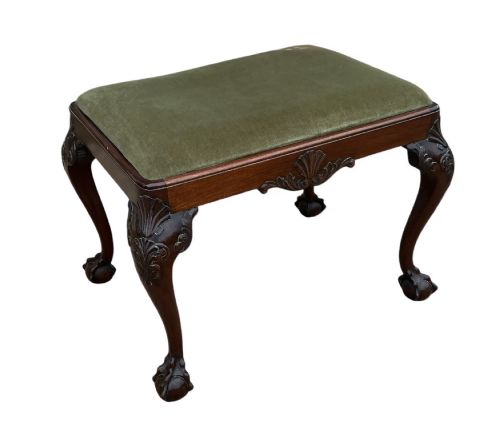
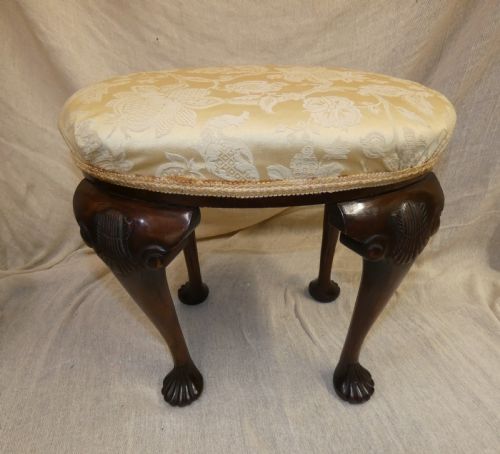
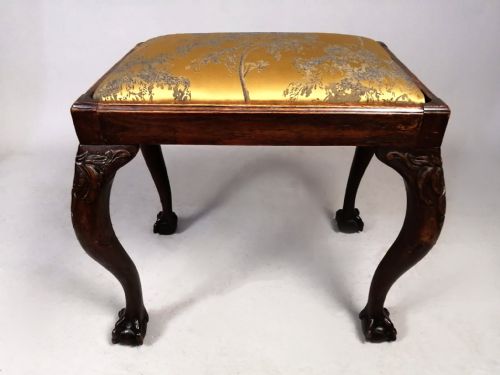
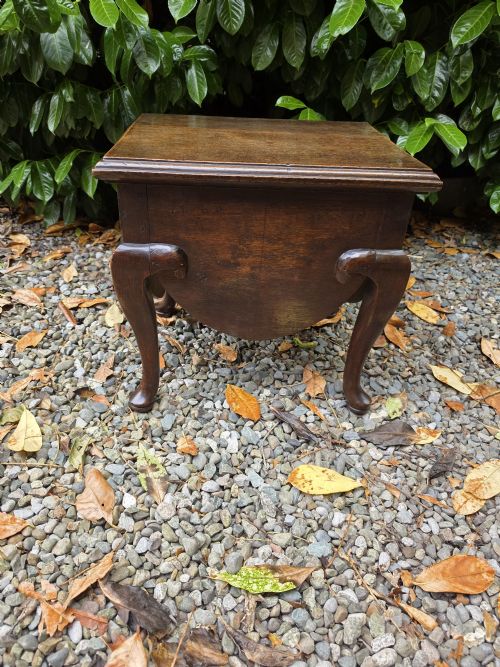
A georgian cabriole footstool represents a specialised form of antique seating designed to support the feet or serve as a low seat, appearing across this selection in various formats such as dressing stools, window seats, and long footstools. These pieces embody the aesthetic values of eighteenth-century design alongside later revival interpretations spanning the nineteenth and early twentieth centuries.
Materials and construction methods
The primary timbers utilised in these pieces are mahogany and walnut, occasionally complemented by oak and elm, which provide the structural integrity required for carved supports. Artisans shaped these hardwoods to form the characteristic double-curved legs that terminate in various foot designs.
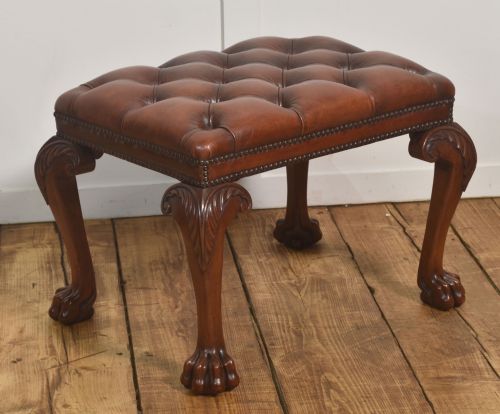
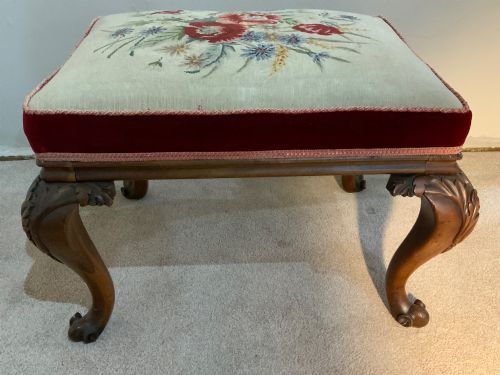
Upholstery techniques involve traditional textiles including wool, velvet, needlework, fabric, and leather, frequently secured over padding and occasionally enhanced with brass detailing. The combination of dense hardwood frames and textile coverings defines the physical presence of each item.
Materials documented across the inventory include mahogany, walnut, oak, elm, leather, velvet, wool, and brass.
Distinctions in craftsmanship
The refinement of the carving on the cabriole legs largely distinguishes superior examples from simpler ones, with finer pieces exhibiting crisply rendered details such as shell motifs or scrollwork. The selection of timber also plays a role, where highly figured walnut or dense mahogany elevates the visual weight of the piece.
Proportion and execution of form dictate the overall success of the design, separating standard production from exceptional examples. Furthermore, the retention of period upholstery materials or appropriate historical textiles contributes significantly to the integrity of the object.
The Georgian Cabriole Footstool Glossary
- Cabriole leg
- A furniture leg featuring a double curve, typically bulging outward at the knee and tapering inward toward the foot. This form derives from animal limbs and became a defining feature of eighteenth-century design.
- George I
- The period of British history spanning from 1714 to 1727, characterised by early developments in walnut furniture design and the introduction of curved forms.
- George II
- The reign spanning from 1727 to 1760, noted for the maturation of carved mahogany furniture and heavier, more ornate decorative schemes.
- Chippendale style
- A design idiom inspired by the cabinetmaker Thomas Chippendale, featuring carved wooden details, elaborate leg forms, and classical motifs.
- Needlework
- Hand-stitched textile work utilised historically for upholstery and decorative panels, frequently appearing on period seat covers.
Georgian Cabriole Footstool: Frequently Asked Questions
How do I date a footstool?
Dating relies upon examining the timber species, construction joints, and stylistic markers such as the contour of the cabriole leg. Earlier pieces often display specific wood patination and joinery techniques typical of the eighteenth century.
Later revival pieces from the nineteenth and twentieth centuries frequently incorporate machine-sawn elements or differ in timber preparation while imitating earlier aesthetic standards.
Where were these stools used?
These pieces served multiple functions within domestic interiors, acting as footrests before armchairs, low seats near fireplaces, or dressing furniture in bedrooms. Window seats also provided specialised perch seating in principal rooms.
Their portable nature allowed them to be moved easily between reception rooms, making them versatile accessories in historic households.
What is the difference between walnut and mahogany?
Walnut was predominantly utilised during the earlier eighteenth century, exhibiting rich brown tones and distinct grain patterns before mahogany superseded it in popularity. Mahogany offers greater density and a darker red-brown colour that responded well to deep carving.
Recognising the primary timber helps establish the chronological context of the frame alongside other stylistic clues.
How should I care for antique upholstery?
Preserving historic textiles requires protection from direct sunlight and regular, gentle cleaning to prevent fibre degradation. Leather and hide components benefit from appropriate conditioning to maintain flexibility.
Maintaining stable environmental conditions within the room protects both the wooden frame and the fabric coverings from excessive wear.