

Georgian Brown Sideboard
A georgian brown sideboard brings deep timber tones and stately dining room presence, combining functional storage with historic British cabinetmaking.
Georgian Brown Sideboard
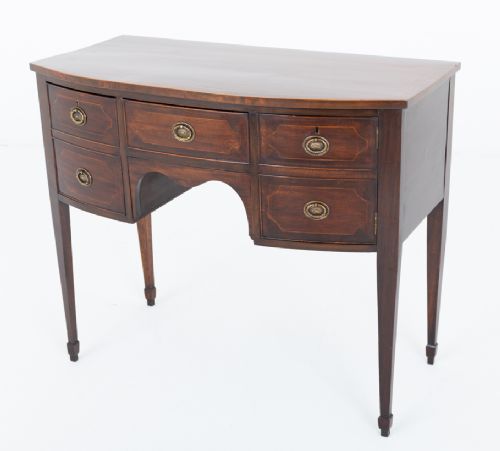
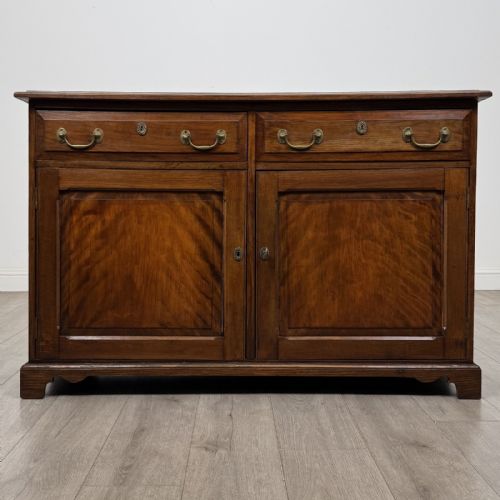
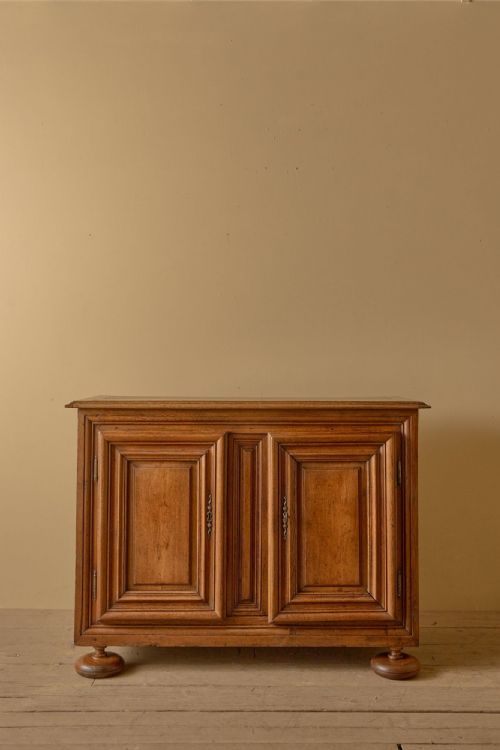
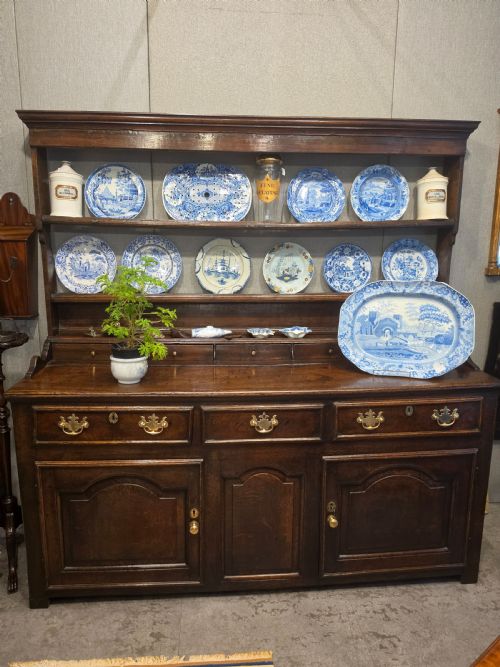
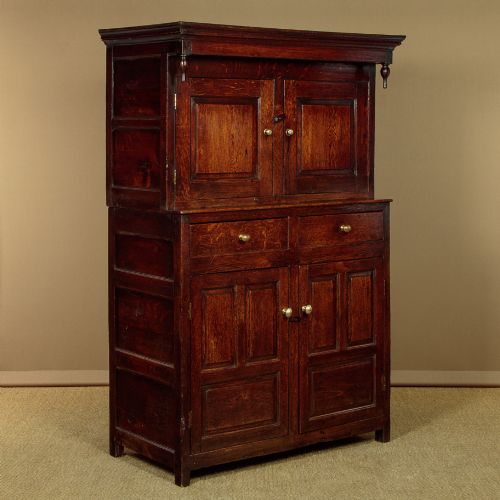
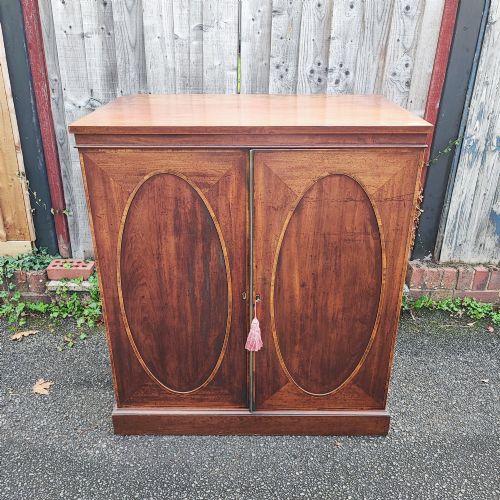
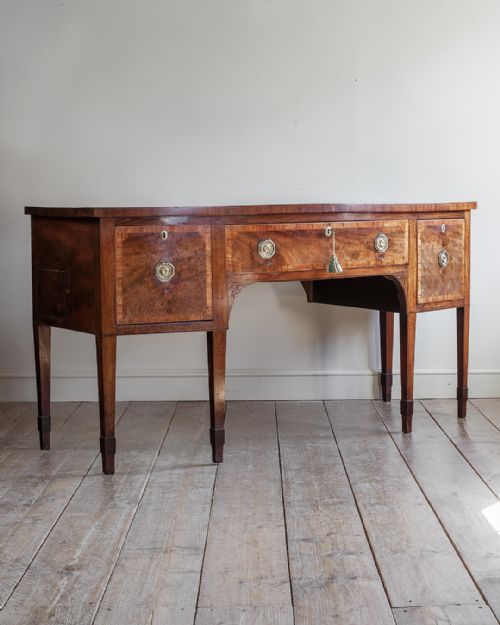
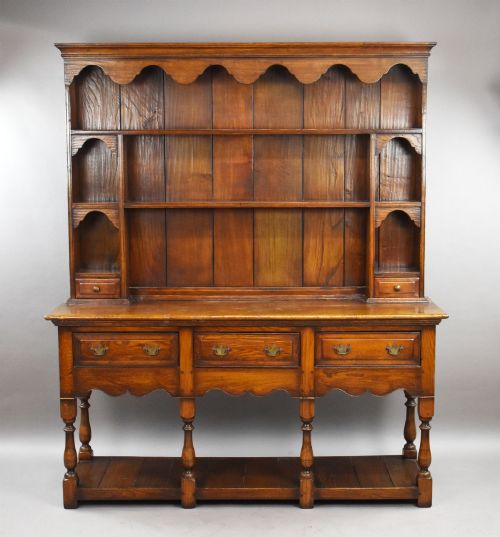
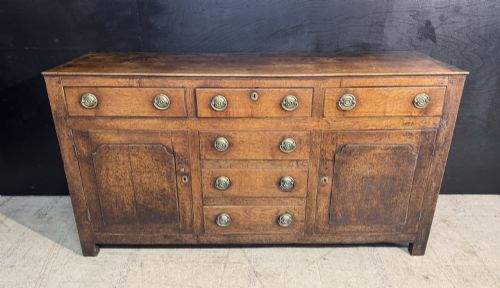
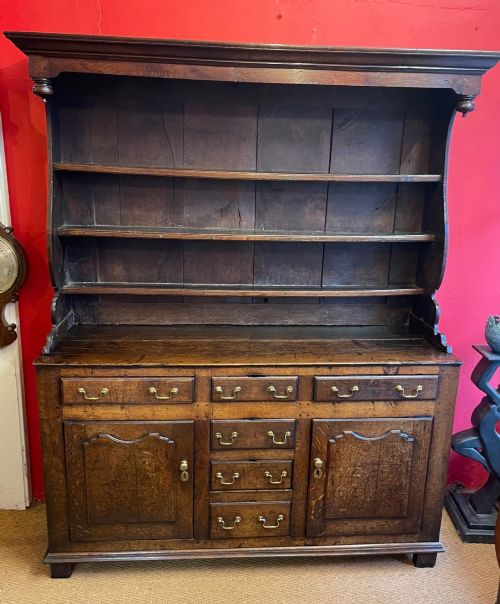
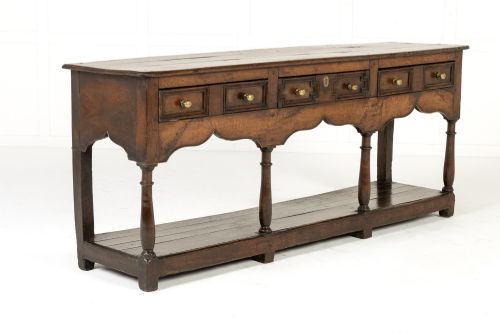
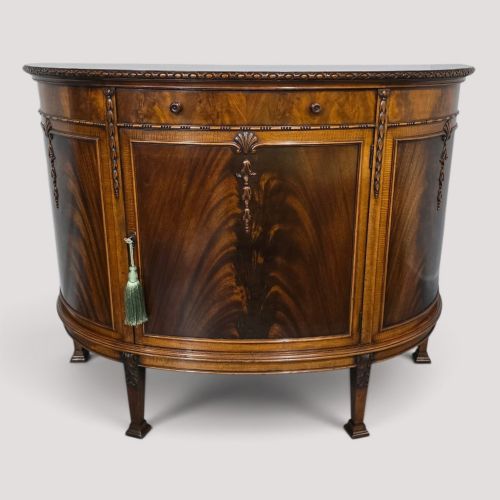
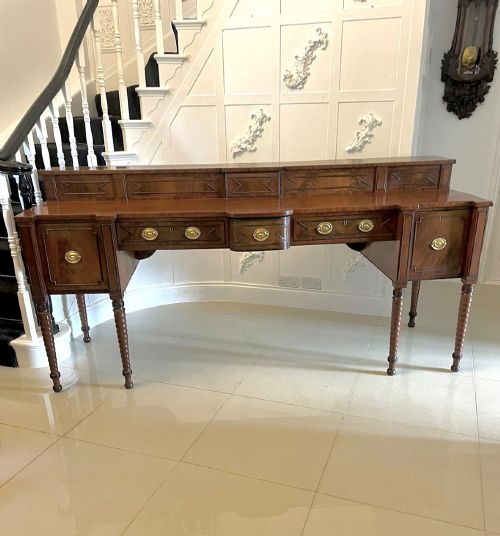
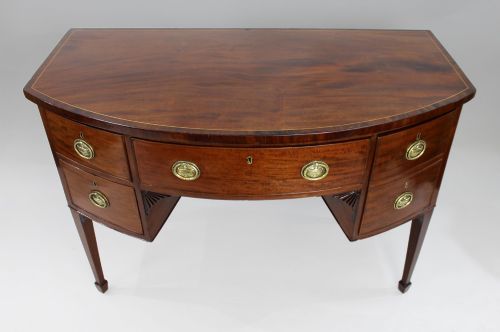
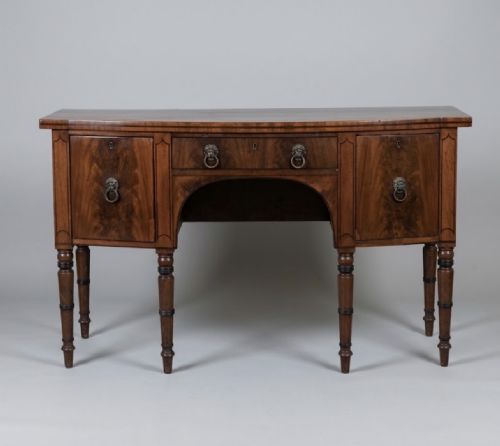
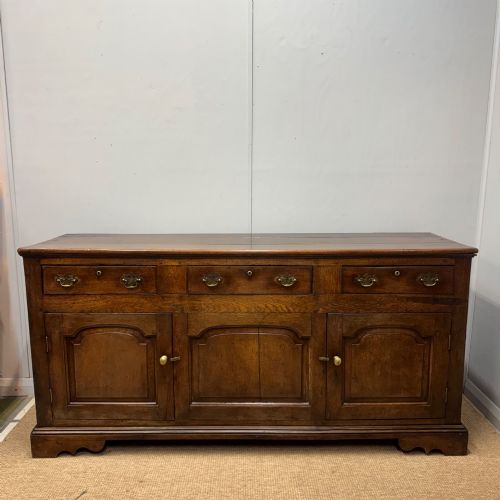
The pieces appearing on this page encompass various forms, including bowfront mahogany sideboards, oak dresser bases, serpentine servers, and side cabinets. Walnut, elm and pine also appear alongside the dominant mahogany and oak constructions, reflecting both formal dining rooms and country house interiors.
You will most frequently meet mahogany bowfront examples bearing string inlay or crossbanding, alongside robust oak dresser bases originating from regional workshops. These brown wood items provide deep patination and generous surface areas suited to traditional or contemporary interiors.
Materials and construction methods
Cabinetmakers constructed these pieces primarily using solid mahogany, oak and walnut timbers, frequently applying figured mahogany veneers to drawer fronts and tabletops. They added decorative contrast through boxwood stringing, inlay and mahogany crossbanding to frame the structural grain.
Traditional joinery techniques such as dovetailed drawer construction and pegged tenons ensure the longevity of these brown sideboards. Brass hardware, including original ring pulls and drop handles, secures the drawers and doors across both formal George III designs and country vernacular pieces.
Georgian Brown Sideboard Retail Price Guide 2026
Typical asking prices for georgian brown sideboard among the pieces listed under this phrase on Sellingantiques today, from the lower quarter to the upper quarter. They describe what is for sale here now, not the wider market.
Listings feature mahogany, oak, walnut and elm woods across Georgian, Regency and Edwardian periods.
Judging the quality of these sideboards
Quality rests upon the choice of timber and the dexterity shown in the matching of figured mahogany or the selection of dense, quarter-sawn oak. Superior examples display thoughtful grain continuity across multiple drawers and harmonious proportions that suit domestic rooms.
Refined craftsmanship shows in the crispness of any boxwood inlay, the neatness of hand-cut dovetails, and the retention of period brass handles. Pieces maintaining their original rich patination and untouched surface colour hold greater distinction than heavily restored alternatives.
The Georgian Brown Sideboard Glossary
- Bowfront
- A curved front facade that swells outward in the centre, commonly seen on mahogany sideboards from the Georgian period.
- Dresser Base
- A low rectangular cabinet featuring drawers or cupboards, designed for food preparation and storage without an upper plate rack.
- Crossbanding
- A narrow strip of veneer applied perpendicularly to the grain of the primary surface to create a decorative border.
- Serpentine
- A shaped furniture front featuring a convex centre flanked by concave curves, demanding high skill from the cabinetmaker.
- Pot Board
- An open lower shelf built into traditional oak dressers to hold heavy pots and ceramic serving dishes.
Georgian Brown Sideboard: Frequently Asked Questions
How do I style a brown sideboard?
You can style a brown sideboard by placing ceramic lamps, silver trays or period pewter on the surface to highlight the rich wood grain.
Pairing the dark timber tones against neutral walls allows the historic patination and brass hardware to stand out in a modern room.
How do I tell George III from later styles?
George III pieces display period construction methods, hand-cut dovetails and timber patination developed over centuries of actual use.
Later Edwardian or early twentieth-century revivals often utilise machine-sawn elements and display cleaner, less weathered surfaces.
Where were these pieces used?
These sideboards and dresser bases originated in formal dining rooms, country houses and regional farmhouses across Britain.
They functioned as central hubs for storing cutlery, linens and serving dishes during large household dinners.