



Georgian Brass Pestle
These georgian brass pestle pieces bring heavy metal apothecary tools into the modern home.
Georgian Brass Pestle
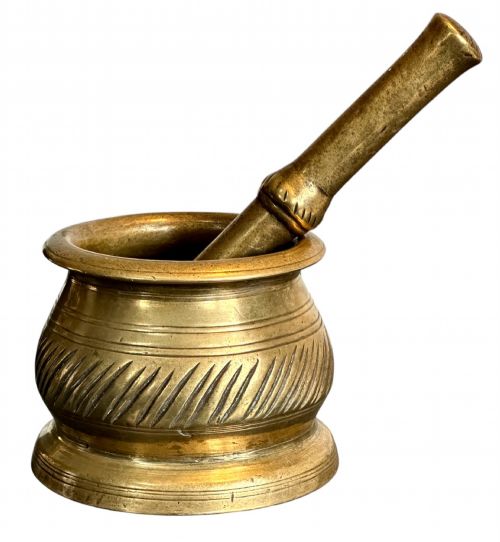
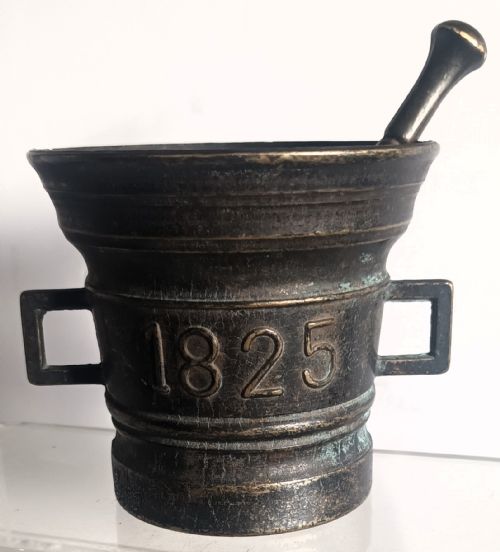
A georgian brass pestle forms part of a heavy grinding set alongside a matching mortar, designed for kitchen and apothecary use. These functional kitchen and chemist tools appear across the Georgian, 18th century, and 19th century periods.
Most examples found here combine the pestle with a sturdy mortar in bronze, brass, or bell metal. The pieces range from standard kitchen items to specialised apothecary aids and chemist grinders.
Materials and construction
These items are cast in heavy metal alloys, predominantly utilising bronze, brass, and bell metal to withstand the continuous force of grinding. The dense composition gives each mortar and pestle significant weight and durability.
Metalworking techniques of the period involved foundry casting, followed by hand finishing to shape the flared rims and solid striking ends. This process created robust utilitarian objects designed for practical preparation tasks.
Georgian Brass Pestle Retail Price Guide 2026
Typical asking prices for georgian brass pestle among the pieces listed under this phrase on Sellingantiques today, from the lower quarter to the upper quarter. They describe what is for sale here now, not the wider market.
Current listings feature metalware predominantly from the Georgian and 18th century eras, constructed in bronze and brass.
Assessing quality and character
Quality rests in the proportional balance between the pestle and its mortar, alongside the integrity of the cast metal surface. Heavier examples display a substantial mass that indicates superior utility and material density.
The degree of wear and the preservation of original cast details distinguish finer items from simpler utilitarian duplicates. Patina develops naturally through age, reflecting the functional history of each piece.
The Georgian Brass Pestle Glossary
- Mortar
- The heavy bowl in which substances are crushed or ground using a pestle. It forms the stable base of the grinding set.
- Pestle
- The heavy tool with a rounded end used for pounding and grinding materials inside the mortar.
- Bell metal
- A hard alloy used for casting bells and high quality mortars, offering a resonant tone and strong durability. It contains a specific proportion of copper and tin.
- Apothecary
- A historical practitioner who prepared and sold medicines, utilising metal mortars and pestles for compounding remedies.
Georgian Brass Pestle: Frequently Asked Questions
What were these pestles used for?
These tools served kitchens and apothecary shops for grinding herbs, spices, and medical ingredients into fine powders. The heavy metal construction allowed users to crush tough substances without damaging the bowl.
Domestic cooks and chemists relied on this equipment daily before the advent of modern mechanical processing. Their robust build ensured a long working life across generations.
Are these pieces made of brass or bronze?
The listings show examples fashioned from brass, bronze, and bell metal. Each alloy offers a distinct weight and surface tone.
Foundries selected these materials for their strength and resistance to fracturing under heavy impacts. Metal composition varied according to the workshop and the intended use of the set.
How do I date an 18th century pestle?
Dating relies on stylistic markers, cast form, and historical documentation associated with the piece. Items span the Georgian, 18th century, and 19th century eras.
Changes in rim profiles and base shapes help specialists place objects into their correct period. Comparing the wear patterns provides further context regarding the age of the metal.
How should I display a mortar and pestle?
These heavy metal objects work well on kitchen worktops, open shelving, or side tables as sculptural display items. Their substantial weight makes them stable freestanding decor.
Keeping the metal clean helps preserve the historical surface without removing the natural aged finish. Pairing the pestle inside the mortar creates a complete silhouette.