





Antique Bronze Pestle
These antique bronze pestle implements, paired with their heavy mortars, offer a tangible link to centuries of kitchen, apothecary, and dispensary work.
Antique Bronze Pestle
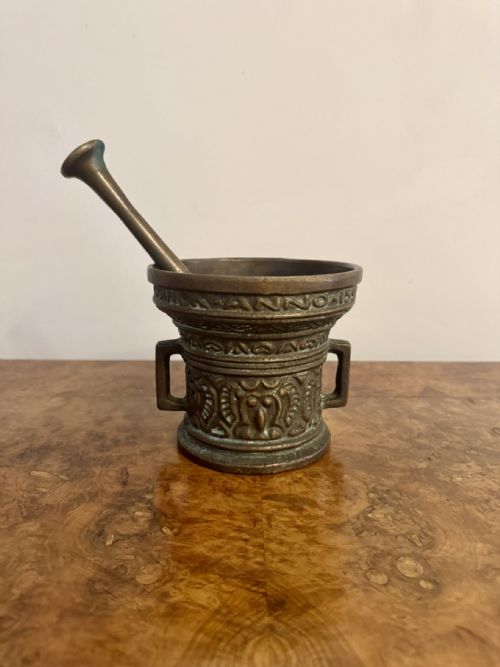
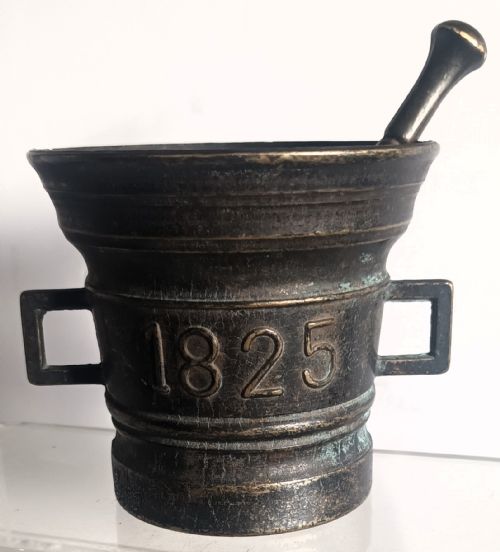
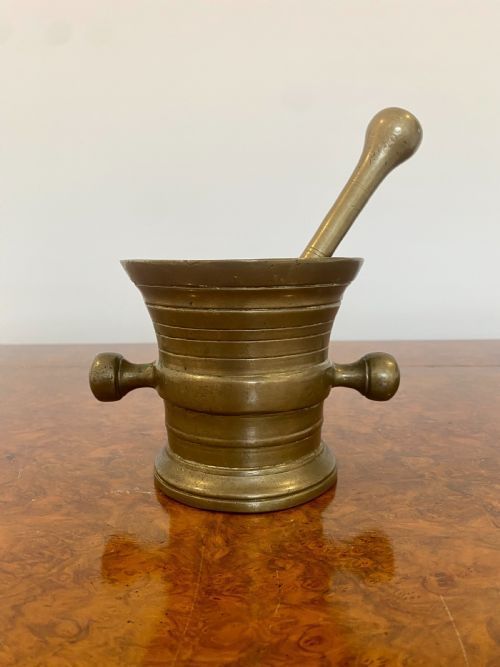
An antique bronze pestle is a heavy, handheld grinding tool typically found paired with a matching mortar for crushing herbs, spices, and medical compounds. When you search for an antique bronze pestle, you will most frequently encounter complete sets spanning the seventeenth and nineteenth centuries, originating from English workshops or continental European foundries.
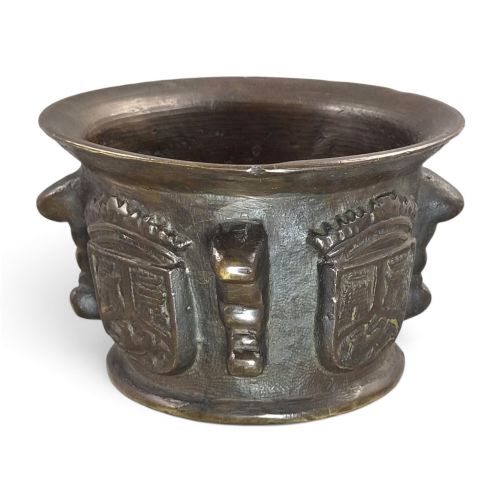
The forms range from utilitarian kitchen aids to decorative apothecary equipment bearing coats of arms or Tudor rose motifs. Examples date from the 16th century through to the Victorian era, taking shape as substantial metalware designed for daily compounding tasks.
What varies in quality
Quality in these implements rests upon the crispness of the cast decoration and the proportional balance between the pestle and its mortar. Pieces displaying deeply struck coats of arms, clean moulding lines, and heavy, stable metal masses sit at the higher end of the range.
Surface patination and the survival of the original matching pestle heavily influence desirability. Examples that retain their heavy original metal strike and show even, aged wear present greater character than mismatched or overly polished pairings.
Antique Bronze Pestle Retail Price Guide 2026
Typical asking prices for bronze pestle among the pieces listed under this phrase on Sellingantiques today, from the lower quarter to the upper quarter. They describe what is for sale here now, not the wider market.
Some seventeenth-century specimens wear their history quite literally, carrying cast coats of arms framed by tiny pestles.
The Antique Bronze Pestle Glossary
- Bell metal
- A hard alloy used for casting mortars, consisting chiefly of copper and tin, which produces a resonant tone when struck. This specific mixture provides the durability needed for heavy crushing tasks.
- Apothecary
- A historical practitioner who prepared and sold medicines and drugs. Mortars and pestles served as primary tools in their trade for pulverising ingredients.
- Carolean
- Pertaining to the reign of King Charles II or the mid-to-late seventeenth century style. Pieces from this period often display specific decorative moulding traits.
- Tudor rose
- The traditional floral heraldic emblem of England, frequently cast as a decorative motif on the exterior walls of seventeenth-century bronze mortars.
- Metalware
- Utilitarian and decorative objects fashioned from metals such as bronze, brass, and iron. This category encompasses the diverse range of mortars and pestles found in domestic and shop settings.
Antique Bronze Pestle: Frequently Asked Questions
What were antique bronze pestles used for?
These tools served in kitchens, dispensaries, and apothecary shops for grinding dry ingredients, herbs, and medical compounds into fine powders.
The heavy weight of the bronze pestle made manual pulverisation efficient against the reinforced walls of the matching mortar.
How do I date an antique bronze pestle?
Dating relies on stylistic clues such as cast coats of arms, Tudor rose motifs, and the specific shape of the flared rim. Seventeenth-century examples often feature distinct architectural moulding compared to later Georgian or Victorian counterparts.
The manufacturing texture and historical documentation associated with the piece also help narrow down the production era.
Are pestles and mortars usually found together?
While many listings offer complete matched sets, pestles and mortars were frequently separated or lost over centuries of domestic use. Finding a pestle that matches the wear, metal composition, and period of the mortar is a notable advantage.
Some surviving examples consist of the mortar alone or are paired with unusual pestles from different origins.
How should I display an antique bronze pestle?
These heavy metal objects require a sturdy surface capable of supporting considerable weight, such as a wooden table, sideboard, or open shelf. Their substantial heft and dark patinated bronze surfaces suit traditional or eclectic interior settings.
Keeping them in a dry environment preserves the metal finish without requiring heavy polishing.