


Georgian Brass Gallery Sideboard
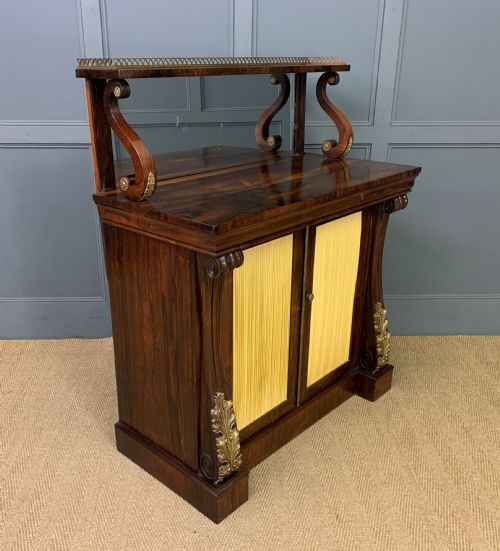
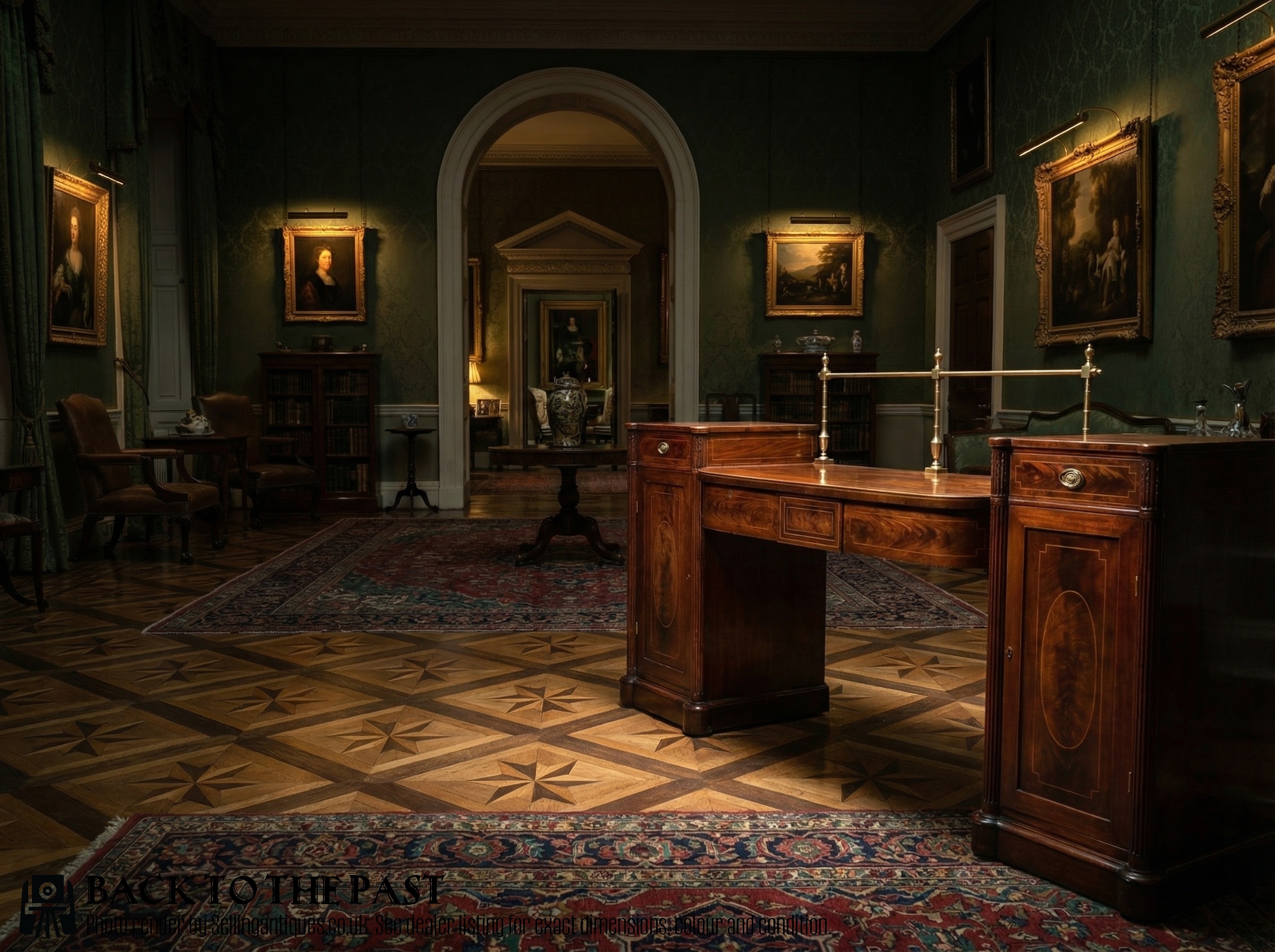
A georgian brass gallery sideboard brings refined period elegance to a room, offering both substantial storage and a distinctive metal rail.
Georgian Brass Gallery Sideboard
Makers and workshops constructed these serving pieces primarily in mahogany, often enhanced with satinwood, rosewood, and amboyna veneer. The configuration usually combines deep drawers and cupboards designed for dining room service.
Materials and construction
Cabinet makers utilised dense native and exotic timbers, selecting figured mahogany, rosewood, and satinwood for visible surfaces while employing oak for structural drawer linings. Inlays of boxwood and delicate stringing added linear definition to the facades.
Brass was cast and polished to form the characteristic gallery rails and mounts, secured firmly to the timber tops. Secondary woods like oak and lighter pine provided durable internal framing for the substantial carcases.
Listings feature pieces spanning the Georgian, Regency, and Edwardian periods, constructed in mahogany, rosewood, satinwood, and oak.
Assessing quality and execution
The sophistication of the timber figure and the crispness of any inlay dictate the visual standing of a piece. Finer examples display continuous grain matching across drawer fronts and doors, paired with substantial gauge brass for the gallery rail.
Structural integrity relies on the tightness of traditional joinery within the carcase and the original placement of the brass mounts. Refined execution shows in smooth drawer operation and the retention of period fittings.
Howard And Sons·H Mower And Stephenson
The Georgian Brass Gallery Sideboard Glossary
- Gallery rail
- An upstanding metal or timber fence mounted along the rear and sides of a serving surface to prevent items from sliding off.
- Chiffonier
- A low cabinet or sideboard featuring shelving or a gallery back, developed during the Regency period for dining and drawing rooms.
- Pedestal sideboard
- A form comprising distinct side pedestals joined by a central serving table or recessed section, typical of the Georgian era.
- Amboyna veneer
- A highly figured exotic wood used for decorative surface panels on fine cabinets and sideboards.
- Stringing
- Thin inlaid lines of contrasting timber used to outline drawers, panels, and borders on cabinet furniture.
Georgian Brass Gallery Sideboard: Frequently Asked Questions
What is a brass gallery?
A brass gallery is a decorative metal rail mounted to the upper surface of a sideboard or serving table. It originally served to secure plates and glassware during dining service.
Over time, these railings became a signature decorative element, cast in brass and secured with fixed upright posts.
How do I date these sideboards?
Dating relies on examining the primary timber, secondary framing woods, and construction techniques. Georgian and Regency pieces show hand-cut dovetails and specific aesthetic proportions.
Later revival pieces from the late nineteenth century often incorporate machine-cut elements and different internal woods while copying earlier stylistic motifs.
Where were these pieces used?
These sideboards and serving tables stood in the dining rooms of substantial townhouses and country residences. Servants used the surfaces to stage dishes and decanters before service.
Today, they function well in modern dining rooms, living spaces, or hallways as both display surfaces and storage units.
What woods are most common?
Mahogany forms the primary structure for the majority of these pieces, often featuring rich figured grain. Cabinet makers also utilised rosewood, satinwood, and amboyna veneer.
Internal elements and drawer linings frequently employ oak or boxwood for durability and contrast.