

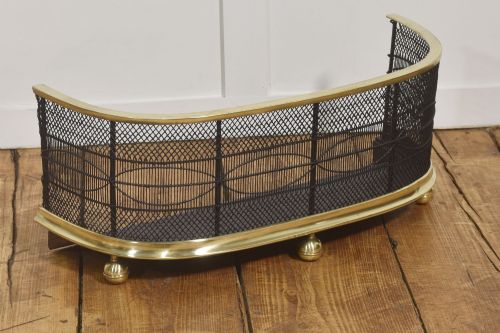

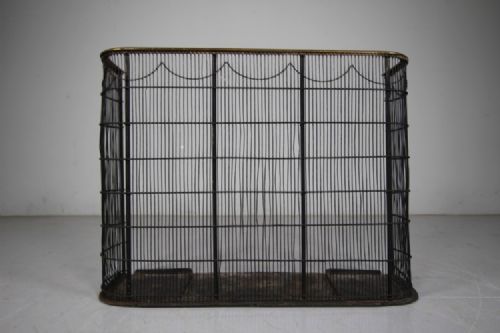


Georgian Brass Fireplace Fender
A georgian brass fireplace fender anchors a hearth with warm metalwork and period proportion, protecting the room from stray embers.

Georgian Brass Fireplace Fender
A georgian brass fireplace fender is a hearth accessory designed to contain ash and keep rolling logs safely contained within the fireplace opening. The pieces found here span the Georgian, Regency, William IV and Victorian eras, taking the form of low curbs, pierced guards and wirework screens.
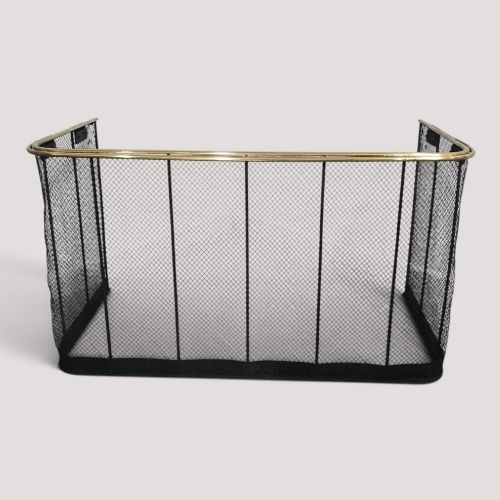
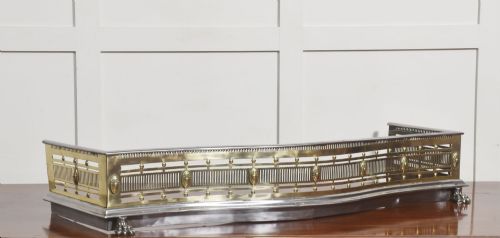
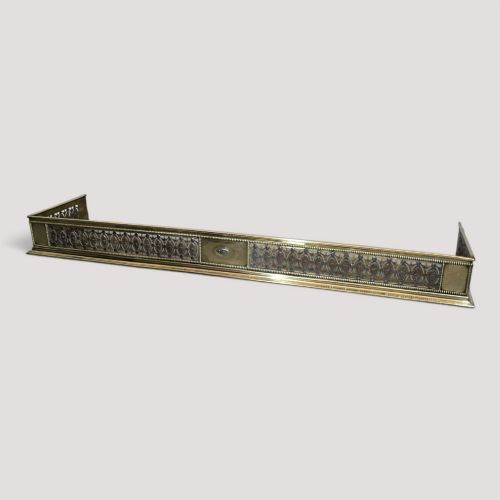
The most common examples on this page are constructed from brass or polished steel, often combining heavy cast elements with lighter perforated sheets or woven wire mesh. Formats range from straight curb fenders to curved designs and nursery guards fitted with integrated frames.
Makers and designers of the period drew inspiration from classical motifs, producing neoclassical, Adam style and scrollwork details that reflect the interior fashions of the nineteenth century.
How they were made
Construction relies heavily on sheet brass, cast brass and polished steel, frequently paired with iron wire or woven iron wire to form protective mesh panels. Metal components were shaped through casting, piercing and hand-cutting steel, with individual pieces joined to create rigid frames.
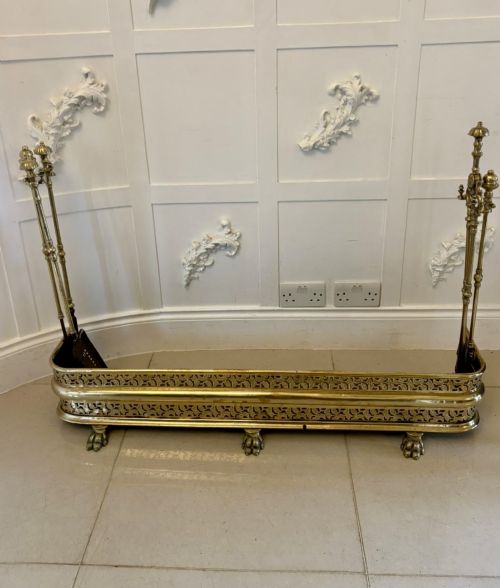
Finishes vary from high polished brass surfaces to contrasting combinations of brass and blackened iron or cut steel studs. Certain examples include fitted fire irons or claw and ball feet cast directly as part of the fender base.
Georgian Brass Fireplace Fender Retail Price Guide 2026
Typical asking prices for georgian brass fireplace fender among the pieces listed under this phrase on Sellingantiques today, from the lower quarter to the upper quarter. They describe what is for sale here now, not the wider market.
The listings combine polished brass, cast iron, cut steel, and woven wire mesh across nineteenth-century styles.
What varies in quality
Quality in a georgian brass fireplace fender is defined by the crispness of the casting, the precision of pierced decorative patterns, and the integration of secondary metals like cut steel. Heavy gauge brass and substantial weight indicate superior material use compared to lighter, later stamped reproductions.
The presence of original components, such as matching fire irons or undisturbed wirework mesh, elevates an example. Finer pieces demonstrate careful hand-finishing on mouldings and decorative mounts rather than mass-produced uniformity.
The Georgian Brass Fireplace Fender Glossary
- Curb fender
- A low metal barrier placed on the floor around the hearth. It establishes the perimeter of the fireplace.
- Pierced fender
- Metalwork perforated with decorative patterns or slots. This technique allowed craftsmen to create light, intricate designs from solid sheets.
- Cut steel
- Small faceted steel studs riveted individually to a steel backing plate. It catches firelight with a diamond-like sparkle.
- Nursery guard
- A tall protective screen designed to prevent children and fabrics from getting too close to the flames. These typically feature robust iron wire frames.
- Club fender
- A low upholstered seat built over a brass or iron frame around the hearth. It offers a warm place to sit close to the fire.
Georgian Brass Fireplace Fender: Frequently Asked Questions
What is a georgian brass fireplace fender used for?
These metal barriers sit on the floor directly in front of the hearth to stop rolling logs and falling embers from damaging floorboards or rugs.
Beyond safety, they frame the fireplace visually, creating a tidy boundary that unifies the hearth furniture within a period room.
How do I clean antique brass fenders?
Dust regularly with a soft dry cloth to prevent soot and dirt build-up on the metal surfaces.
Avoid harsh commercial metal polishes that strip historical patina, opting instead for gentle cleaning methods appropriate for nineteenth-century brass.
Can I use an antique fender with a modern fireplace?
Most pieces fit easily in front of standard hearth openings, provided you measure the width and depth of your floor space accurately.
Check the internal dimensions of the fender against your hearthstone to ensure it sits flat and stable on the floor.
How do I tell Georgian pieces from Victorian ones?
Georgian and Regency examples tend to feature restrained neoclassical proportions, crisp casting and refined pierced brass or cut steel work.
Victorian pieces often introduce heavier proportions, claw and ball feet, or more elaborate cast ornamentation reflecting later nineteenth-century revival styles.