

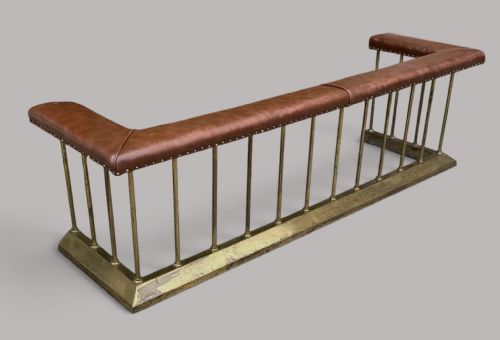
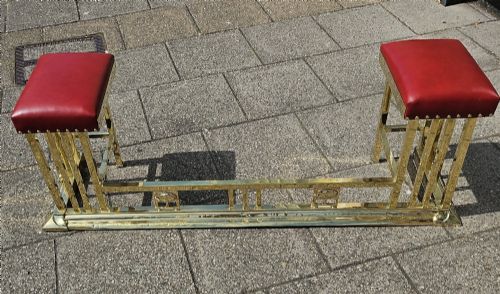
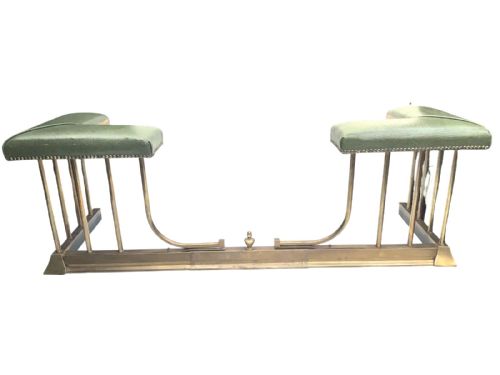


Victorian Brass Club Fender
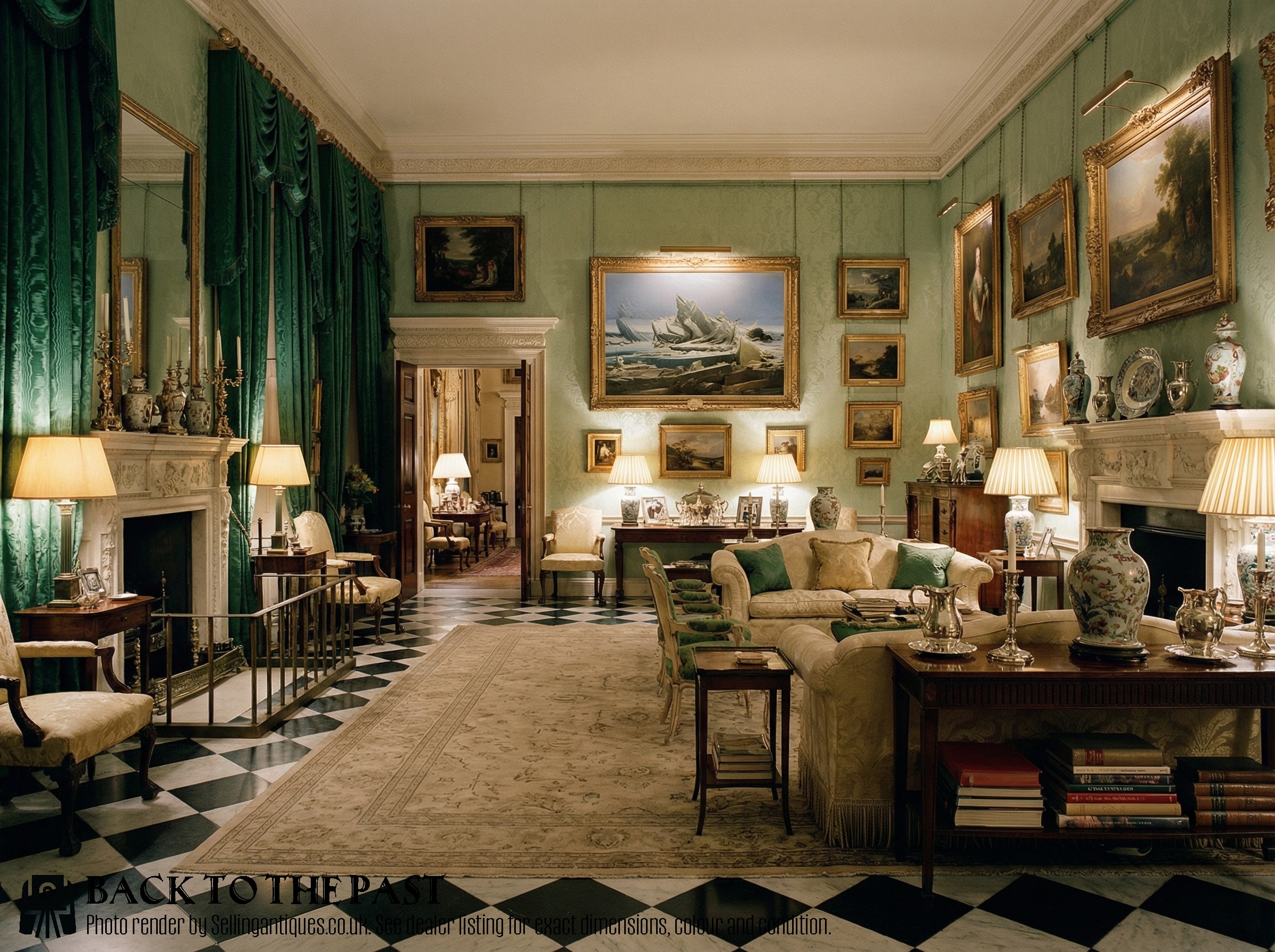
A victorian brass club fender brings warmth and low seating right to the hearth.
Victorian Brass Club Fender
A victorian brass club fender is a hearth accessory built with integrated low seats, allowing individuals to sit close to the fire. When searching for a victorian brass club fender, buyers encounter substantial metal frameworks designed to surround fireplace openings.
The pieces on this page primarily span the nineteenth century and the edwardian era, reflecting both traditional domestic forms and country house styles. Alongside standard brass constructions, variants incorporate iron, copper, and cast steel alongside upholstered elements.
Most examples function as functional fireside seating flanked by open metal balustrades. Surviving forms range from simple tubular brass frames to heavy pieces paired with leather upholstery or auxiliary iron supports.
Materials and construction
Makers constructed these frames predominantly from solid brass tubing and structural iron or steel bases. Many pieces combine brass with secondary metals like copper or wrought iron to ensure stability around the hearth.
Seating portions feature padding covered in materials such as leather and velvet. Upholstered tops are secured directly to the metal frame, often utilising dense internal stuffing to withstand frequent use by the fire.
Victorian Brass Club Fender Retail Price Guide 2026
Typical asking prices for victorian brass club fender among the pieces listed under this phrase on Sellingantiques today, from the lower quarter to the upper quarter. They describe what is for sale here now, not the wider market.
The inventory records pieces incorporating brass, copper, iron, steel, leather, and velvet across nineteenth and early twentieth-century dates.
Quality and proportion
The distinction between standard items and superior examples lies in the weight of the metal and the integrity of the joints. Heavy gauge brass and robust internal iron frameworks indicate higher durability and refined craftsmanship.
Upholstery finish and leather selection also define the grade of a piece. Original hide surfaces and careful stitching separate utilitarian hearth guards from more decorative country house furnishings.
The Victorian Brass Club Fender Glossary
- Club fender
- A low, U-shaped hearth surround featuring cushioned top rails for seating. These frames originated in gentlemen's clubs to maximise warmth close to an open fire.
- Balustrade
- A row of small vertical pillars supporting the top rail of the fender. They form the protective barrier between the room and the fireplace opening.
- Polychromed
- Decorated with multiple colours painted onto the metal surface. This finish adds visual depth to the brass and iron framework.
- Trivet
- A small metal platform attached to the fender for warming plates or kettles. It sits within the hearth structure adjacent to the fire.
Victorian Brass Club Fender: Frequently Asked Questions
How were club fenders used?
These pieces served as fireside seats where people could sit directly around the hearth. The raised cushioned rails kept individuals close to the warmth while protecting the room from stray embers.
They also functioned as social hubs in large reception rooms, providing extra seating capacity during winter gatherings without crowding the main furniture.
Are these fenders adjustable?
Certain examples include mechanism designs that allow the width to be altered. This made it possible to fit the metal frame to varying fireplace dimensions.
Buyers should examine the specific joints and corner brackets to determine whether a given piece possesses this mechanical flexibility.
What leather is used on the seats?
Original seating surfaces typically utilise durable cattle hide, often finished in tones of tan, brown, or red. These leathers were chosen for their ability to endure dry heat near the grate.
Over decades of use, the material develops a distinct patina that records its history by the hearth.
How do I measure for a fender?
Measure the total width and depth of the hearth stone to ensure the metal base sits securely within the perimeter. Account for the projection of the fireplace surround into the room.
Check the internal clearance between the pillars to guarantee it accommodates the fire basket or grate comfortably.