

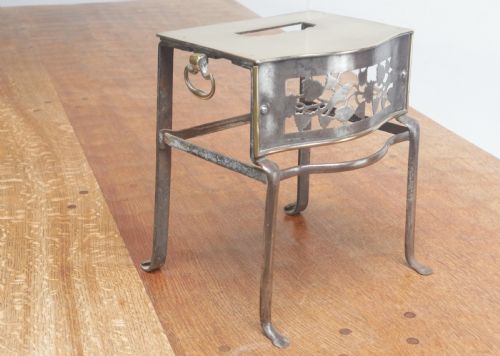


Georgian Brass Fireplace Accessory
A georgian brass fireplace accessory brings warmth and period character to any hearth, uniting practical metalwork with the decorative domestic arts of the period.
Georgian Brass Fireplace Accessory
A georgian brass fireplace accessory encompasses the functional metal objects used around the hearth during the eighteenth and early nineteenth centuries. When searching this phrase, buyers encounter items designed for managing solid fuel fires, cooking, and hearth maintenance.
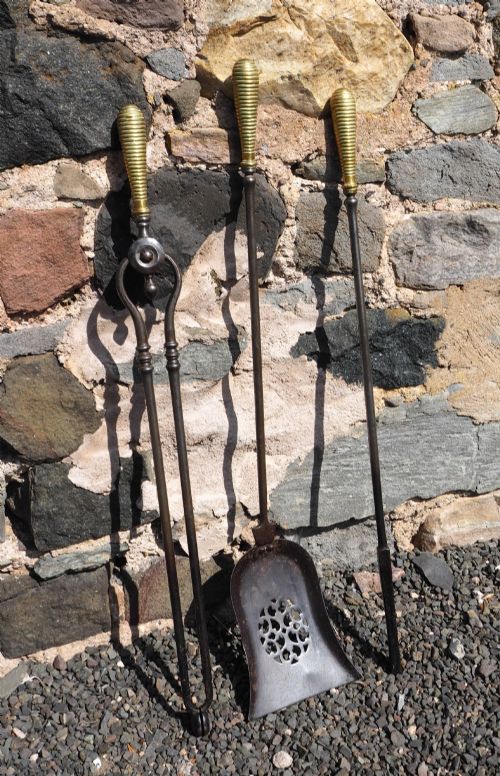
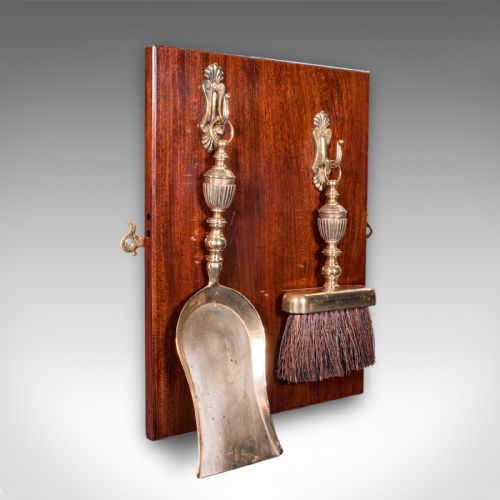
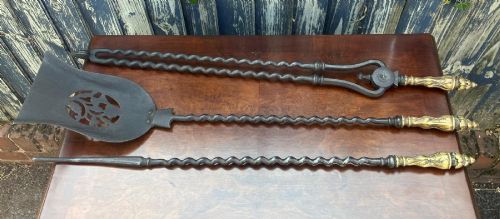
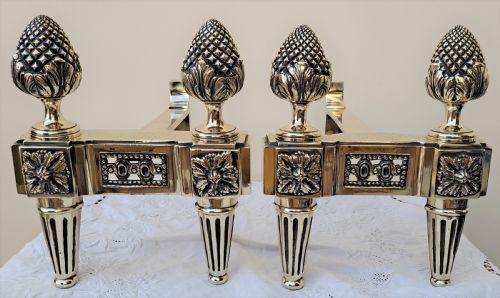
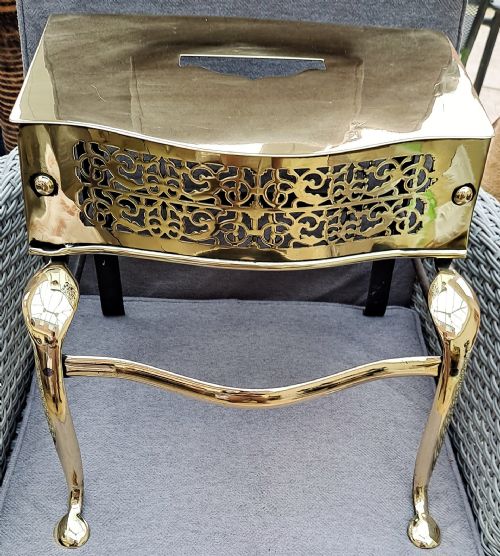
The most common examples on this page include brass-fronted footmen, coal scuttles in copper and brass, and matching sets of fire irons combining steel and brass. These objects originate from the Georgian, Regency, and early Victorian periods, often taking traditional country or formal English forms.
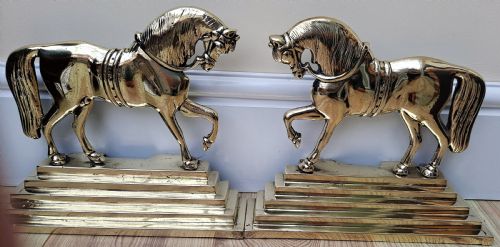
Hearth furniture from these decades serves both utilitarian and decorative roles in the room. Surviving pieces range from simple domestic tools to polished fender mounts and brass andirons intended to frame an open coal or wood fire.
Materials and construction
Makers utilised cast and sheet brass combined with polished steel, iron, and occasionally copper to build these hearth furnishings. Steel provides the necessary rigidity and strength for fire irons and footman tops, while brass offers a bright, reflective surface and decorative detail.
Wood such as mahogany appears in structural elements like peat buckets and bellows, often accented with brass bands or decorative studs. Wrought iron and cast iron form the heavy inner frames of andirons and fenders designed to withstand intense heat.
Assessing quality in hearth metalwork
Quality rests upon the weight of the metal, the crispness of the casting, and the retention of original matching components. Superior pieces display substantial gauge brass and refined turning rather than thin sheet construction.
The presence of original steel fire tools, untouched patination, and maker attribution elevate an item above standard domestic hardware. Pieces retaining their original fixings and unpolished surfaces demonstrate genuine period integrity.
John Linwood·A Richardson
The Georgian Brass Fireplace Accessory Glossary
- Footman
- A metal stand placed in front of the fire to keep food or kettles warm. These typically feature a brass top plate supported by iron or steel legs.
- Andirons
- Iron or brass supports placed horizontally in the hearth to hold logs for burning. They often feature decorative cast brass fronts.
- Fender
- A low metal guard placed around the hearth to contain embers and ash. Examples from the period combine polished steel with pierced or cast brass.
- Spit jack
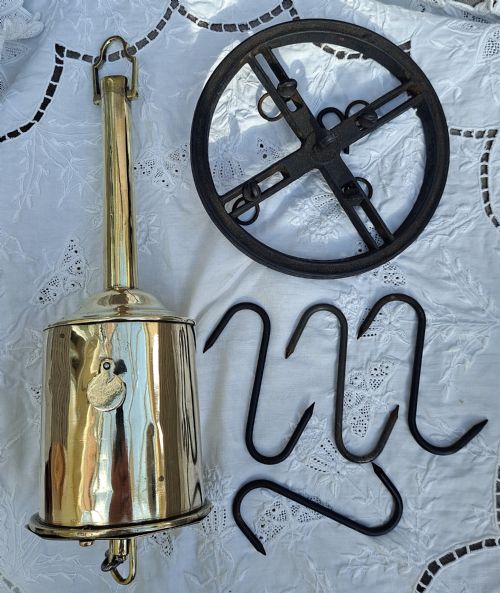
- A mechanical device used to turn meat over the fire for roasting. These often utilise clockwork mechanisms housed in brass cases.
- Peat bucket
- A wooden container bound with brass hoops designed for holding fuel near the hearth. They frequently appear in ribbed mahogany or oak.
Georgian Brass Fireplace Accessory: Frequently Asked Questions
How do I clean antique brass hearth items?
Polishing should be approached with caution to preserve the dark patination accumulated over centuries. Light dusting and occasional gentle cleaning with non-abrasive cloths protect the original surface.
Avoid modern aggressive metal cleaners that strip away historical character and leave brass unnaturally bright. A natural beeswax paste can help protect iron and steel components from surface corrosion.
Are these fireplace accessories still usable today?
Many solid brass and steel items remain robust enough for daily domestic use around a working fireplace. Fire irons, fenders, and andirons are structurally sound and function just as they did in the Georgian era.
Items containing delicate mechanisms, such as mechanical bellows or spit jacks, are best treated as decorative display pieces rather than active tools. Checking the joints and metal thickness helps determine suitability for an active hearth.
How can I tell Georgian items from later copies?
Period pieces display traditional construction methods such as hand-cut threads, dovetailing, and heavy cast brass rather than modern machine stamping. Examine the wear patterns on fire irons and footman feet to confirm age-appropriate use.
Twentieth-century reproductions often feel lighter in the hand and lack the subtle irregularities found in eighteenth-century metalwork. Patina and material thickness provide the clearest indicators of authentic period manufacture.
What is the difference between a footman and a trivet?
A footman is a larger rectangular metal stand with four legs designed to sit squarely in front of the fireplace grate. It serves both as a heater for kettles and a general hearth accessory.
A trivet is typically smaller, often featuring three legs or a handle, and was designed to sit directly on top of the bars of a grate. Both utilise brass tops combined with iron frames for heat resistance.