


Georgian Copper Scuttle
These georgian copper scuttle pieces are fireside metalwork containers that bring warmth and period character to a hearth.
Georgian Copper Scuttle
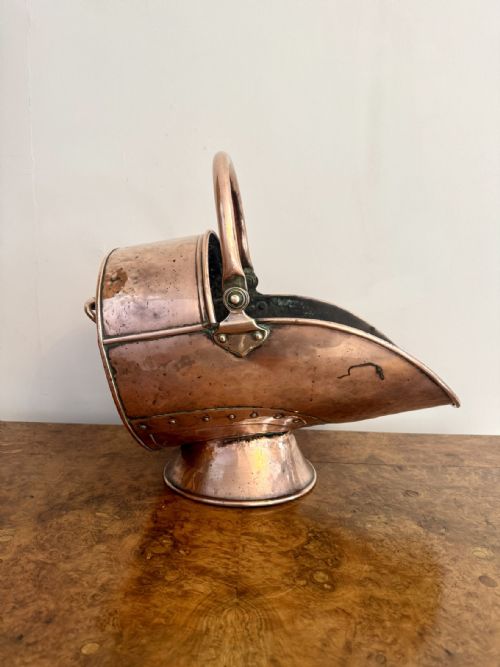
A georgian copper scuttle serves as a functional fireside container for holding coal or logs beside the hearth, taking forms such as helmets, buckets, cauldrons and log bins. When searching this phrase, a buyer encounters pieces originating from the eighteenth and nineteenth centuries, including the George III period.
The inventory on this page consists predominantly of copper vessels shaped for coal and wood storage, often augmented with brass bands, iron handles or wooden elements. These items frequently double as fireside buckets or planters while retaining their original domestic utility.
Materials and construction
The primary metal used in these objects is copper, beaten and shaped to form the body of the scuttle, sometimes paired with brass or wrought iron details for strength and contrast. Riveted joints secure the panels together, demonstrating the practical metalworking techniques of the period.
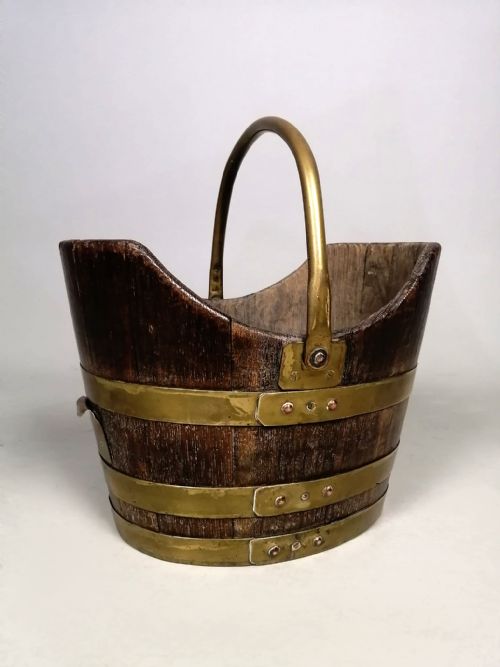
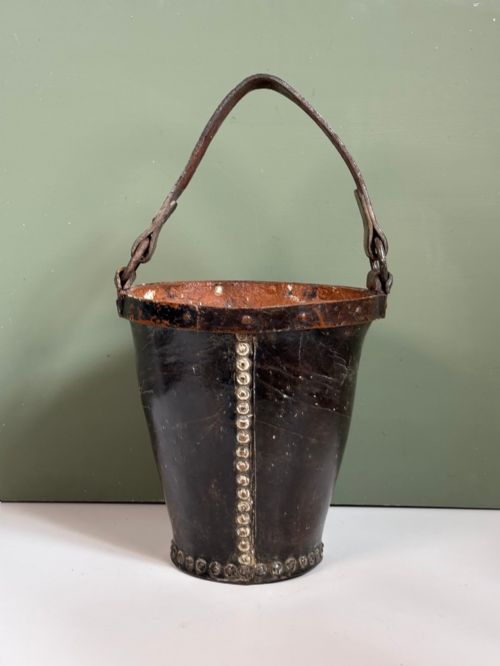
Additional materials such as oak and boiled leather appear in the broader selection of fireside buckets, providing structural variety alongside the heavy metal shells. Brass banding and swing handles complete the construction, combining durability with functional design.
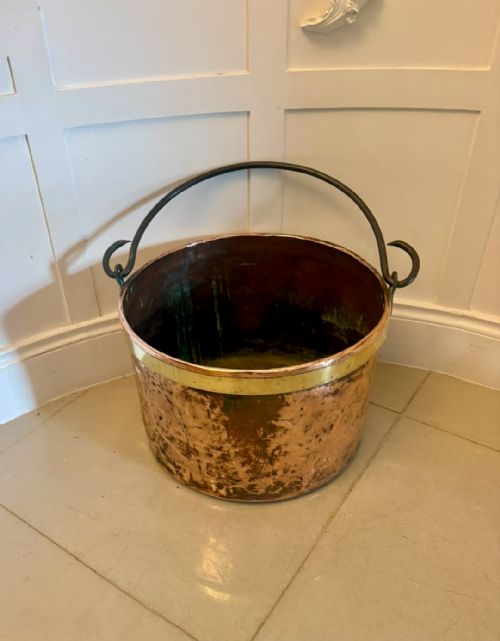
Object types seen in the inventory range from coal scuttles and log bins to fireside buckets and cauldrons.
Evaluating quality in metalwork
Quality in a georgian copper scuttle rests on the weight of the metal and the integrity of the construction, where hand-riveted joints and substantial gauge copper indicate superior craft. Heavier vessels with well-formed helmet shapes or balanced log bins demonstrate better proportion and durability.
The condition of the surface metal, the presence of original brass fixtures and the absence of clumsy repairs distinguish finer examples from standard utility pieces. Patina and honest wear show age, while well-preserved handles and secure bases mark the upper tier of the range.
The Georgian Copper Scuttle Glossary
- Helmet scuttle
- A coal container featuring a shaped mouth resembling a classical helmet, designed to pour fuel cleanly into the hearth.
- Log bin
- A deep cylindrical or shaped vessel intended for storing firewood rather than smaller pieces of coal.
- Cauldron
- A round metal pot with a rounded base, often fitted with a swing handle for fireside use.
- Patina
- The surface sheen and colour acquired by copper and brass through age and handling.
- Riveted
- A method of joining metal plates together using metal pins hammered flat at the ends.
Georgian Copper Scuttle: Frequently Asked Questions
What is a georgian copper scuttle?
A georgian copper scuttle is a metal container made for holding coal or wood by an open fireplace.
These pieces combine practical storage with decorative fireside utility.
How were these metal scuttles used?
They sat by the hearth to hold fuel for replenishing the fire throughout the day.
Many examples were carried using swing handles to transport coal from larger cellars.
Can I use an antique scuttle today?
These vessels suit modern living rooms as decorative logs bins, umbrella stands or planters.
Their sturdy copper and brass construction handles everyday dry storage well.
How do I spot a georgian piece?
Look for hand-hammered surfaces, heavy gauge copper, riveted construction and period shapes like helmets and cauldrons.
Construction details and metal thickness help distinguish earlier eighteenth-century work from later Victorian items.