
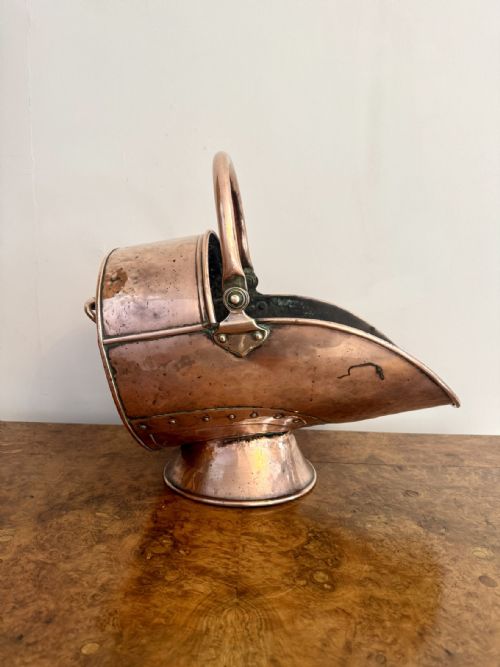


Georgian Helmet Scuttle
A georgian helmet scuttle brings practical fireside utility and classic metalwork into the modern room, offering distinct period character.
Georgian Helmet Scuttle
A georgian helmet scuttle serves as a fireside container designed to hold and transport coal to the hearth. These pieces take their name from their distinctive silhouette, which resembles a traditional military helmet.
Buyers browsing this selection encounter forms dating from the georgian era and the nineteenth century. Most examples found here combine functional purpose with the robust aesthetic of early hearth accessories.
The objects appear primarily as helmet shaped coal scuttles or simpler coal scuttle boxes intended for domestic use. Each piece reflects the material preferences and fireside requirements of the period.
How they were made
Makers constructed these hearth accessories using durable metals such as copper and brass, often paired with wooden elements for handles. Metalworking techniques of the period involved shaping sheet copper and brass into the characteristic helmet profile.
Craftsmen joined metal plates securely to withstand the heavy weight of coal and daily handling beside the fire. Selected items incorporate original accessories like shovels, demonstrating complete functional sets from the workshop.
Every helmet scuttle spent decades patiently waiting by a roaring hearth, quietly absorbing the smoke, stories, and warmth of centuries past.
What varies in quality
The standard of a georgian helmet scuttle depends on the crispness of its silhouette and the preservation of its original metal surfaces. Heavier gauge metal and refined shaping distinguish superior examples from simpler utilitarian vessels.
The presence of intact original components, such as a matching shovel or authentic wooden handles, elevates the standing of a piece within the field of fireside accessories.
The Georgian Helmet Scuttle Glossary
- Helmet scuttle
- A fireside coal container featuring a flared rim and tapering body that mimics the shape of a classic helmet. This form directs the coal neatly into the grate.
- Coal scuttle
- A general term for a portable vessel used to store and carry coal for domestic fires. These objects sit beside the fireplace as both utility items and decorative metalwork.
- Fireside accessories
- A collective description for functional metal objects used around the hearth, including coal buckets, shovels, and fire irons. They complete the furnishing of a period fireplace.
- George III
- The period of British history spanning the reign of King George III, associated with specific stylistic developments in domestic metalware and furniture. Pieces from this era display characteristic proportions.
Georgian Helmet Scuttle: Frequently Asked Questions
What is a georgian helmet scuttle used for?
A georgian helmet scuttle holds coal near the hearth for replenishing domestic fires. The flared helmet shape allows the user to pour fuel cleanly into the grate.
Beyond simple utility, these metal containers served as decorative fireside furnishings in period drawing rooms. They combine practical storage with the aesthetic of eighteenth and nineteenth century metalwork.
How do I identify a georgian piece?
Identifying these items involves examining the specific metal construction, hand-beaten seams, and overall silhouette characteristic of the period. Copper and brass pieces from this era display distinct manufacturing marks and patination.
Compare the proportions and handle attachments against established examples from the georgian and nineteenth century eras. Original shovels and fittings further confirm the period integrity of the piece.
Where should I place it at home?
These scuttles sit naturally beside a working fireplace or a decorative period hearth as accent pieces. Their metallic sheen adds warmth and historical texture to living spaces.
Keep the piece away from damp environments to preserve the copper or brass surface. Many owners use them to store kindling or dry logs if coal is no longer burned.
What metals were used for them?
Makers relied heavily on copper and brass to construct these durable fireside vessels. These metals resisted the heat and heavy wear associated with daily coal transport.
Wooden elements frequently appeared on handles for insulation and grip. The combination of warm metals and timber defines the visual appeal of these accessories.