




Georgian Brass Fire Irons
Georgian brass fire irons are the hearth accessories that bring Regency and Georgian grates to life, combining polished metal with practical fire-tending utility.
Georgian Brass Fire Irons
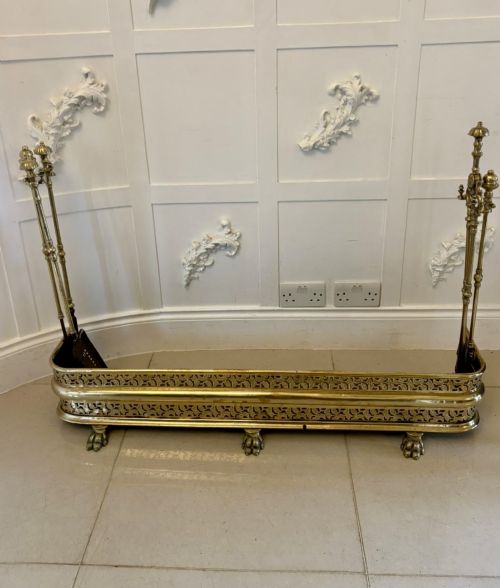
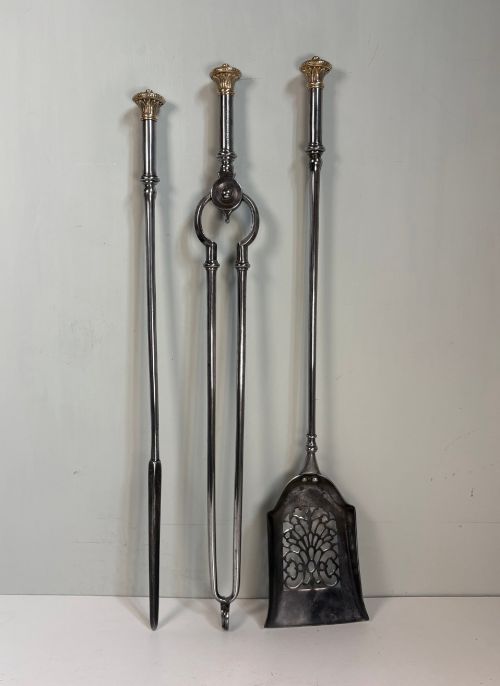
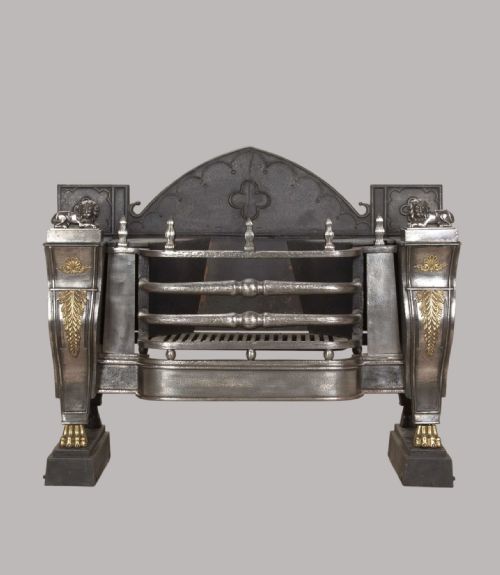
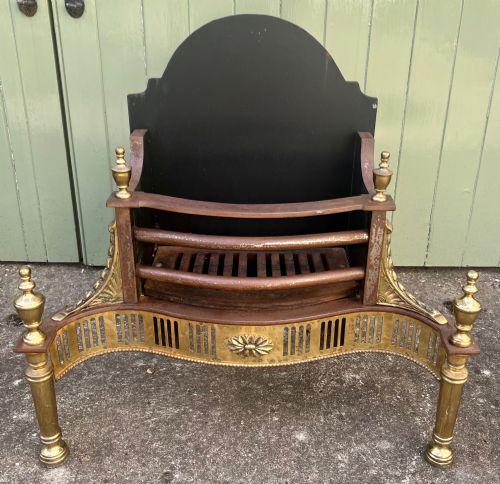
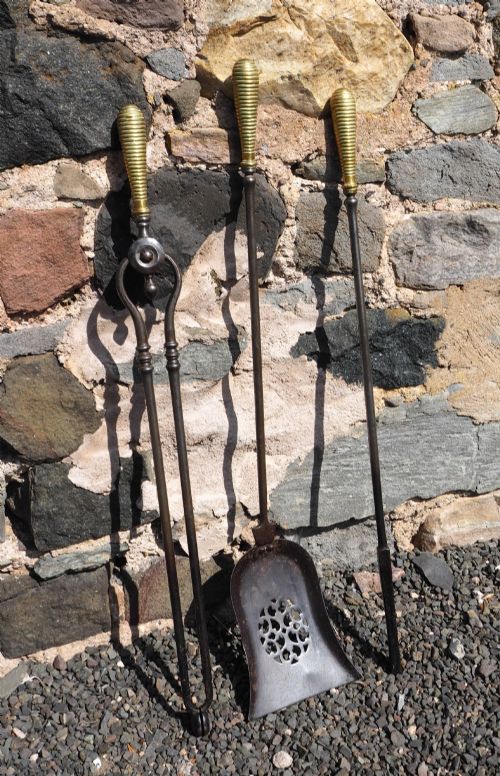
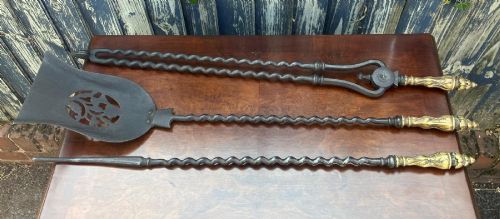
When you search for georgian brass fire irons, you encounter hearth implements designed for open coal or wood fires in period rooms. These pieces typically include sets of three, comprising a shovel, tongs, and poker, often accompanied by fire dogs or grates.
The versions you meet on this page span the eighteenth and nineteenth centuries, taking forms from simple knopped shafts to elaborate foliate engraved designs. They originate primarily from English and Irish workshops, reflecting the classical proportions of the period.
How they were made
Makers combined brass, steel, and cast iron to balance decorative warmth with structural strength for daily hearth use. Handles and shafts often utilised solid cast brass or gilt brass, paired with steel working ends like shovel blades and poker tips.
Craftsmen shaped these materials through casting, wrought ironwork, and hand engraving. Details such as knopped shafts and pierced shovel blades required precise hand finishing by metalworkers.
Georgian Brass Fire Irons Retail Price Guide 2026
Typical asking prices for georgian brass fire irons among the pieces listed under this phrase on Sellingantiques today, from the lower quarter to the upper quarter. They describe what is for sale here now, not the wider market.
Listings feature 18th Century, Regency, and Victorian periods, with materials spanning brass, steel, cast iron, and gilt brass.
What varies in quality
Quality in these hearth tools rests on the integrity of the materials and the crispness of the hand-worked detail. Superior examples display heavy, solid brass construction with substantial weight, whereas lesser pieces feel light or rely on thin plating.
The distinction also lies in the execution of decorative elements like foliate engraving and shaped handles. Sharply defined piercing on shovel blades and well-matched sets indicate superior workshop standards.
The Georgian Brass Fire Irons Glossary
- Fire irons
- A matched set of tools used for tending a fireplace, typically consisting of a shovel, tongs, and poker. They often hang from a stand or rest against a fender.
- Knopped shaft
- A metal rod shaped with rounded swellings or knobs along its length. This decorative and ergonomic feature appears frequently on eighteenth and nineteenth-century tool handles.
- Pierced shovel
- A fire shovel featuring cut-out geometric or foliate patterns in the blade. This technique allowed coal dust to sift through while retaining larger embers.
- Fire dogs
- Also known as andirons, these metal supports hold logs in an open hearth. They frequently coordinate with fire irons and grates in period chimney pieces.
Georgian Brass Fire Irons: Frequently Asked Questions
What is included in a set?
A standard set comprises three essential implements for managing an open fire. These are a shovel for clearing ash, a poker for stirring embers, and tongs for handling fuel.
Surviving sets sometimes keep together through centuries of use, though individual tools occasionally find themselves paired with matching fenders or grates.
How do I date these pieces?
Dating relies on stylistic markers, construction techniques, and material combinations seen across the eighteenth and nineteenth centuries. Earlier examples often feature hand engraving and knopped shafts.
Documentation and archive comparisons help place specific shapes within Regency, George III, or later Victorian revival periods.
Can I use them on a fire?
These historical implements are robustly constructed from brass, steel, and iron for practical hearth use. Many retain their structural strength and functional utility.
Careful handling ensures that delicate elements like engraved details and gilt surfaces remain preserved for daily enjoyment.
How do I clean brass tools?
Maintaining metal hearth accessories requires gentle cleaning to preserve the historic patina developed over centuries. Avoid harsh abrasive compounds that strip away surface character.
A soft cloth and appropriate metal polish keep the brass bright while respecting the age and wear of the piece.