

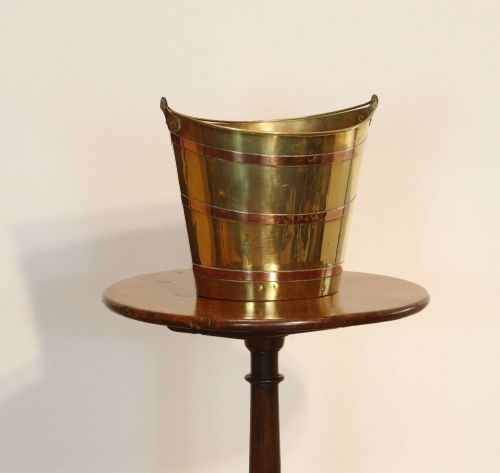
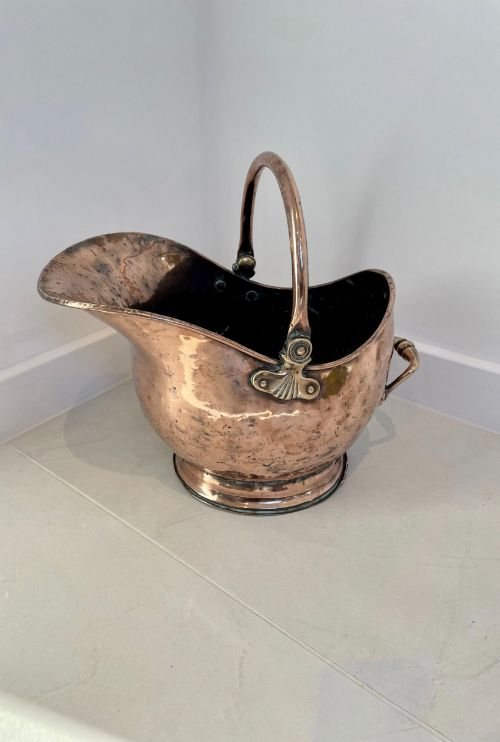
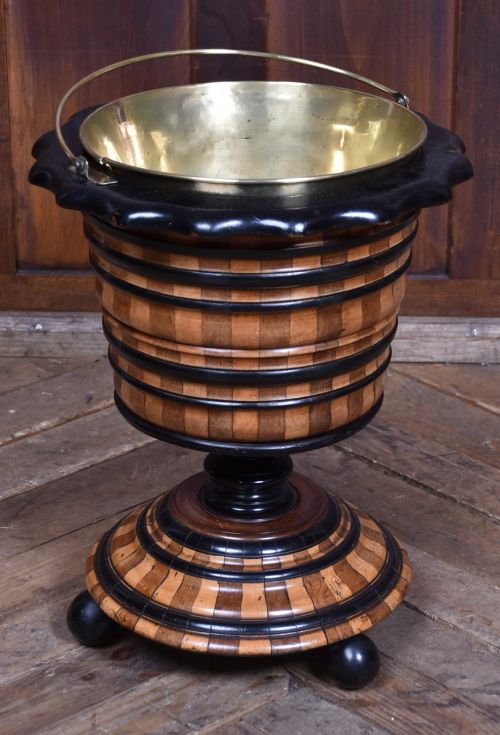
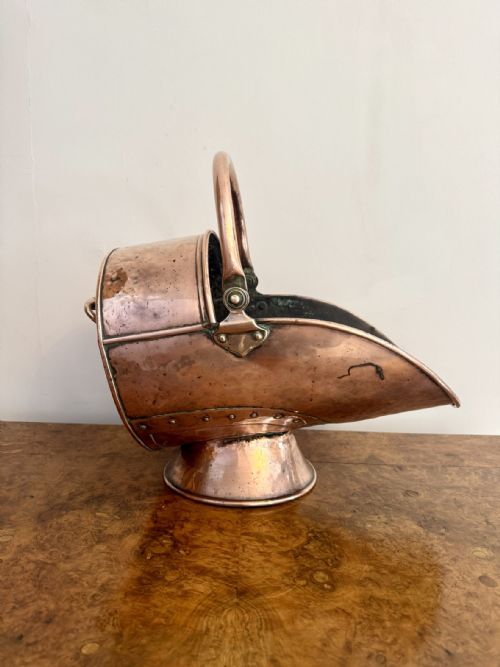
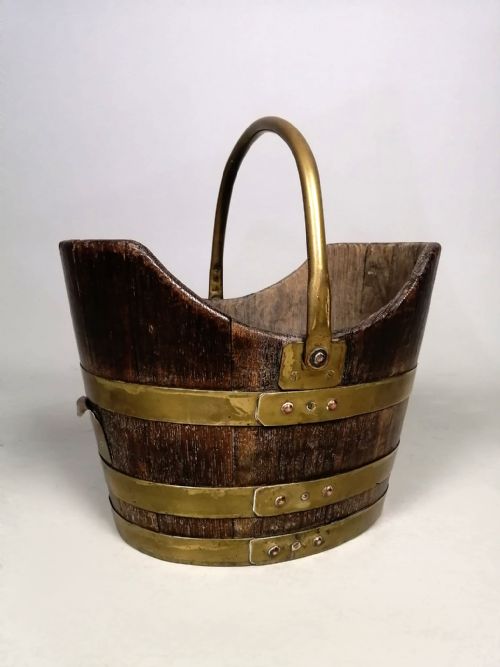
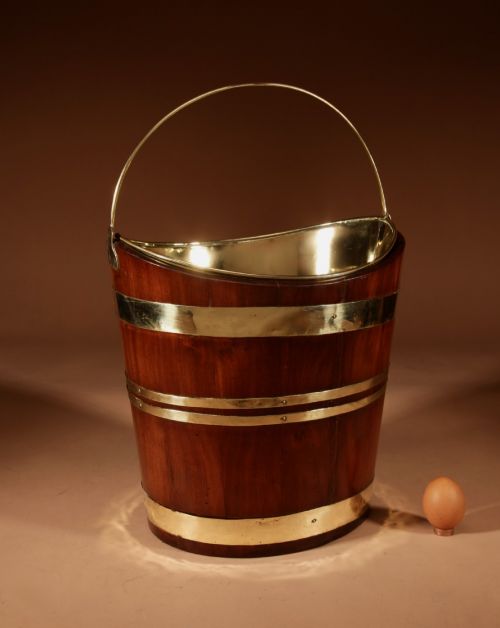
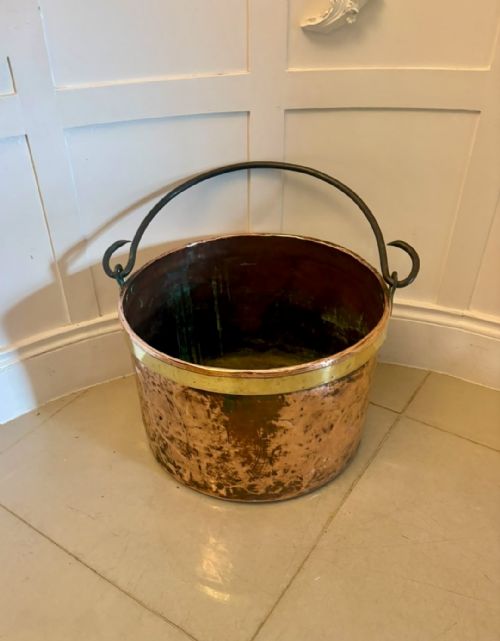


Georgian Brass Coal Bucket
These Georgian brass coal buckets are robust fireside containers designed to hold solid fuel, bringing period metalwork and timber craft directly to the hearth.
Georgian Brass Coal Bucket
A georgian brass coal bucket is a practical fireside accessory created to store and transport fuel such as coal, peat, or logs. You will encounter these vessels in various forms, including traditional helmet-shaped designs, cylindrical log bins, and boat-shaped peat buckets associated with Dutch and English traditions.
The materials and construction span multiple eras, with pieces attributed to the Georgian and Victorian periods, alongside George III styles and 19th-century interpretations. These items function as both functional hearth containers and decorative objects that integrate into traditional room schemes.
How they were made
The construction of these pieces relies on a combination of warm metals and sturdy hardwoods. Makers joined staves of mahogany, oak, or mixed hardwoods, securing them with bright brass bands and hoops.
Handles, swing bails, and liners of hammered copper or brass were incorporated to handle the weight of fuel. Many examples feature contrasting elements such as ebonised wood details and iron fittings.
Georgian Brass Coal Bucket Retail Price Guide 2026
Typical asking prices for georgian brass coal bucket among the pieces listed under this phrase on Sellingantiques today, from the lower quarter to the upper quarter. They describe what is for sale here now, not the wider market.
Some coal buckets arrive with their original matching brass shovels tucked neatly into side brackets for duty.
What varies in quality
The standard of a piece depends heavily on the crispness of the timber grain, the weight and gauge of the brass or copper, and the retention of original components like shovels or inner liners. Heavier metalwork and well-figured mahogany distinguish superior examples.
Proportion and construction methods also dictate worth, particularly where coopered staves meet tight tolerances and secure brass bands without excessive modern intervention.
The Georgian Brass Coal Bucket Glossary
- Coopering
- The method of assembling curved wooden staves to form a round or oval vessel. This technique mirrors barrel-making traditions.
- Teestoof
- A Dutch foot warmer or small heating stove often integrated into bucket forms. It usually includes a metal liner to hold hot embers.
- Peat bucket
- A deep vessel designed specifically to hold dry peat for fuel. These often exhibit ribbed wooden bodies with metal bands.
- Helmet scuttle
- A fireside container shaped with an elevated spout and a wide mouth. This profile aids the controlled pouring of coal into the grate.
- Log bin
- A larger cylindrical or elliptical container used for storing firewood beside the hearth. These pieces frequently incorporate sturdy drop handles.
Georgian Brass Coal Bucket: Frequently Asked Questions
What is a peat bucket?
A peat bucket is a deep, coopered wooden vessel traditionally used to store and carry dried peat for fuel.
These pieces often feature characteristic brass banding and sturdy swing handles for hearth-side utility.
How do I clean a brass coal bucket?
Maintenance involves dusting the timber and applying appropriate wax to preserve the mahogany or oak surface.
Brass and copper elements can be polished gently with a mild metal cleaner, depending on the desired level of brightness.
What is a teestoof?
A teestoof is a Dutch container form that combines a wooden bucket body with a metal liner.
Historically, these were utilised as small heating stoves or foot warmers before finding a place as decorative fireside accessories.
Where should I place a coal bucket?
These items sit naturally beside an active fireplace or wood burner as functional fuel holders.
They also function effectively as standalone planters or decorative bins in period interiors.