



Georgian Brass Bound Tub
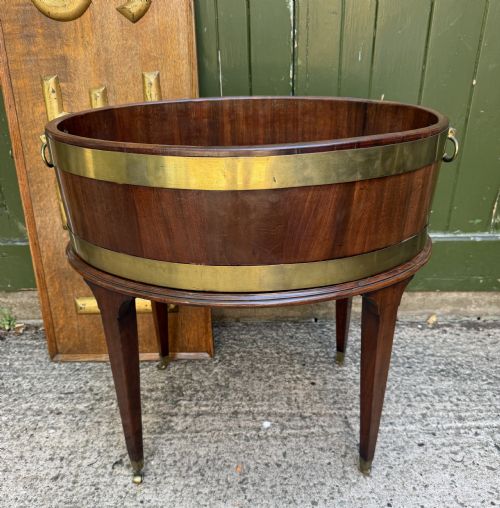
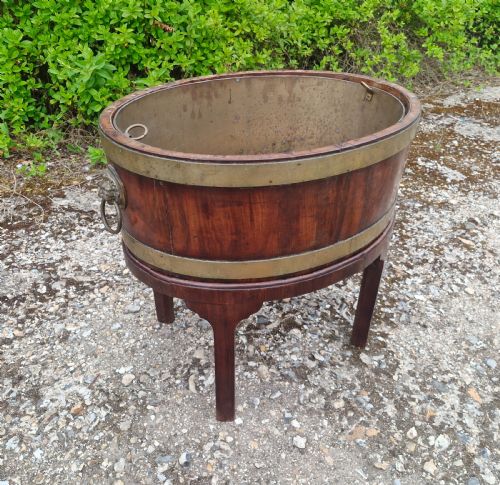
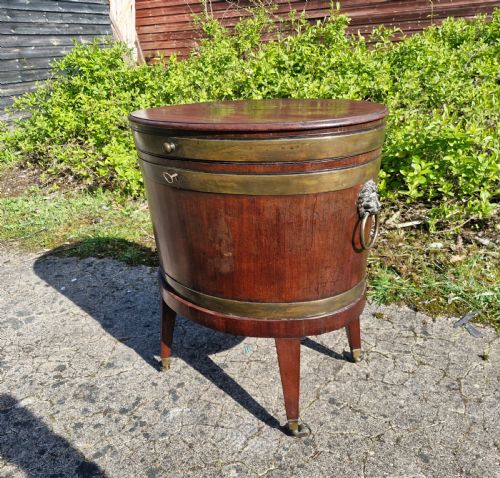
A georgian brass bound tub is a robust vessel of timber and metal built for holding wine or plants.
Georgian Brass Bound Tub
Most examples found here date from the eighteenth and nineteenth centuries, including George III periods and later Georgian styles. Certain pieces arrive complete with original stands whilst others function independently on the floor or hearth.
These multi-purpose items cross boundaries between fireside accessories and dining room furniture. Makers designed them to hold ice for bottles or to house greenery for domestic display.
How they were made
Coopers and cabinet makers built these tubs using solid woods such as mahogany and walnut, shaping staves to form curved bodies. Heavy brass bands were heated and fitted tightly around the timber to secure the structure as the wood expanded and contracted.
Internal elements often incorporated zinc or metal linings to contain moisture safely without damaging the outer wooden staves. Brass handles and feet completed the construction, combining structural support with polished metal detail.
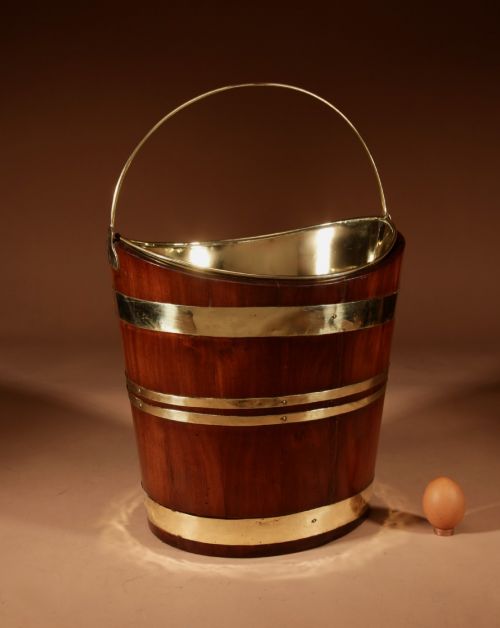
Some nineteenth century peat buckets doubled as tea stoves while keeping the sitting room warm.
What varies in quality
Quality rests in the choice of timber grain and the precision of the cooper's stave construction. Richly figured mahogany and well-matched walnut elevate a piece beyond simple utilitarian joinery.
The weight and gauge of the brass bands and fixings dictate the refinement of the finished tub. Original stands, well-preserved metal linings and crisp proportions distinguish the superior examples.
The Georgian Brass Bound Tub Glossary
- Cellarette
- A lockable container used to store bottles of wine safely in the dining room. These often sit within brass bound tubs or dedicated stands.
- Jardinière
- An ornamental pot or stand designed to hold growing plants or flowers. Many large tubs serve this dual purpose in period interiors.
- Stave
- One of the narrow shaped strips of wood joined together to form the curved sides of a tub or bucket. Tight joints ensure the vessel holds contents securely.
- Peat bucket
- A traditional container utilised for holding fuel blocks near the fireplace. These pieces share similar brass bound wooden construction with wine coolers.
- Elliptical
- Having an oval shape with tapering ends rather than a strict circle. This form allows the vessel to fit neatly against dining tables or walls.
Georgian Brass Bound Tub: Frequently Asked Questions
What is a brass bound tub?
A brass bound tub is a wooden vessel encircled by metal bands, originally designed for chilling wine or holding peat.
Today these pieces serve equally well as planters or decorative floor storage.
How were these tubs used originally?
Wealthy households utilised these heavy vessels in dining rooms packed with ice to cool wine bottles during feasts.
Alternative domestic uses included housing peat by the fireplace or displaying indoor plants.
Do they come with stands?
Certain examples are mounted on dedicated wooden stands while others remain as standalone floor buckets.
Stands elevate the piece and often date to the same period as the tub itself.
How do I care for the wood?
Keep the timber clean with dry dusting and occasional wax application to preserve the natural grain.
Avoid placing damp plants directly on the bare wood without a suitable liner inside.