
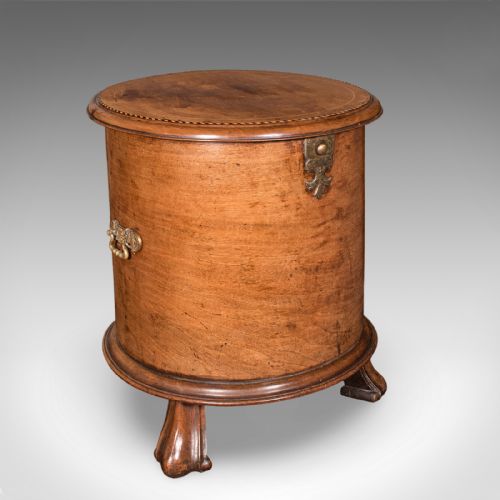


Walnut Wine Cellarette
These walnut wine cellarette examples combine figured timbers with robust containers, offering serious collectors a traditional vessel for cooling bottles or storing drinks.
Walnut Wine Cellarette
A walnut wine cellarette is a dedicated storage vessel designed to hold bottles, appearing in forms such as stands, sarcophagus shapes, and standing cabinets across multiple periods. Buyers browsing this selection encounter pieces originating from the eighteenth century through to the early twentieth century, spanning Georgian, Regency, Victorian, and later revival styles.
The objects listed range from brass-bound coolers and tea stoves to marquetry-inlaid planters and cocktail cabinets. Georgian and Regency pieces favour architectural proportions, whilst Victorian and later examples often incorporate elaborate marquetry or heavy carving.
Most items serve primarily as wine coolers or cellarettes, though related forms such as jardinieres and drinks cabinets share the same timber and functional heritage. The selection balances formal antique vessels with decorative Edwardian and Art Deco interpretations.
Construction and materials
Cabinet makers utilised solid walnut and burr walnut veneers over secondary timbers such as oak, applying intricate marquetry inlay for decorative surface pattern. Natural grain figures provide the primary visual interest across both flat panels and curved surfaces.
Metal components play a structural and decorative role, featuring brass bands, ormolu mounts, and internal zinc or lead linings designed to hold ice and bottles. Glass and mirror elements appear in later drinks cabinets and associated display pieces.
Some nineteenth-century plant stands share so much DNA with bottle holders that dealers still argue whether they cooled champagne or ferns.
Assessing quality in walnut furniture
Quality rests upon the selection of the timber veneer, where rich burr walnut and figured grain display superior depth compared to plain or heavily faded surfaces. The crispness of carved details and the integration of brass mounts further distinguish finer workshop production.
Structural integrity depends on the preservation of internal linings, original stands, and mounts. Pieces retaining their fitted zinc or metal interiors and matching hardware command greater authority among collectors.
Whytock & Reid
The Walnut Wine Cellarette Glossary
- Cellarette
- A lockable container used for storing wine bottles near the dining table. Eighteenth and nineteenth-century examples often featured lead or zinc linings for ice.
- Burr walnut
- A prized timber harvested from the wart-like growths on walnut trees, exhibiting swirling grain patterns. Cabinet makers sliced this wood into thin veneers for decorative surfaces.
- Ormolu
- Gilded bronze ornamentation applied to furniture, popular in French revival and Regency designs. The technique provides metallic contrast against dark walnut timber.
- Sarcophagus cellarette
- A cellar box shaped like an ancient stone coffin, featuring sloping sides and heavy feet. This classical form was particularly favoured during the Georgian and Regency periods.
- Jardiniere
- A decorative stand or container intended to hold plants or flowers. These items frequently share dimensions and materials with wine coolers of the same era.
Walnut Wine Cellarette: Frequently Asked Questions
What is a walnut wine cellarette used for?
These vessels originally held wine bottles and ice in dining rooms before modern refrigeration existed. Wealthy households kept them close to the dining table to chill beverages during long meals.
Today, collectors utilise them as statement furniture pieces, side tables, or specialised storage units for modern wine collections and bar accessories.
How do I date a walnut wine cellarette?
Dating relies on examining the timber construction, hardware style, and overall proportions of the piece. Georgian and Regency examples typically feature architectural lines and brass banding, whereas Victorian pieces often incorporate elaborate marquetry or heavy carvings.
Internal metal linings and secondary woods like oak also offer clues regarding the manufacturing period and regional workshop traditions.
What is the difference between a cellarette and a wine cooler?
The terms are frequently used interchangeably in antique listings, though traditional cellarettes often included locking lids to secure expensive vintages from domestic staff. Wine coolers sometimes featured open tops or jardiniere-style stands designed for plant display alongside bottles.
Both forms utilise water-resistant internal linings such as zinc to handle melting ice and condensation.
How should I care for antique walnut timber?
Walnut furniture requires protection from direct sunlight and sudden humidity changes to prevent the burr veneers from drying out or splitting. Maintaining a stable indoor climate preserves the natural colour and structural stability of the wood.
Applying occasional high-quality furniture wax helps nourish the grain without building up a heavy, dull residue.