




Georgian Brass Bound Cellarette
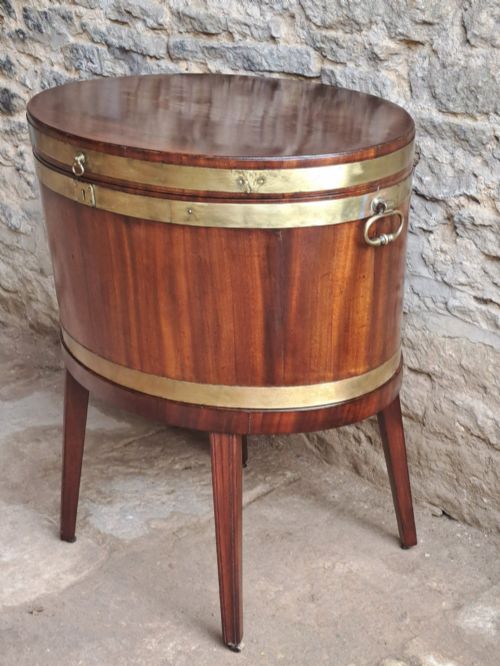
A georgian brass bound cellarette brings period timber and heavy metal bands together to hold bottles beside the dining table.
Georgian Brass Bound Cellarette
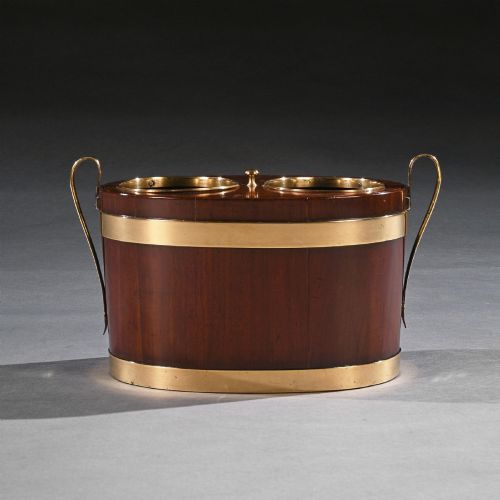
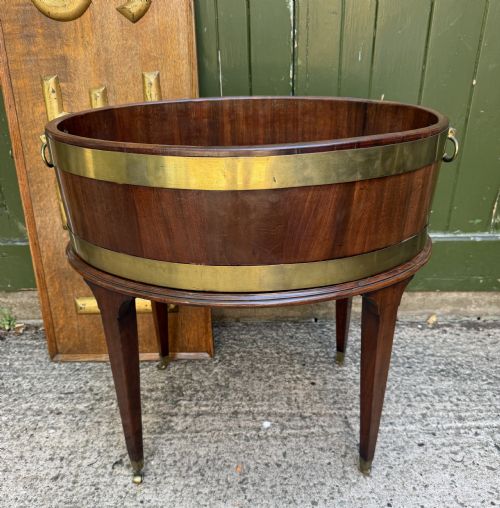
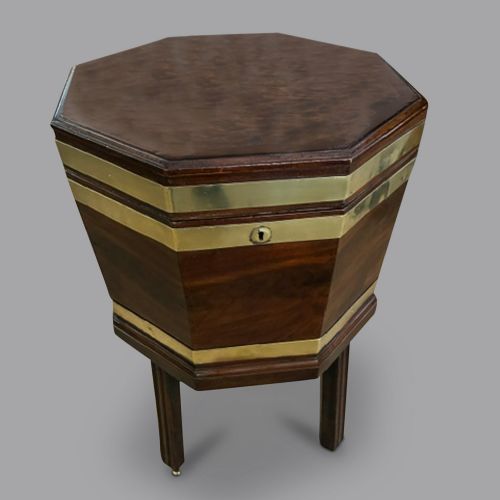
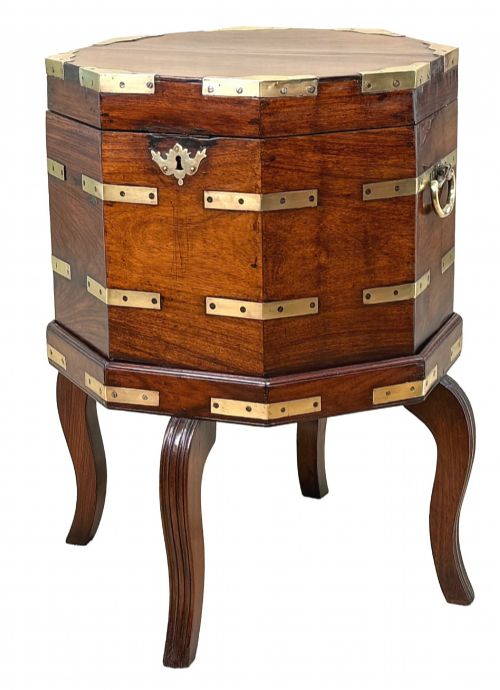
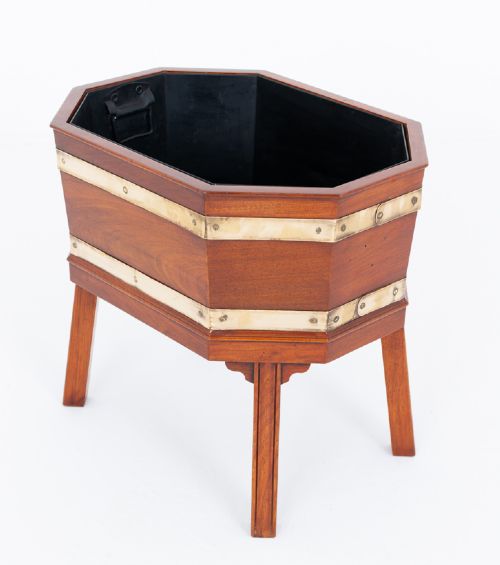
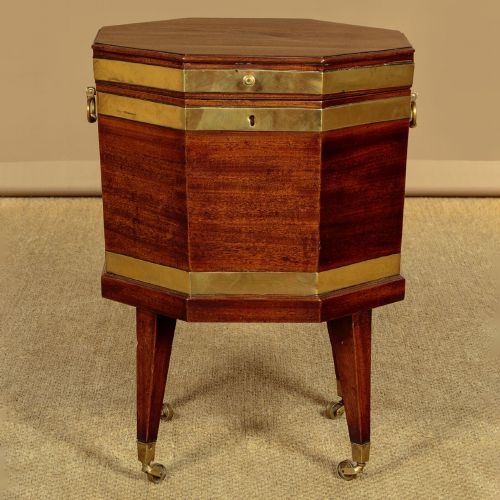
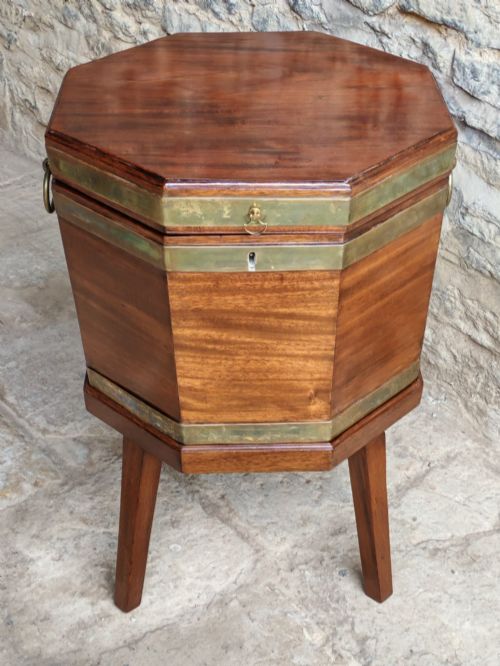
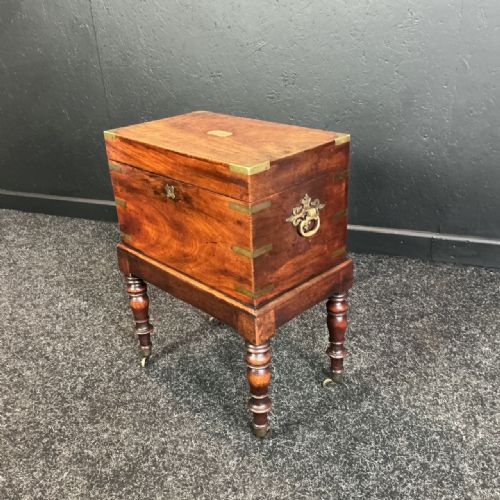
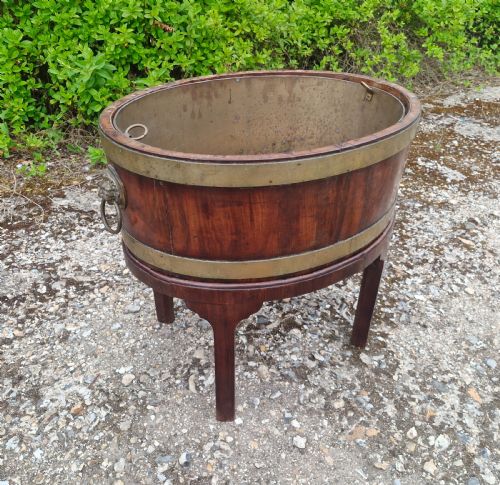
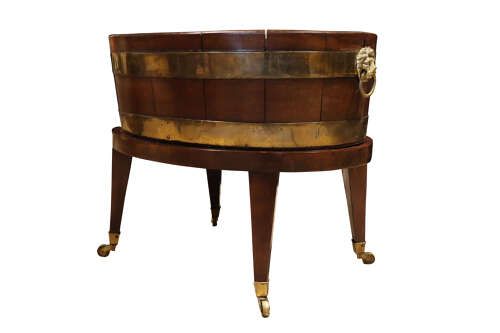
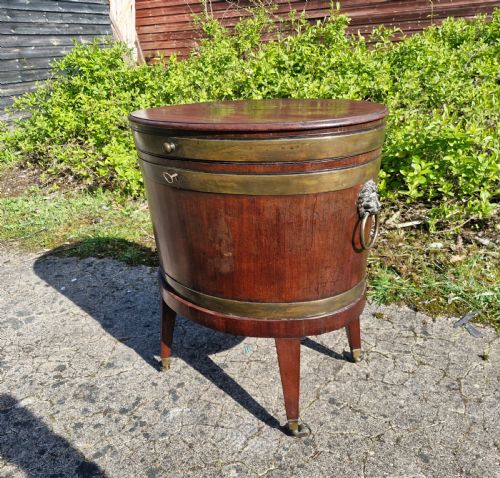
A georgian brass bound cellarette is a heavy timber vessel designed to chill and store wine bottles during formal dining in the eighteenth and nineteenth centuries. These pieces appear as oval, octagonal, or sarcophagus-shaped bins, often raised on original stands or short legs.
Buyers browsing this selection encounter pieces from the eighteenth century, the Regency period, and later revival dates up to nineteen thirty. Mahogany forms the primary body timber, accompanied by occasional examples in walnut, padouk, and ebonised wood.
Many items double as plant jardinières or planters, reflecting how owners repurposed these timber vessels over subsequent centuries. The domestic function shifts from holding ice and bottles to displaying greenery within the formal interior.
How they were made
Cabinet makers constructed the bodies from solid timbers like mahogany and walnut, frequently employing coopered stave techniques similar to barrel-making for the rounded and octagonal forms. This method allowed the thick timber staves to withstand the moisture from melting ice and wet bottles placed inside.
Heavy brass bands and strapping wrap the exterior, secured with numerous small pins or screws to reinforce the heavy timber joints. Liners of zinc or metal protect the interior base and sides from water damage during use.
Listings feature mahogany, walnut, padouk, and ebonised wood alongside brass and zinc elements.
What varies in quality
The choice of timber grain and the integrity of the original stand separate standard examples from finer works. Figured mahogany with a deep patina commands attention, while pieces retaining their original integrated stands or matched bases show greater architectural completeness.
The weight and gauge of the brass bands, alongside the precision of the cooperage work, dictate the standard of execution. Hand-beaten or cast brass mounts finished with tight joints indicate higher workshop skill than later replacement metalwork.
Gillows of Lancaster and London
The Georgian Brass Bound Cellarette Glossary
- Cellarette
- A lockable container used for storing wine bottles near the dining table. These vessels typically sat on the floor beneath the sideboard or upon dedicated frames.
- Coopered
- Built using curved wooden staves joined together side by side and bound with metal hoops. This technique derived from cask and barrel production.
- Jardinière
- An ornamental pot or stand designed to hold growing plants or flowers. Many surviving wine coolers transitioned into this decorative domestic role.
- Sarcophagus
- A heavy coffin-like box shape with a domed or pitched lid popular during the Regency period. This architectural form lent considerable visual weight to dining room furniture.
- Padouk
- A dense tropical timber displaying reddish-brown tones utilised in colonial cabinet making. This material appears in pieces originating from Anglo-Indian contexts.
Georgian Brass Bound Cellarette: Frequently Asked Questions
What is a cellarette used for?
A cellarette held wine bottles and ice close to the dining table during extended meals. Servants accessed the chilled bottles without leaving the room.
Over time, many of these vessels lost their interior divisions and function as decorative storage or planters.
How do I date a cellarette?
Dating relies on timber choice, construction methods, and overall silhouette. Eighteenth-century examples often feature oval or octagonal forms with straightforward brass bands.
Regency pieces lean towards heavy sarcophagus shapes with bolder mounts, while twentieth-century revivals copy these earlier Georgian patterns.
Are all cellarettes made of mahogany?
Mahogany forms the vast majority of surviving examples due to its strength and rich colour. Walnut and padouk also appear among eighteenth-century items.
Ebonised wood and boxwood accents sometimes supplement the primary timber body.
Can I use mine as a planter?
Many examples show interior wear from historical dampness, and numerous pieces were adapted into plant jardinières decades ago. Metal liners help protect the timber from fresh moisture.
Placing a modern inner pot inside ensures the historic wood remains dry.