



Antique Cellarette Bucket
An antique cellarette bucket brings solid timber and gleaming metal together to hold wine or plants with proper historical weight.
Antique Cellarette Bucket
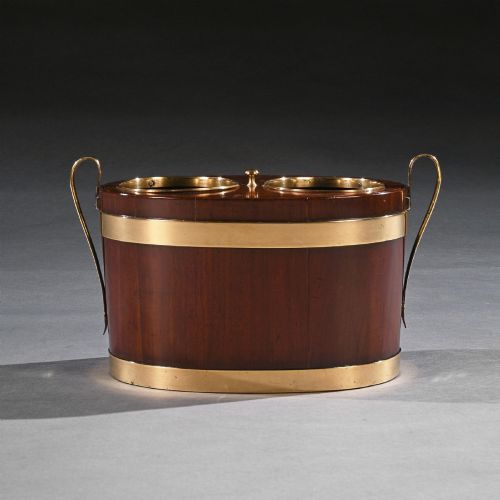
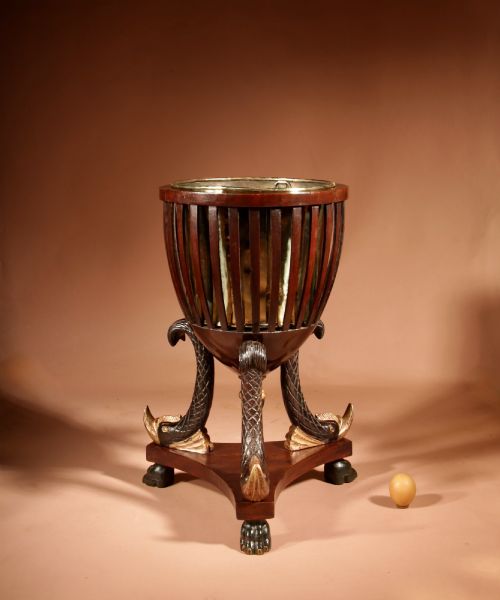
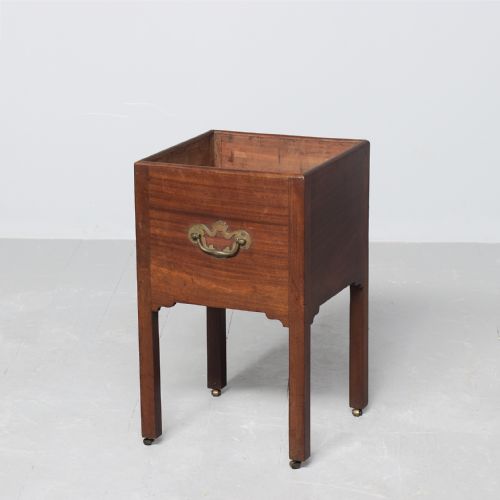
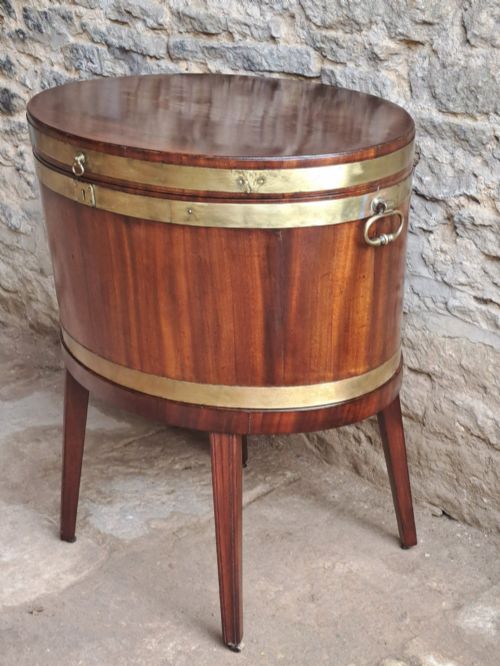
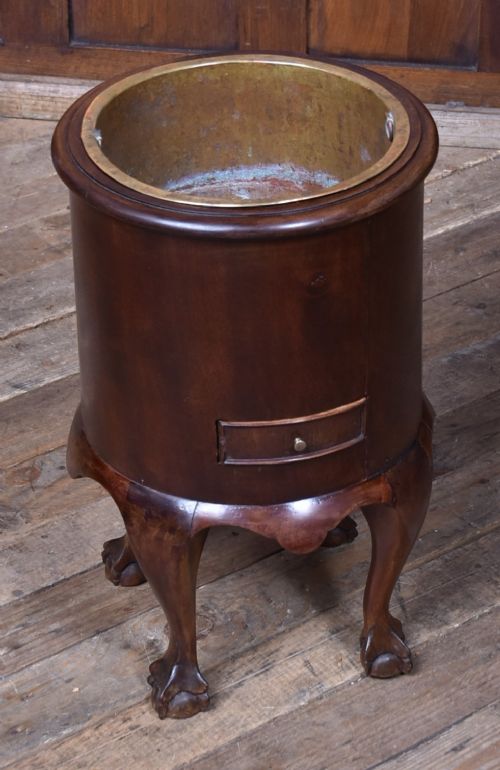
When you search for an antique cellarette bucket, you encounter robust vessels designed primarily for chilling wine or holding plants in formal rooms. The pieces recorded here span the eighteenth century, the Georgian era, the Regency period, and the Victorian age.
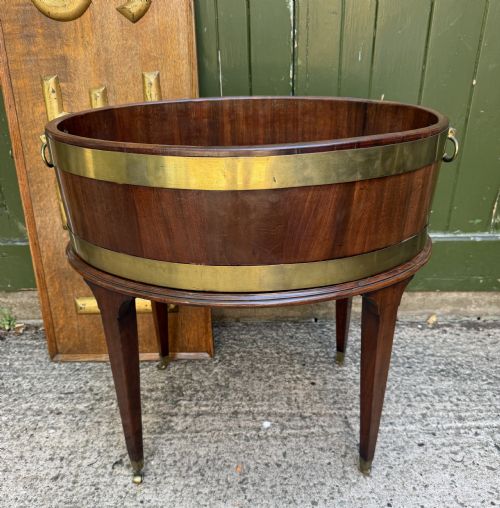
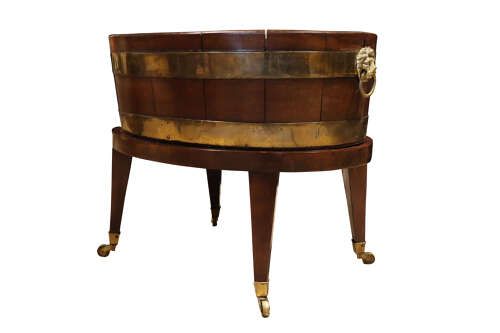
Mahogany forms the principal body of these objects, often shaped in oval outlines and reinforced with brass bands or coopered staves. Walnut, satinwood, and ebonised wood also appear, sometimes complemented by boxwood inlay or zinc linings.
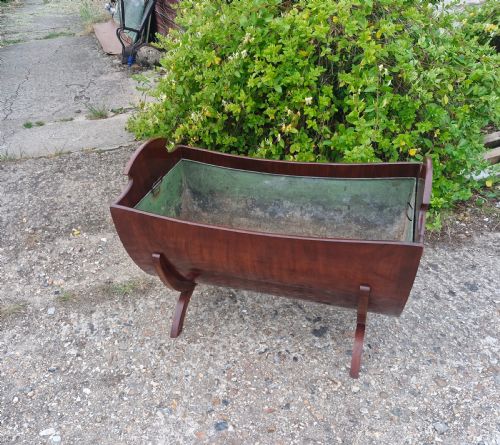
Many examples stand on dedicated wooden frames or legs, while others function as table coolers or large floor-standing jardinieres. The George III style dominates the selection, alongside French Empire and Edwardian interpretations.
How they were made
Cabinetmakers constructed these vessels using solid mahogany or walnut, frequently employing cooperage techniques with tight staves bound by heavy brass hoops to hold moisture safely. Boxwood and satinwood provide delicate contrast through stringing and inlay work upon the curved timber surfaces.
Internal zinc or metal linings protected the timber from melting ice and damp soil when the pieces served as wine coolers or plant holders. Stands and bases were joined to the main body using traditional mortise and tenon methods suited to heavy daily use.
The listings span the eighteenth century through to the Edwardian era, with George III and Regency designs appearing most frequently in mahogany.
What varies in quality
The depth of timber figure and the warmth of the natural patina distinguish superior examples from plain utility items. Crispness in the brass bands and the survival of original matching stands elevate a piece significantly.
Fine craftsmanship shows in the precision of the coopered staves, subtle inlay details, and whether internal metal liners remain intact. Pieces retaining their original proportions and unaltered stands command greater attention from collectors.
Samual Norman
The Antique Cellarette Bucket Glossary
- Cellarette
- A lockable container or freestanding vessel for holding bottles of wine near the dining table. They evolved from simpler wooden buckets into elaborate mahogany and brass-bound furniture.
- Coopered
- Constructed from curved wooden staves joined edge to edge, much like a barrel or cask. This method gave the vessels the structural strength required to hold heavy liquids and ice.
- Jardiniere
- An ornamental pot or stand designed to hold plants and flowers indoors. Many antique wine coolers were later adapted or originally built to serve this dual purpose.
- Patina
- The surface sheen and mellow colour developed by aged wood through handling, polishing, and exposure to light over centuries. A deep patina indicates long-term care and genuine age.
Antique Cellarette Bucket: Frequently Asked Questions
How do I use one today?
You can utilise them beside a fireplace for logs, on the floor as a large planter for indoor greenery, or in a dining room to hold bottles. Their sturdy construction handles weight easily.
Line the interior carefully if using live plants or ice to protect the historic timber from prolonged moisture exposure.
How do I date a cellarette?
Dating relies on timber choice, construction methods, and prevailing stylistic details such as George III brass banding or Regency proportions. Eighteenth-century pieces typically feature heavy mahogany and hand-forged brass.
Later Victorian and Edwardian revivals often adopt lighter frames or simpler inlay patterns while mimicking earlier forms.
Are they all made of mahogany?
Mahogany is the dominant wood found in these listings, valued for its strength and rich grain. Walnut and satinwood also appear in specific periods.
Metal bands, zinc linings, and occasional boxwood stringing provide structural reinforcement and decorative contrast across the various styles.