

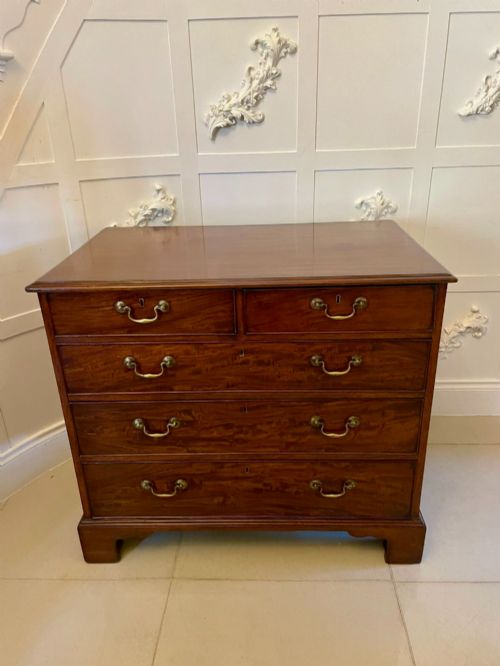
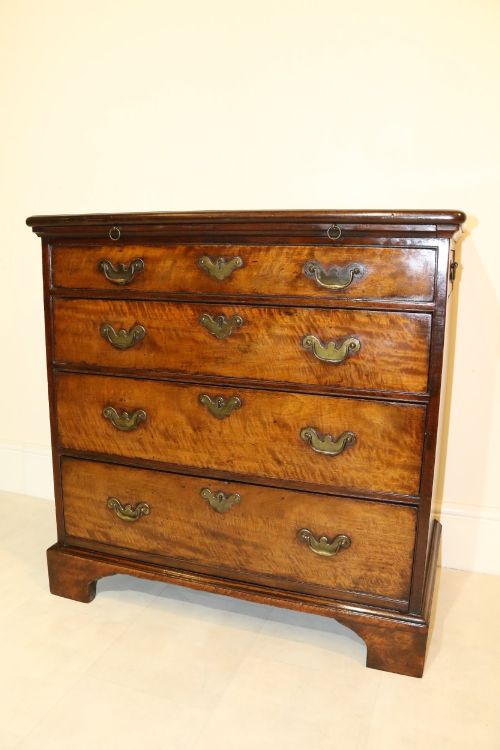
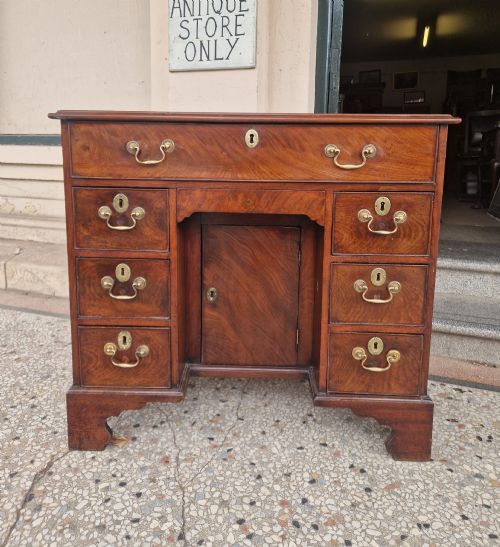
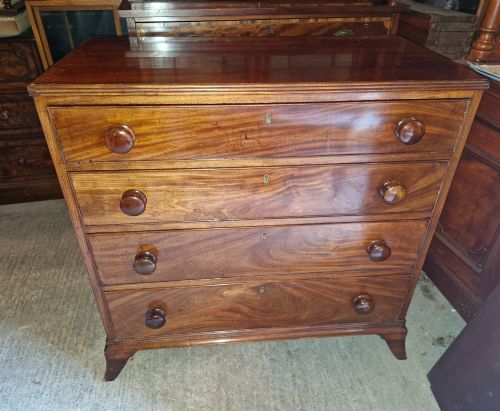

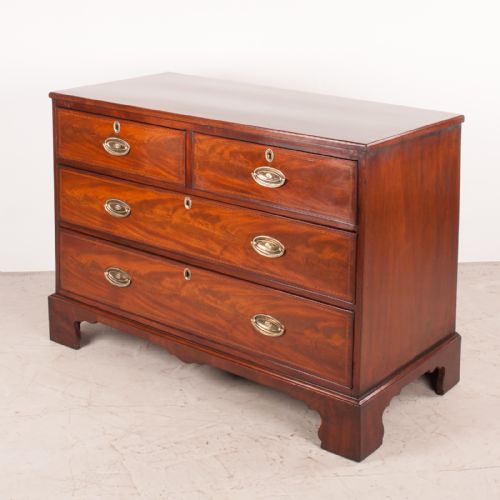
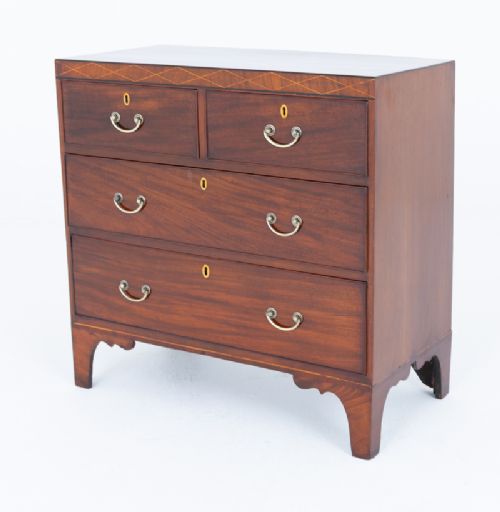
Georgian Bracket Feet Bureau
When you search for georgian bracket feet bureau, you find practical writing furniture raised on sturdy corner supports that suits a study or living space.
Georgian Bracket Feet Bureau
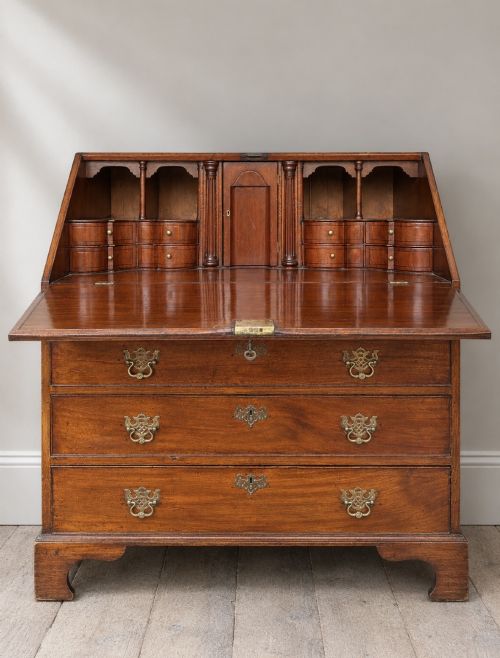
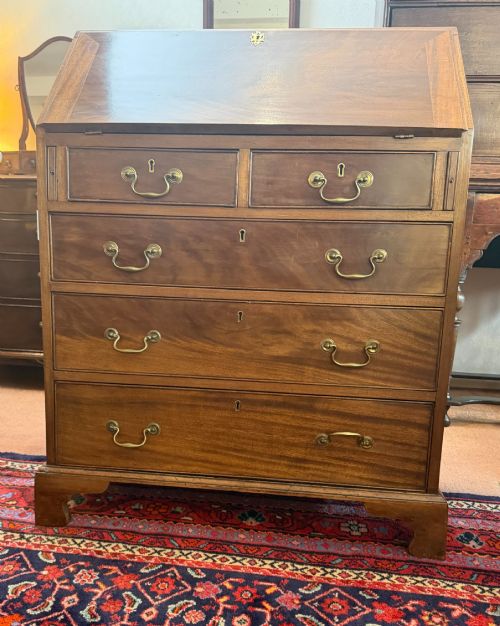
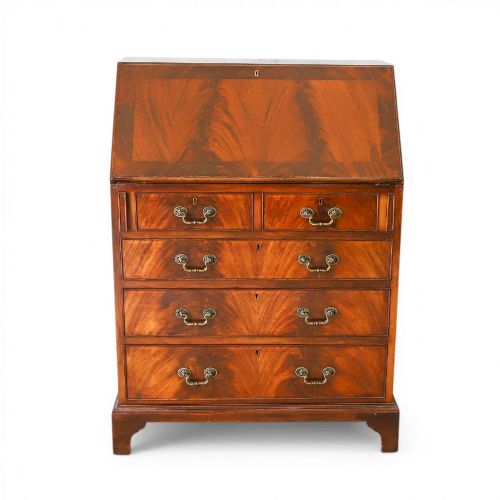
A georgian bracket feet bureau combines a sloping writing flap with a set of drawers underneath, supported by shaped corner brackets rather than standard legs. The form appears most frequently in mahogany, with occasional examples executed in walnut, oak or burr walnut.
The material range spans standard timber surfaces through to figured veneers, with styles crossing Georgian, George III, Queen Anne and later revival periods.
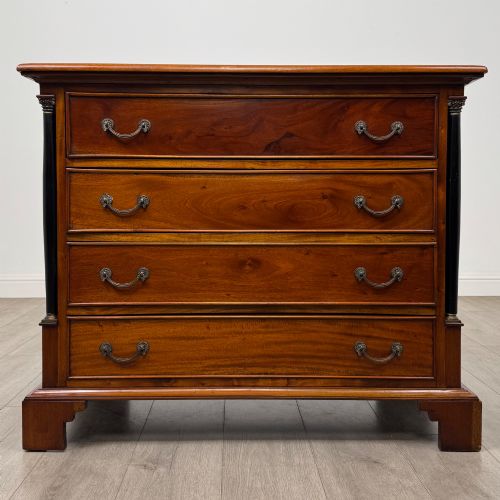
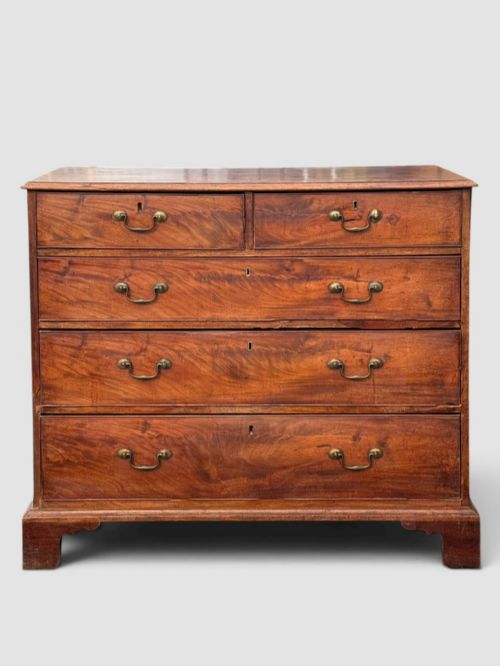
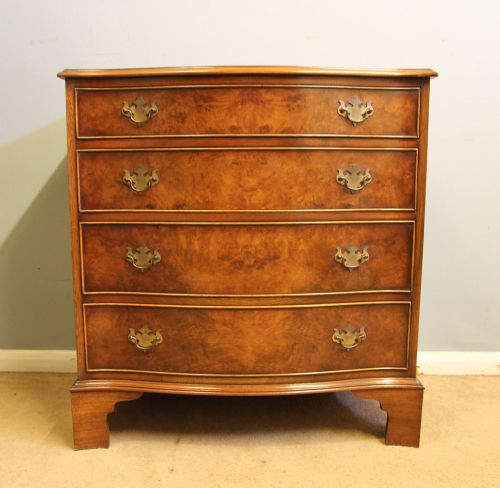
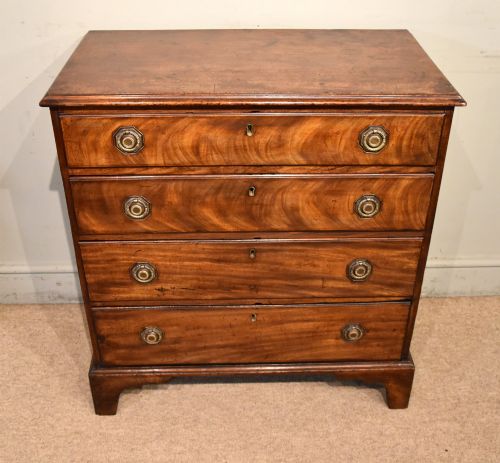
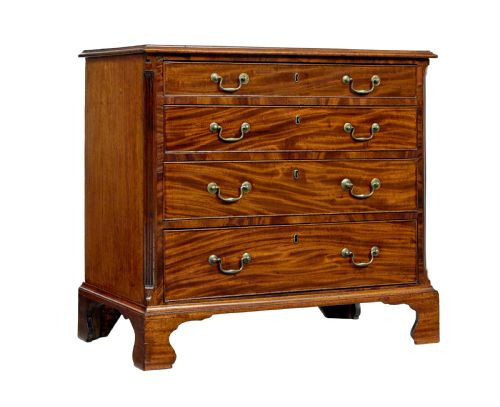
Buyers encounter these writing pieces alongside related chest of drawers and kneehole desk formats that share the characteristic bracket base configuration.
Materials and construction methods
Makers utilised solid hardwoods like mahogany, oak and walnut for structural integrity, often applying figured veneers to the exterior writing flaps and drawer fronts.
Interior fittings incorporate secondary timbers alongside boxwood stringing, brass handles and bone escutcheons to complete the writing compartments and drawer assemblies.
Listings feature eighteenth-century and nineteenth-century pieces alongside Georgian Revival examples executed in mahogany, walnut, oak and boxwood.
Distinctions in quality
The grade of timber selection dictates visual appeal, separating plain grain surfaces from rich flame or burr walnut veneers with strong natural warmth.
Interior complexity sets individual pieces apart, ranging from simple pigeonholes to fitted central cupboards with secret compartments and pigeonholes.
The Georgian Bracket Feet Bureau Glossary
- Bracket foot
- A corner foot shaped like a bracket, supporting case furniture with a clean mitered profile. This support style lifts the cabinet body off the floor.
- Bureau
- A desk featuring a sloping fall-front lid that opens to reveal internal writing compartments and drawers. It provides a concealed workspace for correspondence.
- Mahogany
- A durable hardwood prized for its rich reddish-brown tone and stable grain. It served as the primary material for case furniture.
- Walnut
- A dense timber used extensively for cabinet work before mahogany gained dominance. Figured varieties like burr walnut display intricate decorative patterns.
- Escutcheon
- A protective plate surrounding a keyhole, frequently made from brass or bone. It prevents the timber around the lock from sustaining wear.
Georgian Bracket Feet Bureau: Frequently Asked Questions
What is a bracket feet bureau?
A bracket feet bureau is a writing desk with a sloping lid that encloses small drawers and pigeonholes, standing on shaped corner feet.
These pieces combine functional storage with a compact footprint suited to domestic study spaces.
How do I identify a Georgian bureau?
Georgian bureaux feature period timber construction, traditional joinery methods and specific ornamental details like brass drop handles.
They rely on proportions and cabinet-making techniques typical of the eighteenth century.
Where should I place a bureau?
Bureaux fit well in studies, living rooms or hallways where the drop-front lid can open without obstructing movement.
Ensure the room humidity remains stable to protect the timber and veneer surfaces.
What woods were used for bureaux?
Cabinet makers built these desks primarily in mahogany, walnut and oak, occasionally utilising elm or secondary pine for internal drawer linings.
Exteriors often featured figured veneers to highlight the grain pattern.